By Ibrahim Hassan-Wuyo
Stakeholders from government institutions, civil society organisations, community groups and vulnerable populations have called for stronger community resilience and grassroots coordination as practical tools to counter rising violent extremism in Kaduna State and the wider North-West.
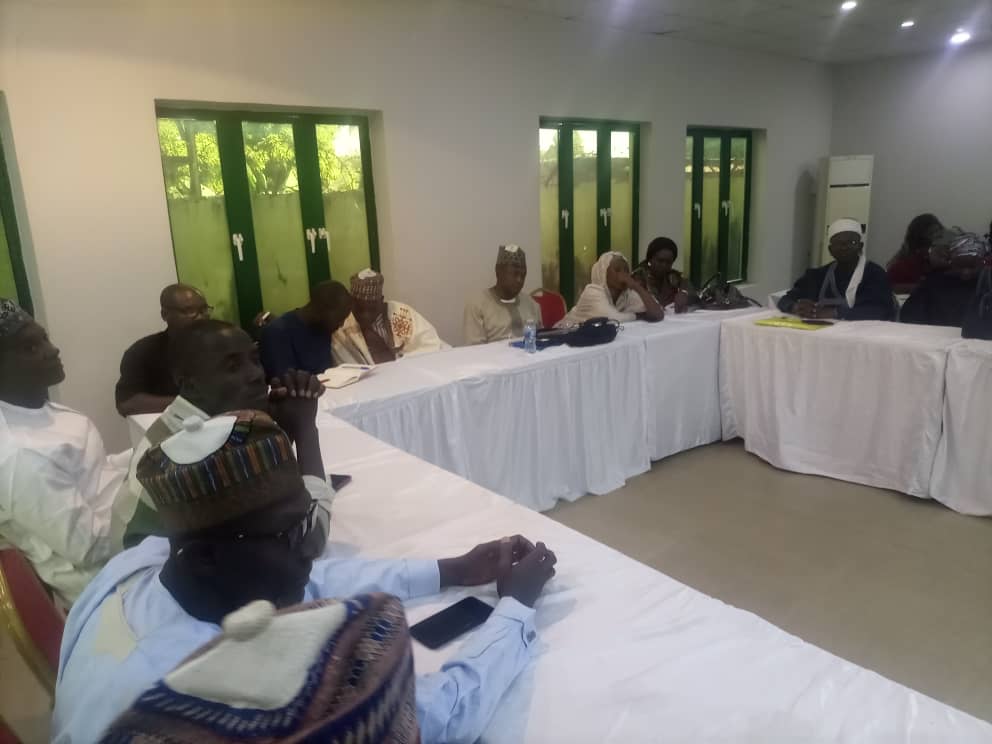
The call was made at a two-day capacity-building workshop held in Kaduna, organised by the Institute for Peace and Conflict Resolution (IPCR) in collaboration with the Partnership Against Violent Extremism (PAVE). The forum brought together representatives of state ministries, youth and women’s groups, persons with disabilities, traditional institutions, community-based organisations and practitioners in Preventing and Countering Violent Extremism (PCVE).
The programme, themed “Stakeholders’ Roles in Community Resilience of CB-RRR,” focused on strengthening community-based reintegration, rehabilitation and reconciliation mechanisms in line with national PCVE frameworks.
The Director of IPCR and Coordinator of the National Conflict Early Warning and Response Situation Room, Mr Steve Agbo, said the workshop aimed to deepen participants’ understanding of Nigeria’s PCVE framework and improve implementation at state, local government and community levels.
He noted that many well-designed policies often fail at the implementation stage due to weak coordination and limited grassroots engagement.
“This workshop is about helping stakeholders clearly understand the PCVE framework, the coordination structure and the specific roles each actor must play,” Agbo said. “If implementation is not effective at the local government and community levels, then the entire system weakens.”
He described participation as encouraging, with strong representation from civil society, youth and women’s groups and state MDAs, though he observed that security agencies were less visibly represented.
Agbo added that technical sessions focused on countering extremist narratives, responding to early-warning signals and strengthening local capacities to prevent conflicts from escalating.
The State Chairperson of PAVE, Mr Eric John, said the intervention became necessary after repeated engagements revealed capacity gaps in conflict management, early-warning mechanisms and community cohesion in many communities.
“Many communities lack the skills to manage diversity and address small disputes before they escalate into larger security problems,” John said. “Our focus is to empower communities to take ownership of peacebuilding rather than relying solely on government.”
He stressed that young people, women, religious leaders and persons with disabilities must be central to efforts to counter extremist narratives, noting that violent extremism thrives where local voices are weak or excluded.
“Security challenges start at the grassroots, so prevention must also start there through coordinated early-warning and early-response systems,” he added.
A representative of Youth Against Violent Extremism and the Joint Movement for the Blind, Ms Priscilla Daniel, said the training reinforced the importance of including persons with disabilities in peacebuilding processes.
She warned that people with disabilities are often the most vulnerable during violent crises, making their inclusion in prevention efforts crucial.
“If violence breaks out, people with disabilities are usually the first victims,” she said. “That is why peacebuilding must be our collective responsibility, starting from our communities.”
She also urged youths to avoid drug abuse, jungle justice and other behaviours that contribute to insecurity.
From the traditional institutions, a community leader from Gwagwada District in Chikun Local Government Area, Alhaji Lawal Magaji, said the workshop emphasised the importance of early detection and local intervention in preventing radicalisation.
“Our role as community leaders is to take these PCVE action plans back to our communities and implement them at the grassroots,” he said. “Community participation is vital if we are serious about curbing violent extremism.”
A Senior State Counsel at the Kaduna State Ministry of Justice and member of the PCVE Technical Working Group, Barrister Sarah Kajiri-Peters, described the workshop as an eye-opener that helped participants map both formal and non-traditional stakeholders across Kaduna’s 23 local government areas.
“We discovered that groups we never considered before, such as tea sellers’ associations, can play important roles in promoting peace,” she said. “It shows that communities understand their own dynamics and who can influence behaviour positively.”
The workshop forms part of broader efforts to strengthen grassroots resilience, improve coordination and expand stakeholder participation in preventing radicalisation and violent extremism in Kaduna State.
Partners supporting the programme included IPCR, Involve Naiv, GSARB, Abolive and other technical and financial contributors, with additional backing from the PCVE Knowledge, Information and Resource Hub.
Disclaimer
Comments expressed here do not reflect the opinions of Vanguard newspapers or any employee thereof.