By Gabriel Ewepu
ABUJA – THE National Chairman, Nigeria Institution of Maritime Engineers and Naval Architects, NIMENA, Engr Sylvanus Eferebo, has asserted that overdependence on foreign expertise is negatively impacting the nation’s maritime sector.
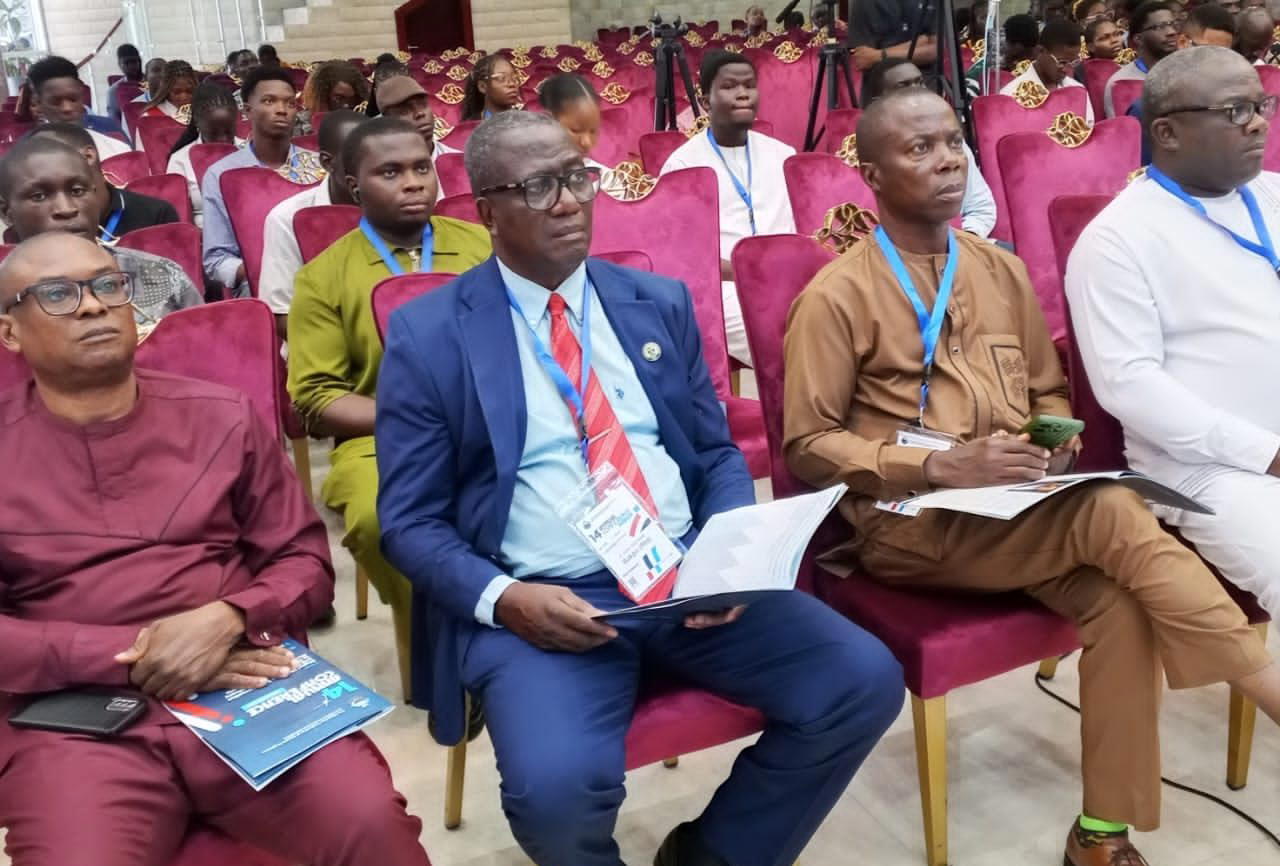
Eferebo made the assertion in a remark at the 14th Annual Conference of the Institution with the theme, ‘Digital Maritime Transformation and Smart Solutions: A Pathway to the Advancement of Nigeria’s Blue Economy’, held in Port Harcourt, Rivers State, noted that Nigeria’s maritime sector is among the world’s most active due to her global oil and gas business including a long stretch of coastline and inland waters.
However, said if properly managed by giving adequate attention by the government to attract investors and build capacity internally it will spin millions of jobs for the teeming young population and enormous wealth.
He also expressed concerns over missing opportunities to unlock the sector, largely due to dependence on foreign certification and standardization for its operations.
He said: “If we want to solve unemployment issues in this country and create enormous wealth. Nigeria has one of the most active maritime sectors in the oil and gas industry. We also have a long coastline; our inland waterways alone span 10,000 kilometres. Then, to crown it all, we also have young talents. So, the problem is not about shortage of talents but a structured pathway, so this conference is an avenue to unlock these potentials.
“We are a sovereign nation, but we are not technically sovereign.
We still depend on technical expertise from foreign nations, so we cannot even standardize our tools, we cannot certify our tools, for us to have our engineers or cadets on board, they have to get foreign certification.
“Nigeria has a huge human capital population; it is now for us to have a structured pathway towards harnessing it. We must also have a national vision for our maritime sector.
“We must come to a round table and fashion out a vision that will now help us to frame our policies better.”
In an address, the President, Council for the Registration of Engineers in Nigeria, COREN, Engr Saddiq Abubakar, FNSE, acknowledged the critical role Nigeria’s maritime sector plays in terms of trade, logistics, energy exports, naval defence, blue economy development, employment, foreign exchange earnings, investment attraction, and contribution to the Gross Domestic Product, GDP.
Abubakar however, noted that in spite of the sector’s role in the economy on daily basis there are still a lot of challenges based on capacity building in the sector including the proliferation of substandard marine engines and equipment, a poor maintenance culture, high failure rates of marine machinery, inadequate shipyard capabilities, and limited local content.
Meanwhile, he highlighted some.of the limitations – weak conformity assessment for imported maritime equipment, fragmented enforcement of engineering and marine standards, and insufficient technical regulations for naval machinery as challenges facing the sector.
“These deficits undermine operational efficiency, increase cost, compliance safety, reduce fleet availability and limit Nigeria’s participation in the global maritime value chain.”
Meanwhile, he recommended that, “Strengthening standardization and compliance enforcement is therefore essential for industrial growth, maritime safety, naval protection and global competitiveness.”
According to him, standardization will bring about improved durability of Nigerian-built vessels, expansion of local export potentials to local shipyards, and reduced maintenance costs.
The COREN boss, added that it is imperative for the country to look inwards and upscale local capacity building, and focus on boosting digital services to ease marine operations in the country.
Meanwhile, the keynote speaker, Dr Aladenusi Olugbemiro, for the maritime sector ams.otjers to really become competitive it is for the government and other stakeholders to really give attention to digital transformation as an essential component for Nigeria to build a competitive and globally attractive maritime industry.
Olugbemiro also lauded NIMENA for playing a crucial leadership role by driving the national conversation from that perspective.
Disclaimer
Comments expressed here do not reflect the opinions of Vanguard newspapers or any employee thereof.