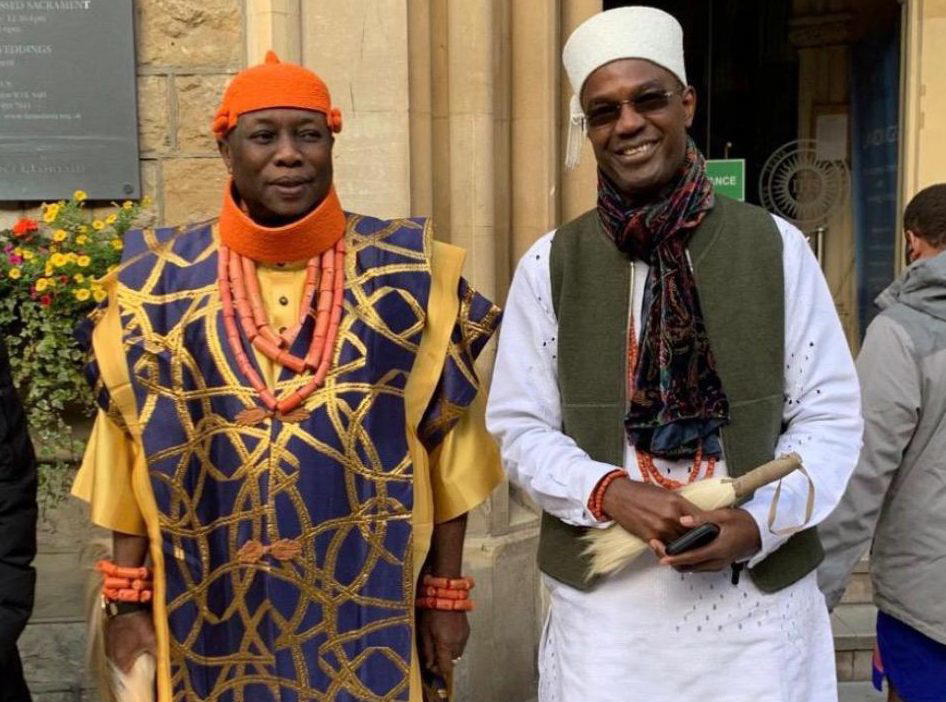
A new documentary, Asaba Massacre: October 1967, is reigniting national attention on one of the most traumatic and under-examined episodes of Nigeria’s civil war, more than five decades after the killings that devastated the Asaba community. Executive produced by Chief Chuck Nduka-Eze, the Isama Ajie of Asaba, and directed by historian and filmmaker Nze Ed Emeka Keazor, the film documents the mass execution of unarmed civilians by Nigerian troops in October 1967 and raises enduring questions about memory, justice and nationhood.
For Nduka-Eze, the decision to confront the story publicly was rooted in deeply personal experience. He lost members of his family during the massacre and said the documentary emerged from both grief and obligation. “My personal experience of loss, and a sense of responsibility to my community to document the events that impacted deeply on its indigenes, were my motivations,” he said. He described the project as a “duty of sacred trust” to Asaba and its people.
The journey to the finished film began three years ago, when Nduka-Eze commissioned Keazor to research, direct and produce the documentary. The process involved extensive historical work, survivor testimonies and careful consideration of how to tell a painful story with honesty and restraint. That journey culminated in two major premieres: an international screening at the Africa Centre in London on 26 October, and a Nigerian premiere at the Jet Ski Club in Ikoyi, Lagos, on 26 November 2025.
Nduka-Eze said his personal loss inevitably shaped his commitment to the project, but stressed that the film was never intended to centre on him alone. Rather, it sought to ensure that the voices of other victims and families affected by the tragedy were heard. He expressed gratitude to both the late Asagba of Asaba, Professor Chike Edozien, and the current Asagba, Professor Epiphany Azinge, for endorsing and participating in the project. Their involvement, he said, underscored the institutional and communal importance of memorialising the innocent lives lost.
The Asaba massacre took place during the Nigerian civil war when soldiers of the Second Division of the Nigerian Army entered Asaba in October 1967. According to accounts presented in the documentary, troops led at the time by Lt Col Murtala Muhammed, with Lt Col Ibrahim Taiwo as his deputy, gathered unarmed civilians—mostly Asaba men and boys—at Ogbeosowa Square. The civilians were told to demonstrate loyalty to the Federal Government and marched while singing “One Nigeria”. Unknown to them, preparations for a mass execution had already been made. More than 1,000 men were killed.
Nduka-Eze noted that Asaba was firmly within federal territory, making the killings particularly troubling. Nigerian soldiers, he said, executed fellow Nigerians on Nigerian soil while the victims proclaimed national unity, an act he described as a desecration of the country’s “sacred essence” and national identity. While the facts of the massacre have not been formally denied, he argued that the event remains inadequately reported and insufficiently integrated into Nigeria’s national consciousness.
The premieres of the documentary were themselves acts of remembrance and reflection. In London, His Royal Majesty the Asagba of Asaba, Professor Epiphany Azinge, attended as guest of honour. The event was hosted at the Africa Centre by Nduka-Eze and its chairman, Professor Oba Nsugbe KC SAN, who also lost his grandfather during the massacre. The audience included members of the Asaba diaspora and international scholars, such as Professor Liz Bird, author of Asaba Massacre: Trauma, Memory and the Nigerian Civil War, and Dr Charles Adams, Dean of Humanities at the University of South Florida.
The Lagos premiere, co-chaired by Nduka-Eze and Keazor, attracted a wide cross-section of dignitaries, including Her Royal Majesty Agu Nwanyi Modupe Edozien, widow of the late Asagba, the Netherlands’ Consul-General Michel Dellen, and the Director-General of the National Commission for Museums and Monuments, Gbile Holloway. A panel discussion followed the screening, featuring Supo Shasore SAN, Aduke Gomez, Demola Akinrele SAN, Chijioke Okoli SAN and Nduka-Eze. Panellists spoke candidly about the massacre’s long-term social and psychological impact and the urgent need for resolution in the broader national interest.
Revisiting such traumatic history, Nduka-Eze acknowledged, was emotionally demanding. He said the process inevitably reopened old wounds, but also offered a measure of healing. Creating the documentary, he explained, was necessary not only for Asaba but for Nigeria as a whole, as a means of self-reflection and an inquiry into the deeper questions of humanity and collective responsibility.
One of the most difficult challenges, he said, lay in editorial decisions around depicting violence and trauma. His instruction to the director was clear: the film must be historically accurate and sensitively handled, while presenting the facts clearly, honestly and without ambiguity.
On the question of justice, Nduka-Eze was forthright. He does not believe adequate justice has been served for the victims. He said the Asaba community has, for many years, clearly expressed its demands to the authorities. Most recently, these concerns were conveyed to President Bola Ahmed Tinubu, who granted an audience to a delegation led by the Asagba at the Presidential Villa. The community, he said, hopes these appeals will now receive serious consideration.
Looking ahead, Nduka-Eze argued that Nigeria must integrate events such as the Asaba massacre into national memory through education and other formal means. “A nation that does not learn from its past is bound to repeat the same mistakes,” he said. Memorialisation and education, he added, remain among the most effective ways of ensuring that such a tragedy is never repeated.
Disclaimer
Comments expressed here do not reflect the opinions of Vanguard newspapers or any employee thereof.