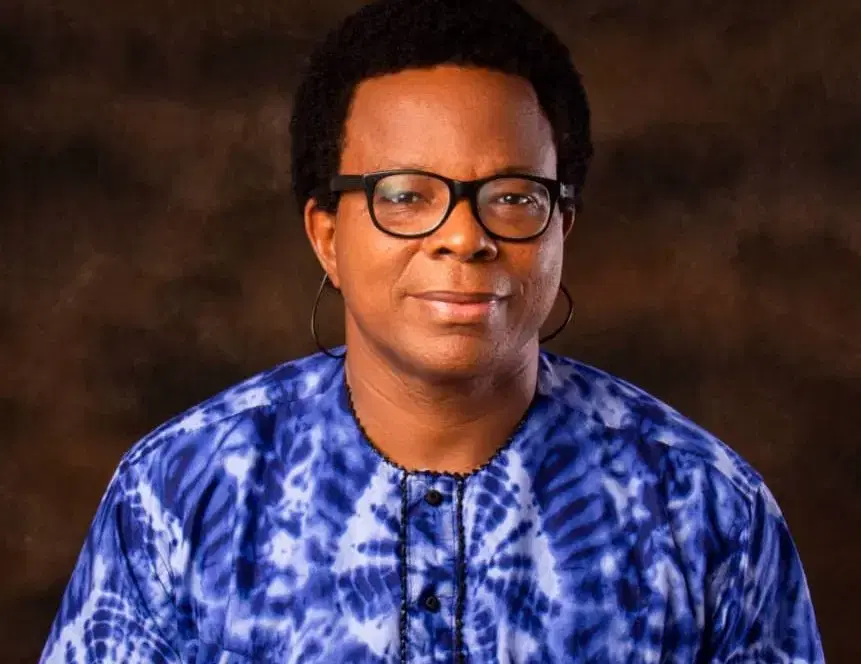
Is this the arrival of a Moses – a deliverer who will part the Red Sea of banditry and insurgency – or merely a polished repackaging of another retired general?
After the rumours of a coup which the government denied, Gen Musa was removed and retired. He had been Chief of Defence Staff for over two years. When he was removed, the government said they needed new hands for a problem growing out of hand. Under his watch, insecurity had spiralled and even earned the attention of President Trump. Yet his recent return as Minister of Defence has been received with loud public approval. Most Nigerians see him as a massive upgrade over the mediocre politicians to whom Tinubu had handed that ministry. Musa has promised to revamp Nigeria’s defence. But critics say the systemic rot is deeper and one eloquent and smooth-talking general is no better than Panadol taken for hypertension . It might soothe the headache but can’t check the organ damage.
At his confirmation hearing in the Senate, Gen Musa listed all the problems. A familiar litany. The economy is in shambles and breeding criminals. The borders are porous and letting in vagabonds. The military is stretched thin, under-equipped and overburdened with police work. Military spending is opaque and where there is no light, shit must happen. Some elements in government have been funding insecurity through ransoms and pathetic peace deals. Our shared sense of nationhood and patriotism is at an all-time low. Musa promised to tackle all, including going after terror financiers.
Gen Musa also attributed a significant portion of the violence to cross-border insurgents from the Sahel. Data, however, tells a different story: a 2024 International Crisis Group report estimates that 70–80 % of bandit groups in Zamfara and Katsina are local, thriving on impunity rather than foreign influx. Blaming the Sahel may foster national unity, but it obscures the real affliction and the decisive role that jobs, education, and healthcare could play in drying up the recruitment pool for “terrorpreneurs”.
Gen Musa did his best as CDS. But these very problems probably defined, and arguably marred his tenure. Musa has to find fresh and practical approaches. As CDS he had proposed fencing Nigeria’s over 4000 km of land borders to stem the tide. That doesn’t explain why Ghana is not as infested . In a country that now ranks as the global capital of child malnutrition, Musa knows diverting scarce resources from poorly funded education and health to build border walls will only breed more bandits. Still, he made fencing an issue , probably to shield the military and government from charges of gross incompetence. As CDS, Musa attributed a good chunk of the violence to cross-border insurgents from the Sahel. But data disputes that. A 2024 International Crisis Group report estimates 70-80% of bandit groups in Zamfara and Katsina are local, thriving on impunity rather than foreign influx. The Sahelian theory may be good for national unity, but it obscures the real affliction true picture and the decisive role jobs, education and health could play in cutting off recruitment chains .
For a military General, Musa is refreshingly eloquent and media-savvy. Even when his ideas lack depth , they provoke necessary conversations. Nigerians have long demanded greater use of technology in counter insurgency. At the Senate hearing, Musa rightly highlighted the prohibitive cost. A drone’s precision-guided missile can cost ¦ 150 million. In a society that lacks basic healthcare for the masses, how many of such missiles can we afford to waste on a handful of bandits? He raises expectations like a seasoned politician, then immediately begins managing them downward. The danger is that he remains, as some fear, more talk than action. The same criticism levelled against him as CDS. The burden of proof is now squarely on him. Some of the promises he made at the Senate will require him to operate at Spiderman levels.
Rather than obsessing over border fences that would cost trillions we do not have, Nigeria must confront its home-grown terrorism. Tunisia, Algeria, Morocco, and Egypt all share long, vulnerable borders yet have largely contained jihadist spill-over. The difference? Investment in education, health, and jobs that deny both local and foreign extremists their oxygen. In a state of anomie, minds bend easily. Before we build walls, we must build a national vision that fosters unity, equity, and belonging. This is the sermon Musa should be preaching to his bosses now that he has become an associate politician. We cannot fund a border fence, but the political class can turn a new leaf at no cost and marshal a new national vision where leaders are moral examples for the public.
The hard truth remains: if the presidency is corrupt, the military will be corrupt. When multi-trillion-naira contracts are awarded to cronies without due process, the civilian leadership forfeits the moral authority to demand transparency in defence spending. Opaque budgets cripple counter-insurgency. We have diligent, competent officers, but the military is only as effective as its civilian oversight. A pride of lions led by a cunning sheep will scatter before scrawny dogs.
Musa is undoubtedly an improvement on the lacklustre politicians Tinubu previously entrusted with the defence portfolio. But he is unlikely to be the Moses Nigeria craves. The nation itself is not ready for deliverance. In many states, bandits collect taxes from citizens and tithes from local authorities. Mass abductions and roadside kidnappings remain lucrative because impunity reigns. Bandits are invited to “peace talks” and treated as development partners. Hostage rescues are almost always ransom-driven; the police and military rarely attempt kinetic extractions. Too many people – inside and outside government – profit from the chaos. Had Trump not issued his blunt warning, the administration would have remained fixated on 2027 while pretending the plague did not exist.
To become a true Moses, Musa must do far more than regurgitating, describing insecurity as a “global phenomenon” or mouthing that “security is everybody’s business”. The beleaguered and terrified people of Malumfashi and Orlu are exhausted by such platitudes. It is commendable that he rejects negotiation with terrorists, but principle without pragmatism is aloof idealism. He must openly acknowledge the military’s current limitations and – discarding pride – seek professional stop-gap assistance (mercenaries or a formal foreign pact) while the armed forces are retooled. Nigeria already quietly employs ekuke mercenaries. So let us stop the pretence and get the best available help. Above all, to be a real Moses he must embrace sober reflection, discard pride, set deadlines for himself. He must be willing to resign when the system overwhelms him.
The public has invested extraordinary faith in Gen Musa. To whom much is given, much is expected. He must resist the temptation to settle into the familiar ministerial routine of excuses and buck-passing that has defined Tinubu’s government. Though, Insecurity is not just a military failure but a symptom of deeper societal rot – economic despair, porous borders, opaque spending, and a fraying sense of national belonging, Gen Musa must acquit himself or quit. He has to land a telling blow in good time.
Even if, against all odds, Musa rises to the moment and lives up to the hopes now resting on his shoulders, one question remains: Will the Pharaohs of Nigerian politics allow him to raise his staff and part the Red sea of banditry and insurgency? I don’t envy Gen Musa. The pain of unrequited love is the most painful pain of all. The public might not forgive.
Disclaimer
Comments expressed here do not reflect the opinions of Vanguard newspapers or any employee thereof.