By Esther Onyegbula
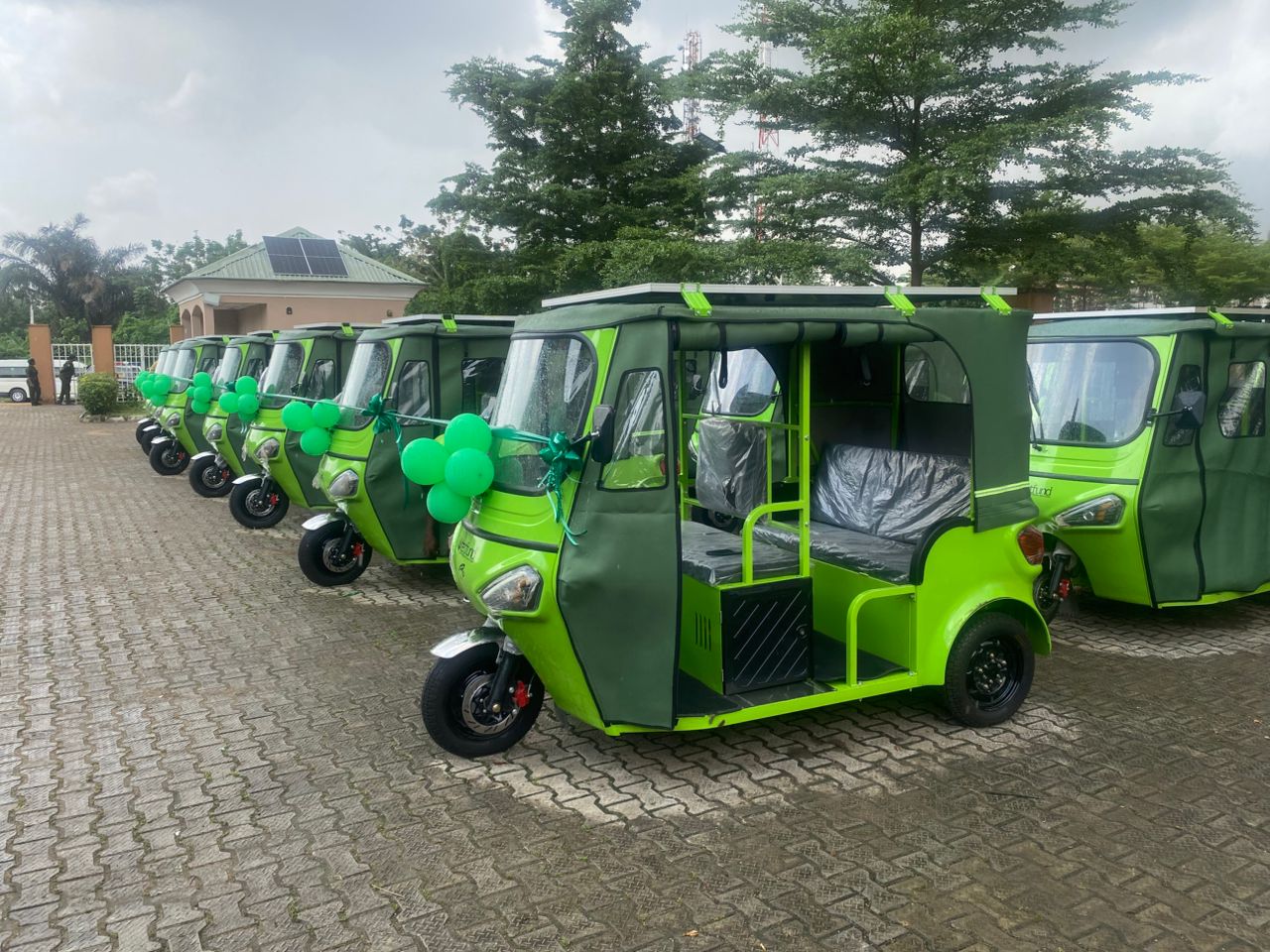
The Federal Government on Monday launched the Renewed Hope Campus Transport Scheme, deploying 240 solar-powered electric tricycles to 12 federal universities as part of efforts to ease the rising cost of transportation for students across the country.
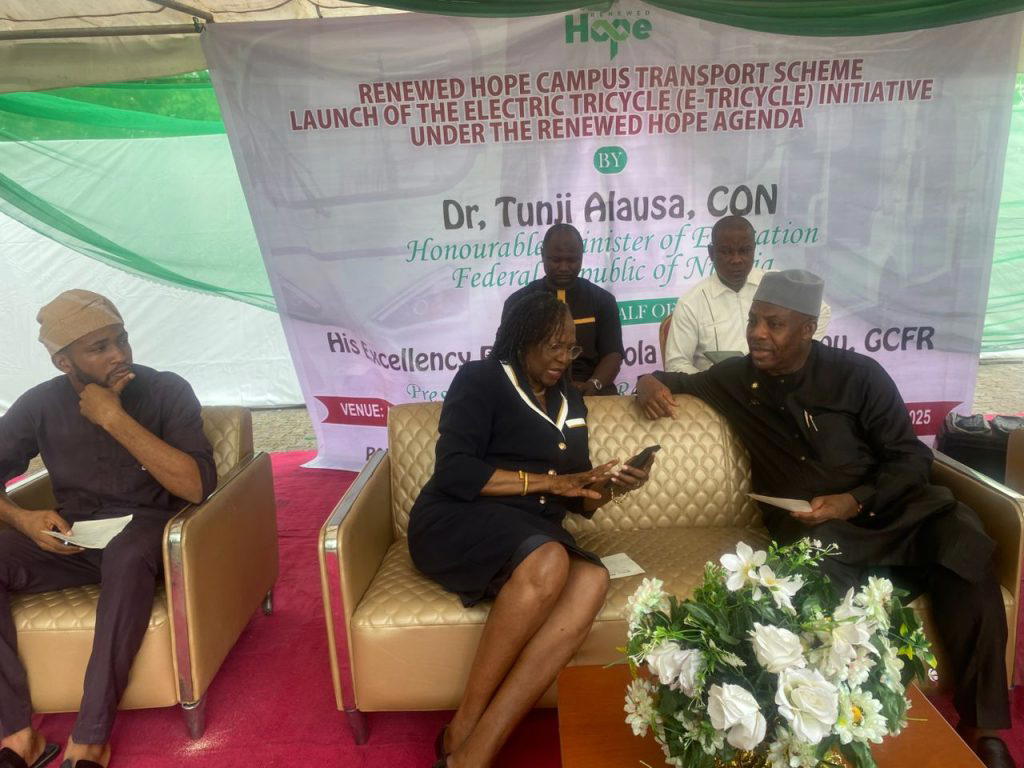
The Minister of Education, Dr. Tunji Alausa, unveiled the initiative at the University of Lagos (UNILAG), describing it as a key national intervention under President Bola Ahmed Tinubu’s Renewed Hope Agenda. He said the programme was designed in direct response to the economic impact of fuel subsidy removal and exchange rate reforms, which have pushed transportation costs beyond the reach of many students.
Alausa said the President instructed the Ministry of Education and TETFund to develop an innovative, sustainable and student-centred mobility solution for campuses nationwide.
“Mr President directed that we design solutions that are innovative, sustainable and directly responsive to the needs of our young people. Today’s programme is the result of that directive,” he said.
The minister noted that each of the 12 beneficiary universities would receive 20 electric tricycles and a fully equipped solar-powered charging station with panels, battery storage and an inverter system. He added that the tricycles would be donated directly to the student unions, who are expected to operate them at significantly reduced transport rates while generating income for maintenance and expansion.
“These tricycles are for the students. They are not meant to be free, but should be provided at a very low cost. This model ensures sustainability and empowers students with responsibility and leadership,” Alausa said.
He urged student leaders to collaborate with their vice-chancellors to ensure equitable distribution and efficient service delivery, noting that UNILAG students may charge as low as N80 per trip to encourage competition with existing campus transport services.
The first tranche of the scheme covers two universities per geopolitical zone, North-West: Ahmadu Bello University, Zaria; Bayero University, Kano. North-East: Abubakar Tafawa Balewa University, Bauchi; University of Maiduguri. North-Central: University of Jos; University of Ilorin. South-East: University of Nigeria, Nsukka; Nnamdi Azikiwe University, Awka. South-South: University of Benin; University of Port Harcourt. South-West: University of Lagos; Obafemi Awolowo University, Ile-Ife
Alausa disclosed that more electric tricycles have been budgeted for the 2026 TETFund spending cycle to ensure every tertiary institution benefits.
The minister said the transport scheme aligns with the administration’s push for renewable energy adoption. He revealed that the Federal Government has already deployed CNG (Compressed Natural Gas) charging stations in some universities, with plans to retrofit about 2,000 vehicles belonging to academic and non-academic staff at no cost.
“If you run your car on CNG, you will save up to 80 per cent of fuel costs compared to PMS. These conversions will be done for free—Mr President has already paid for that,” Alausa stated.
The minister added that procurement had been completed for an 11-megawatt mini solar grid to power the University of Lagos off-grid. Construction is expected to begin early next year.
In her remarks, the Vice-Chancellor of UNILAG, Professor Folasade Tolulope Ogunsola, described the deployment as a major boost to the university’s green-environment agenda.
“Today is another milestone in our bid to maintain a clean, healthy campus environment. This transport scheme aligns with the university’s drive for clean air,” she said.
Ogunsola recalled that the university had successfully launched electric buses on January 13, 2025, and commissioned 10 additional upgraded units in May. She noted that the buses, which can run for 24 hours at 120 km/h, are projected to help UNILAG cut over 120 metric tonnes of CO₂ emissions by year-end.
She also thanked the Federal Government for approving the deployment of the Presidential Compressed Natural Gas Initiative to UNILAG, which includes the construction of a CNG station on campus.
Alausa described the transport scheme as a practical demonstration of President Tinubu’s commitment to ensuring no student is denied comfort, mobility or learning opportunities due to economic hardship.
“This is Renewed Hope in action, practical, measurable and impactful. The President has your back,” he said, announcing the official flag-off of the scheme.
With the launch, all beneficiary universities can now commence full operation of the electric tricycles on their campuses.
Disclaimer
Comments expressed here do not reflect the opinions of Vanguard newspapers or any employee thereof.