By Ikechukwu Nnochiri
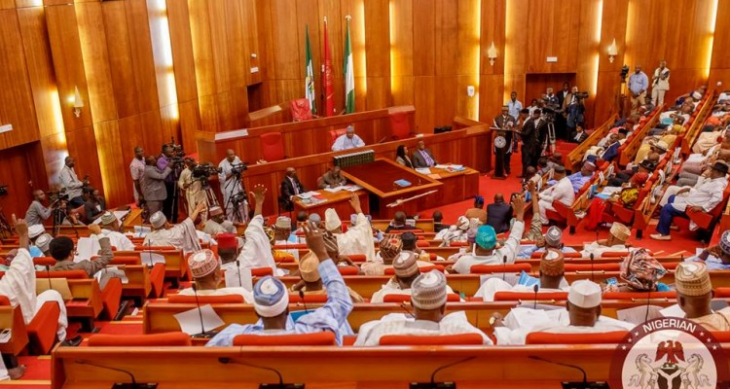
ABUJA– The European Union, EU, and the government of the United Kingdom, on Thursday, threw their weight behind ongoing campaign for the National Assembly to speedily pass the Special Seats Bill.
In their separate presentations at a stakeholders roundtable the Policy and Legal Advocacy Centre, PLAC, organised in collaboration with the House of Representatives Committee on Women Affairs, both the EU and UK maintained that passage of the bill would not empower women politically, but also enhance Nigeria’s reputation among the comity of nations.
The Deputy Ambassador of EU in Nigeria and the ECOWAS, Mr. Zissimos Vergos, said there was need for a legislation to back women rights movement in the country, describing the ongoing constitution amendment process as an opportunity for the 10th National Assembly to leave a lasting legacy for the nation.
“As we continue our activities around the 16 Days of Activism against gender based violence, it is important that we continue to reflect on ways to advance improved representation of women at all levels.
“The ongoing constitutional reform process presents an opportunity to adopt an inclusive legal framework that promotes equal participation of all Nigerians regardless of gender, ethnicity, age and disability status.
“Be reassured that on the part of the European Union, we are keenly following this process and that we will continue to collaborate and support all those who are lending their voices to it at this critical time.
“The active participation of women at all levels of decision making and politics is essential to the achievement of equality, sustainable development, peace and democracy.
“Despite these, women are facing obstacles in their political participation. We keep repeating the obvious, I know, but I think it is also essential that we keep demonstrating the impasse of not moving forward with this kind of legislation.
“In Nigeria, the advocacy for women’s political participation has been long drawn and in spite of the very dynamic interventions by women’s group and other key stakeholders, their representation remains in steady decline.
“For example, women representation in the 10th National assembly is 7.4% out of 469 combined seats in the Senate and the House of Representatives.
“And I recall that also the figures do not look much better at the level of the State Assemblies. There has been no single woman elected to Governor.
“They have been nominated by some elected governor. In Nigeria’s 25 years of democracy, the percentage of women appointed to political position still fall significantly short compared to men.
“I am not quoting these figures to make it seem impossible, but to show that is indeed possible.
“On the positive side, in the past decade, there has been an increasingly growing attention on political parties regarding their roles to transform and offer equal gender-based power relationships in their intra party democracy systems and processes.
“What can be done to change this situation?There is need for an affirmative action legislation such as the bill we are talking about. The special seats bill, coupled with the need for all political parties to adopt robust measures and strategies that help to foster transformative changes, starting from within the political parties themselves.
“The clear objective is to increase women’s participation and representation. It is recognized that political parties are the real gatekeepers of women’s political empowerment.
“If the political parties institutionalize gender equality measures and transform from within, it will have a direct impact on women’s equal participation and representation in Nigeria.
“There is no single strategy to address gender inequalities in general and the unequal participation of women in politics and decision making in particular.
“Sustainable strategies and actions that go beyond formal equal rights to transform the deeply entrenched gender inequalities in society are required and political parties as we said before have a fundamental responsibility,” he added.
Likewise, the British Deputy High Commissioner in Nigeria, Mrs. Gill Lever OBE, while stressing the importance of having more women in politics, noted that other African countries like Zimbabwe had since passed the special seats law.
She emphasized that currently, women are occupying various high and sensitive positions in the UK, saying “right now in our lower chamber, our House of Commons, we have about 50% women.”
“In the United Kingdom, we have our top positions in government apart from Prime Minister. We have had three women Prime Ministers.
“We have had four women Foreign Secretaries. Half of our cabinet now are women who are very senior people in the UK government.
“Both our Chancellor of the Excheque or our Finance Minister, and our Home Secretary, are women.
“So we are doing well on appointed and elective positions in the United Kingdom, but it had taken a while to get there.
“But we know in the National Assembly of Nigeria, less than 5% of those 469 seats are women. It is not a good look. It is not good for political life in Nigeria.
“It is not good for the economy. It is not good for Nigeria’s international reputation. Nigeria is almost at the bottom of the gender equality index alongside countries like Afghanistan. I don’t know why that should be the case.
“That is not how I see Nigeria. That is not how it is with all the talented women that there are in this country heading up international organizations.
“In fact, Nigeria’s loss is the international community’s gain because we have wonderful people like Amina J. Mohammed and Ngozi Okonjo Iweala heading up other international bodies because there haven’t been the opportunities for them to be President of Nigeria, which perhaps they should be one day.
“But the arguments are well made. Economic growth increases when you have women in political lives; you also have less conflict,” she added.
In his remarks, the Executive Director of PLAC, Mr. Clement Nwankwo, noting that the NASS is almost ready to vote on the special seats bill, called for more pressure and collaborations to ensure its passage into law.
“I think that the National Assembly understands fully that this is going to be the defining issue regarding the 10th National Assembly.
“This is a bill that has now built into popular demand of Nigerians, not just women, Nigerians, regarding the responsibility of the NASS to respond to citizens demands.
“So my expectation and my hope is that the National Assembly will do what citizens are asking it to do.
“The NASS represents us and we, the citizens, are demanding of the National Assembly that they pass this Special Seats Bill.
“If it is not passed, it would define the qualification of this National Assembly.
“I think that Nigerians will decide that the 10th National Assembly is a failure if the Special Seats Bill does not pass.
“So my hope, my expectation and the demand that we all have as Nigerians who have a National Assembly is that it will respond to our demand.
“Citizens demand that women be given the representation and presence in governance as they demand.
“It is not too much to ask and I think perhaps it is actually not enough. But it would be great and good gesture that National Assembly passes the Special Seats Bill,” Nwankwo added.
Disclaimer
Comments expressed here do not reflect the opinions of Vanguard newspapers or any employee thereof.