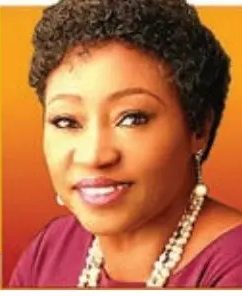
On December 10th, Amandla Institute for Leadership and Policy Advancement, in collaboration with AWLN-Nigeria and Womanifesto, organised a Beijing plus 30 Women’s Summit in Abuja. The event brought together women from government, civil society and the private sector. The Summit featured conversations with women who attended the Beijing conference as well as younger women who are at the forefront of taking the promises of the Beijing Platform for Action forward. It was an event that was truly inspirational, with the realisation that regardless of the challenges women continue to face, giving up is not an option. These were my remarks at the opening session.
I was a young woman of 32 when I attended the UN Beijing Conference in 1995, The Beijing conference was one of a string of UN Conferences in the 1990s aimed at setting a far-reaching global agenda on a range of social justice, sustainable development and human rights issues. There was the Rio Conference on the Environment (1992) Vienna World Human Rights Conference (1993), Cairo International Conference on Population and Development conference (1994) and the UN Women’s Conference, Beijing 1995. In all these, the networks I was involved in at the time were keen to push issues of concern to women globally, and African women in particular wanted their priorities addressed. The Beijing Conference was crucial because it gave women of the world, regardless of their backgrounds or contexts, the opportunity to table their vision of transformation for generations to come. The Beijing Platform for Action was the first global policy framework to confirm gender mainstreaming as a key strategy for realizing gender equality and it called on governments and other stakeholders to apply this to policies and programs at all levels.
Most of us at AMwA were young women below the ages of 35. We were concerned about the future of the women’s movement on the continent, and our struggles for peace, democracy, political participation and economic empowerment. We knew that as young women we needed to have a say, but we needed to prepare ourselves. We started the African Women’s Leadership Institute in 1996, a pan-African training, networking and information forum for young African women aged 25-40. This was a deliberate way of shaping the future, using different platforms and spaces. Our thinking back then was that we needed a cadre of women across the continent who were grounded in feminist theory and practice, gender mainstreaming and analysis, with strong leadership capacities. We figured that the next generation of women leaders would emerge from this process, directly or indirectly. Guess what? We were right. Today, the AWLI has produced over 10,000 women leaders across Africa and many of them are in key decision-making positions, including here in Nigeria.
With the success of the AWLI came the need to consolidate the gains we had made with the growing number of women passing through the leadership program. It was time to help shape the future on another platform. I teamed up with two other African women, the late Joana Foster of Ghana and Dr Hilda Tadria of Uganda and we started the African Women’s Development Fund in 2000, the first Africa-wide grantmaking foundation for women.AWDF has funded over 4,000 women’s organisations in 42 African countries over the past 25 years with millions of dollars and is now one of the leading Women’s Funds in the world.
I stepped down as Executive Director of AWDF when my husband, Dr Kayode Fayemi, became Governor of Ekiti State in October 2010, though I am still on the Executive Board. During my husband’s terms in office, Ekiti became known as the State that has the most comprehensive legal and policy frameworks in the country that promotes gender equality and women’s empowerment, with the required political will for implementation.
NIGERIAN WOMEN SINCE BEIJING: THE GOOD NEWS
•A major gain from the 4th World Conference on Women which took place in Nairobi, Kenya in 1985, and which was affirmed at the Beijing Conference, was the imperative of establishing national machineries for gender mainstreaming. With the establishment of these structures at national and State level, there is now more awareness of women’s rights and empowerment across all our communities.
•There are legaland policy frameworks in place to ensure that women’s human rights are guaranteed and protected. There is the African Women’s Protocol to the African Charter (known as the Maputo Protocol) UN Resolution 1325 on Women in Peace and Security (2000) the Sustainable Development Goals (2010), the National Gender Policy (2005, revised in 2021) the Child Rights Law (2003) and the VAPP Law (2015). There is also a plethora of relevant State legislations which aim to secure rights for women and children.
•Nigerian women and girls have more access to educational opportunities than ever before, especially in Southern Nigeria
•There is a significant number of women in leadership in the private sector, civil service, academia, judiciary and the creative industries.
•We have female role models in all fields of endeavour, who are inspiring the next generation of women to be the best they can.
•Nigeria has many dedicated women’s organisations and networks who work tirelessly with minimal resources to support women and other marginalised communities.
THE BAD NEWS
At this time, in 2025, Nigeria is not in a good place when it comes to ensuring dignity, rights and equity for women. Nigeria currently features poorly on most global indicators measuring Gender Equality and Women’s Empowerment (GEWE). For example:
•The most recent World Economic Forum’s Global Gender Gap Index (2025), ranks Nigeria 124th/148
•Nigeria has one of the highest maternal and infant mortality rates in the world at 12% of global figures, right after India that has 17%.
•Nigeria has the highest number of child brides at 22 million, highest in West Africa and 11th highest globally.
•Nigeria has a 20% prevalence rate of Female Genital Mutilation
•According to UNICEF, there are approximately 18.3m children out of school in Nigeria and 60% of those are girls. Insecurity, banditry and kidnapping have caused serious security challenges, with severe implications for women and girls. Many of our schools in Northern Nigeria have suffered attacks which involve the kidnapping of young girls and their teachers. If a generation of girls is denied an education, we are setting ourselves up to fail.
•Nigeria has one of the lowest figures of women’s political representation on the African continent, with 3.5% of women in the National Assembly, and an equally abysmal figure in the State Houses of Assembly.
All these issues and more, continue to hinder the progress of Nigerian women due to entrenched patriarchal power and social norms, insecurity, conflict and displacement, multi-dimensional poverty, lack of political will, low political representation of women, endemic sexual and gender-based violence and discriminatory practices which undermine the potential of women and girls.Not only didNigeria not meet any of the original Millennium Development Goals (MDGs), we might not meet most of the Sustainable Development Goals (SDGs) in 2030 either. If by a miracle we manage to meet a few of the targets, we will not meet SDG 5 which aims to achieve gender equality by ending all forms of discrimination.
Over the past thirty years, our governments at Federal and State levels have attempted to address many of these challenges. However, due to inadequate political will, lack of continuity in governance, ineffective coordinating mechanisms, and insufficient financial, human, material and technical resources, the gap between laws and policies and meaningful impact remains significant. It is only through effective partnerships between governments, the private sector and civil society, that we can make the much-required progress.
The Amandla Institute for Policy and Leadership Advancementis a pan-African platform that was founded by my husband and I in February this year. Amandla Institute facilitates high level policy and action dialogues, knowledge building, and mentoring across sectors and generations. The challenges Africa faces today requires leaders who are prepared to think, build and operate differently. With regards to the role of women, it is clear at this point that our development will continue to be stunted if we do not prioritise the full and equal participation of women at all levels.
In October this year, with support from Open Society Foundation, Amandla Institute co-convened a regional summit to review Beijing Plus 30 as part of the 40th anniversary celebrations of AMwA in Kampala, Uganda.
Disclaimer
Comments expressed here do not reflect the opinions of Vanguard newspapers or any employee thereof.