By Favour Ulebor, Abuja
At least 200 women and girls are set to receive certified training in Compressed Natural Gas (CNG) installation and maintenance as part of a new initiative aimed at empowering women and promoting cleaner, cheaper fuel in Nigeria.
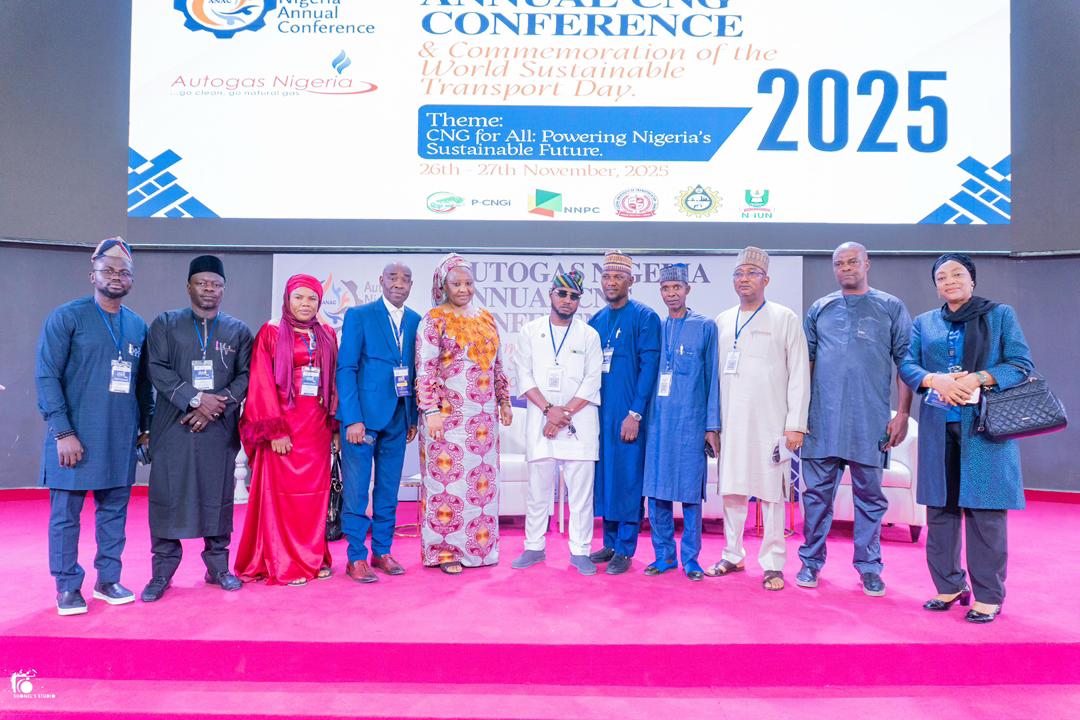
The announcement was made by the MD/CEO of Automotive Gas Nigeria Services Limited, Maryam Salihu Ibrahim, during the 2025 Annual CNG Conference held on Wednesday and Thursday at the National Open University of Nigeria, Jabi, Abuja.
According to her, initiative aims to empower women while expanding adoption of cleaner, cheaper fuel across the country.
Speaking on the theme “CNG for All: Powering Nigeria’s Sustainable Future,” Ibrahim emphasized that Nigeria stands at a defining moment in its energy transition.
She highlighted that the Presidential Compressed Natural Gas Initiative provides a strategic framework to reduce fuel costs, improve energy security, and drive inclusive growth, while the National CNG Perception Survey 2025 shows strong public support for the program.
The survey revealed that 98 percent of respondents are aware of CNG, 95 percent believe it aligns with national priorities, yet only one-third have converted their vehicles due to high costs, limited refueling stations, and financing gaps.
Ibrahim noted that closing these infrastructure and financing gaps is critical to accelerating adoption and ensuring Nigeria’s gas reserves are fully utilized.
Ibrahim outlined a strategic roadmap for progress, including expanding CNG infrastructure, introducing targeted financing, investing in local manufacturing and vocational training, reinforcing safety and quality standards, and aligning CNG policies with Nigeria’s Net Zero 2060 goals.
She also called on government agencies, private investors, researchers, and transport unions to collaborate in building a sustainable CNG ecosystem.
In his remarks, the Chief Operating Officer of Automotive Gas Nigeria Services Limited, Mr. Kennedy Osagie, said the program aims to empower women and expand the adoption of cleaner, more affordable fuel across Nigeria.
He unveiled the SheGas Initiative, which will provide certified training in CNG installation and maintenance for at least 200 women annually, alongside mentorship, job placement, and enterprise support.
He highlighted that over the past four years, the company has trained and certified more than 1,000 Nigerian technicians, converted over 2,000 vehicles to CNG, and united over 100 workshops under its Affiliate Programme, creating a nationwide network to boost adoption. Osagie described these milestones as foundational steps in building a strong green energy ecosystem in the country.
He outlined three key initiatives to drive the sector further: retrofitting service centres with advanced CNG dispensing systems and deploying Mobile Refuelling Units to reach remote communities; establishing local manufacturing capacity for CNG storage tanks to create jobs and strengthen local industry; and the SheGas Initiative, which empowers women to become engineers, technicians, entrepreneurs, and leaders in the green energy sector.
On the adoption of CNG vehicles, Osagie noted:
“The 2,000 vehicles are just within the Autogas Nigeria network. In Nigeria today, we have done over 100,000 vehicles. The numbers may not sound great, but every journey begins with a step. CNG provides better economic opportunities and cleaner fuel for vehicles.”
Osagie called on government partners to continue providing an enabling policy environment, financial institutions to introduce affordable financing models, and private sector players to integrate CNG into their fleets.
He stressed that active collaboration from all stakeholders is crucial to accelerate adoption and build a sustainable energy future.
In his goodwill message, the Director General of the Energy Commission of Nigeria, Dr Mustapha Abdullahi, pledged support for the CNG initiative and recalled that the policy was introduced after subsidy removal to shift Nigeria to cleaner transportation alternatives.
He said Nigeria’s gas reserves, estimated at about 210 trillion cubic feet, position the country to lead Africa’s energy transition. He added that the commission will continue to localise CNG technologies through research and collaboration.
He urged investors to take advantage of the growing demand for CNG and noted that national policy documents already reflect CNG as part of Nigeria’s long term energy plan.
Juliet, one of the workshop coordinator, with Autogas Nigeria expressed satisfaction with the initiative to involve more women.
She noted that many women are still hesitant and hoped that the program propels them to join the sector.
The conference concluded with a call for collaboration among government, investors, and development partners to ensure wider CNG adoption and a sustainable green energy future for Nigeria.
Disclaimer
Comments expressed here do not reflect the opinions of Vanguard newspapers or any employee thereof.