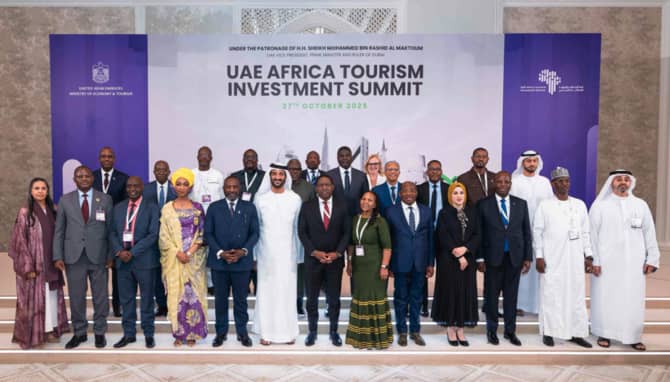
The footprint of the United Arab Emirates in Africa is expanding, not only through trade or investment but through a growing humanitarian and developmental presence that reflects a new philosophy of international giving. While the priorities of traditional donors shift, the UAE offers a model based on what can be described as pragmatic humanitarianism, where aid blends with development, and charitable work is built on partnership rather than patronage.
Unlike many forms of international aid tied to political or economic considerations, the UAE adopts a more flexible and pragmatic approach. Its humanitarian institutions, such as the Emirates Red Crescent, the Khalifa bin Zayed Al Nahyan Foundation for Humanitarian Work, and the Mohammed bin Rashid Al Maktoum Foundation for Charitable Work, operate in the field with high efficiency and rapid response to natural disasters and health crises across Africa. Development data indicate that in recent years, the UAE has ranked among the top donor countries relative to its national income, surpassing the United Nations target for official development assistance (0.7%). Yet beyond the numbers, the transformation lies in the nature of the aid itself — shifting from temporary relief to capacity-building and sustainable development.
In the health sector, the UAE has supported the establishment of hospitals and field clinics in several African countries and contributed to extensive vaccination campaigns against malaria, cholera, and polio, while funding programs to train local medical personnel to transfer expertise and ensure the continuity of services after direct support ends. In education, it has sponsored school construction projects and provided scholarships for African students in its universities, alongside supporting literacy and digital education initiatives. These efforts reflect a growing belief that knowledge is the truest form of assistance, and that education remains the most vital entry point for independent development.
In energy and infrastructure, the Abu Dhabi Fund for Development has played a pivotal role in financing solar and wind energy projects in countries such as Mauritania and Tanzania, providing electricity to communities previously isolated from national grids. The UAE has also funded roads, bridges, water, and sanitation networks, enabling communities to improve living standards and stimulate economic activity.
In addressing hunger and climate change, the UAE has focused particularly on sustainable agriculture programs. By financing the digging of wells and providing seeds and equipment to farmers in Niger, Ethiopia, and Uganda, these projects have strengthened food self-sufficiency and reduced dependence on external aid, with the aim not merely to provide relief but to build resilience.
What distinguishes the UAE approach is that it does not operate in isolation from the international system. It closely coordinates with UN agencies, such as the World Food Programme, the World Health Organization, and the UN Refugee Agency, ensuring that aid is complementary rather than duplicative and reaches the areas of greatest need. These partnerships have reinforced international confidence in the efficiency of UAE operations and cemented its image as a responsible donor that addresses crises pragmatically rather than rhetorically.
In Chad, UAE humanitarian convoys have alleviated the suffering of Sudanese refugees fleeing the war by providing food, shelter, and medical care. In Niger, the Democratic Republic of the Congo, and Senegal, the “One Billion Meals” campaign has combated malnutrition and saved thousands of children from hunger. Across other parts of the continent, hospitals, schools, and energy facilities funded by the UAE stand as evidence of developmental impact that goes beyond immediate relief.
These models do not diminish the efforts of African countries themselves but complement their development visions, as outlined in the African Union Agenda 2063, which focuses on human empowerment and self-sufficiency. UAE projects often support existing local initiatives rather than replace them.
Despite the predominance of humanitarian goals, UAE aid cannot be separated from its broader vision for security and stability. In an interconnected world, the UAE views supporting development in Africa not as a courtesy but as an investment in regional and global stability. With its growing economic ties across the continent, Abu Dhabi seeks to build a model that balances shared interests with ethical responsibility, without imposing political conditions or economic dictates.
In an era when trust in traditional international institutions is declining among many African populations, the UAE experience stands out. It does not speak the language of patronage, nor does it offer aid as a tool of influence, but as a bridge for cooperation and shared development. The result is a more mature relationship based on mutual respect and joint responsibility in addressing humanitarian challenges.
The UAE’s role in Africa today represents a model of what aid can be when freed from political calculations: support built on partnership, development rooted in efficiency, and humanity measured by impact rather than slogans. In this sense, the UAE emerges as a quiet yet influential partner in Africa’s journey toward a more stable and prosperous future.
Disclaimer
Comments expressed here do not reflect the opinions of Vanguard newspapers or any employee thereof.