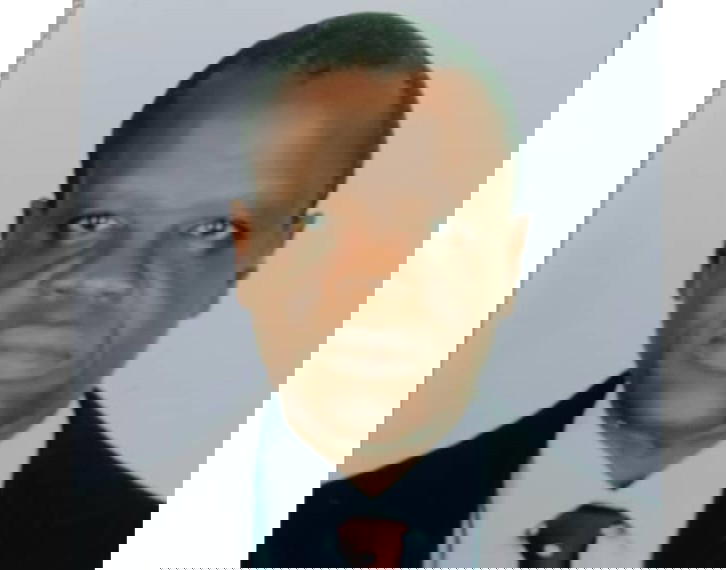
Aziken
One of the most astonishing acts of political absurdity in recent Nigerian politics is the report that the faction of the Peoples Democratic Party, PDP, loyal to Governors Seyi Makinde of Oyo State and Bala Mohammed of Bauchi State produced only one set of nomination forms for the now–disputed national convention scheduled for Ibadan today.
By this needless show of bravado, they effectively prevented Alhaji Sule Lamido, one of the foundational pillars of the PDP, from exercising his democratic right to contest for the office of national chairman. It was more than internal party politics. It was a slap on reason, a complete disregard for institutional memory, and a troubling display of unrestrained treachery by persons who, in truth, are strangers to the PDP’s heritage.
Lamido was not a passive bystander in the formation of the PDP. He was one of the nine original founders, a group made up of some of the most outstanding statesmen in Nigeria’s political history. The nine include:
Dr. Alex Ekwueme, Chief Bola Ige, Senator Francis John Ella, Mallam Adamu Ciroma, Abubakar Rimi, Professor Jerry Gana, and Senator Iyorcha Ayu.
Today, only Lamido, Gana, and Ayu survive from that historic assembly.
At the earliest meeting in Lagos in 1998 at the height of the impunity of General Sanni Abacha, the idea of a broad national movement was conceived. That meeting, was, however, marked with geopolitical tension, particularly the silence of northern leaders in the face of General Sani Abacha’s brazen northernisation agenda. Chief Bola Ige, true to his reputation, confronted the six northern participants, chiding them for passivity. Abubakar Rimi attempted to counter him, but it was Sule Lamido who stood up to admit that the North indeed needed to demonstrate stronger resistance to Abacha’s authoritarianism.
Lamido’s intervention shifted the meeting’s mood and opened the door to a broader coalition. The next expanded meeting of the G18 led to the drafting of the famous protest letter urging Abacha to withdraw from his self-succession plan. A source close to the meeting revealed that the letter was discreetly drafted by the wife of one of the leaders to prevent leaks. When the letter was ready, Chief Solomon Lar, being the oldest and most respected, volunteered to deliver it personally to Abacha—stepping into the lion’s den.
Abacha’s security aides quickly sensed that the letter did not carry Lar’s linguistic imprint. They suspected the hands of Rimi and Lamido. The two men were swiftly arrested—Rimi dispatched to a prison in Ilorin, Lamido to Maiduguri—where they remained until Abacha’s sudden death. On their release, they regrouped with their colleagues to consolidate what evolved into the PDP, which became the dominant political party of the Fourth Republic.
These historical facts are well known to Professor Jerry Gana, who served as the secretary of the G-9, G-18, and G-36, and later as the first pro-tem secretary of the PDP. The records are unambiguous and easily verifiable.
Given this distinguished lineage, it is nothing short of an affront to the party’s heritage that Governor Makinde and Governor Bala Mohammed—neither of whom was born politically in the PDP—now preside over decisions that brazenly exclude Sule Lamido. Makinde came from the Social Democratic Party (SDP), while Mohammed migrated from the All Nigeria Peoples Party (ANPP). What effrontery. What gall.
Yet, even if the Makinde–Bala machination is mischievous, it does not diminish the culpability of the rival faction led by Nyesom Wike, which has openly shown its willingness to compromise the PDP’s electoral value, particularly in the countdown to the 2027 presidential election.
Caught between these two warring blocs, Sule Lamido has remained one of the few stabilising voices—an arbiter whose presence could have helped hold the party together. In many ways, he is one of the last men standing who can still invoke the PDP’s founding spirit.
With conflicting court rulings—including the latest order of the Federal High Court, Abuja, restraining the party from proceeding with the convention—the PDP has now become a poisoned chalice for anyone hoping to ride its platform into re-election.
The consequences are already visible. Several first-term southern governors have quietly defected, aware that the ongoing crisis could jeopardise their second-term prospects. In the North, two of the party’s only three governors—Agbu Kefas of Taraba and Caleb Mutfwang of Plateau—are deeply conflicted.
Kefas, according to political insiders, is already preparing to defect. Mutfwang, historically anchored in the PDP’s Plateau legacy and aligned with his political mentor Jonah Jang, has repeatedly reaffirmed his commitment to the party. The PDP is more than a platform on the Plateau; it is a political culture. The only time the opposition took the state was due to an error of judgment in 2015—an error quickly corrected in 2023 despite the APC controlling the centre.
Now, Mutfwang faces the dilemma of finding a viable platform for a second term. Yesterday, he issued a firm denial of rumours linking him to the Young Progressives Party (YPP). Those pushing the YPP rumour are believed to be elements determined to keep him away from the APC.
Both Kefas and Mutfwang, however, face the same constraint: joining a smaller party would require them to personally finance and structure the platform from scratch—raising the risk of channelling state resources toward a private political venture, a path fraught with legal and ethical landmines.
On the Plateau, a significant bloc of APC stakeholders is quietly encouraging Mutfwang to defect to the APC, seeing it as the most straightforward route to retaining Government House. Others who have benefited from the APC in Abuja are opposed to his entry for purely self-interested reasons.
Mutfwang now carries the burden of explaining any potential association with a party still widely regarded as a locust on the Plateau political landscape.
In all of this, the tragedy remains the same: the PDP, once the bastion of national cohesion and the pride of its founders, is now being torn apart by factions that neither understand nor honour its origins.
Disclaimer
Comments expressed here do not reflect the opinions of Vanguard newspapers or any employee thereof.