… Says despite progress in some states, millions of Nigerians still lack access to safe toilets
By Chioma Obinna
As the world marked 2025 World Toilet Day, Nigeria continues its fight against open defecation, (ODF) and poor sanitation. Despite progress in some states, millions of Nigerians still lack access to safe toilets and other sanitation services.
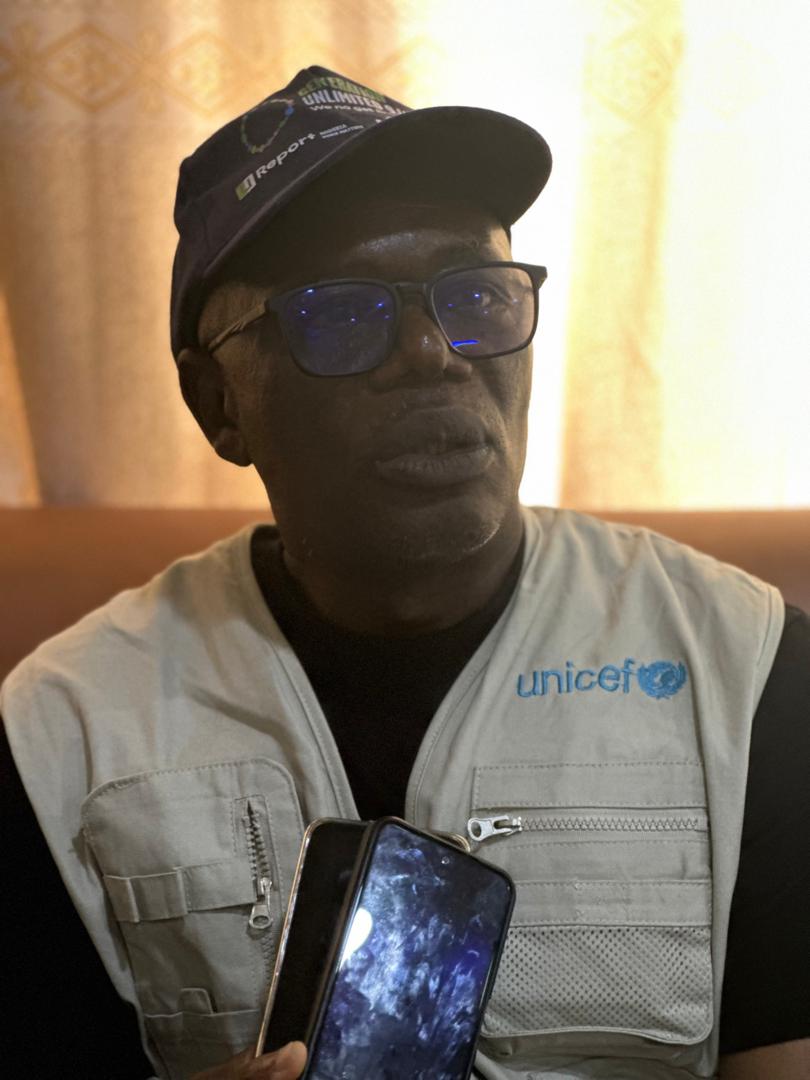
Vanguard recently spoke to Mr. Monday Johnson, a Water Sanitation, and Hygiene, WASH, Specialist at United Nations Children’s Fund, UNICEF, Lagos Field Office, which covers Lagos, Ondo, and Edo States. In this interview, He X-rayed Nigeria’s achievements, ongoing challenges, and the urgent steps needed to ensure sustainable Water, Sanitation, and Hygiene (WASH) services for all, especially children.
Exercpts:
What is UNICEF’s overall objective in Nigeria?
UNICEF’s role in Nigeria or any country is to work with governments, supporting them in ensuring that the best interest of a child is protected. That is why UNICEF’s programme covers a range of areas, from education to child protection, to water and sanitation, to social policy, among others. I think there are about six basic programmes that UNICEF covers. If you look at all these, they are child-centered.
Anything that will support the growth and development of a child up to his or her full potential is supported by UNICEF. This is where women also come in because women are the vehicle through which children come into the world. UNICEF focuses on women, protecting girls so that they can grow to their full potential and be safeguarded while they are growing. A child’s life does not start at birth; it starts from the day the child is conceived.
Nutrition for a pregnant woman is very important for UNICEF. When the child is born, it is equally important to ensure that the child is cared for, nurtured, and provided for.
What achievements has Nigeria recorded in Water, Sanitation, and Hygiene under the Clean Nigeria: Use the Toilet Campaign?
WASH has seen significant achievements in Nigeria, helping the country make progress toward SDG 6, which focuses on environmental sustainability and sanitation.
Two states, including all their local government areas, have become open defecation-free, having worked with UNICEF and other partners to implement strategies that end open defecation. Open defecation leads to widespread transmission of diseases, and children are especially susceptible because their immune systems are not fully developed. For any child, hygiene and sanitation are vital. Mothers must know how to prepare food properly, care for themselves, and breastfeed to ensure that nothing harmful enters the child’s weak immune system.
Across Nigeria, WASH achievements vary depending on how seriously a state government prioritizes the sector. States that have allocated funds to support UNICEF’s work have progressed further. As of September, over 140 LGAs have been declared open defecation-free. Considering Nigeria has 774 local governments, there is still much work to do.
In some states, local governments have made significant progress but have not yet been fully certified. For example, in Oyo State, nine out of 11 council wards have been certified ODF, with the remaining three in urbanized areas, highlighting the unique challenges of urban sanitation.
When UNICEF enters a state, it creates models, identifies gaps, and brings these to the government’s attention. Advocacy is a key role of UNICEF. We provide samples or models of what the state should do, and it is expected that the state will scale them up. UNICEF acts as a catalyst, showing the way and identifying gaps for the government, which is the duty-bearer, to address.
What is the criteria for a local government to be declared open defecation-free?
A state needs a roadmap outlining when open defecation will end, how many communities will be cleaned up, and the budget to support local governments in achieving this. Certification starts with the community claiming that open defecation has stopped.
The local government then verifies these claims, reporting certified communities to the state. The State Task Group on Sanitation checks the claims and certifies the communities. Once all communities in a local government are certified, the National Task Group validates 25 percent of these communities to confirm the local government’s ODF status. Only then is a local government officially declared open defecation-free.
For a state to be certified ODF, all its local governments must be validated by the national team. For example, the last state certified as ODF, Katsina, followed this process.
What strategies have been effective in open defecation-free areas?
A range of strategies has been applied. The Community-Led Total Sanitation (CLTS) approach is nationally approved, especially for rural areas. It involves building structures at the community level.
Every community has a WASH committee responsible for implementation and monitoring. The key intervention is behavioural change. Constructing toilets alone is insufficient; people must understand the benefits to use them consistently. Hygiene and sanitation promotion are essential.
Sanitation financing strategies have also worked. Community members sometimes pool resources, using systems like Ajo or Adachi, contributing funds in turns to build toilets. In some states, sanitation revolving loans help vulnerable individuals access funds from microfinance institutions at low interest to construct toilets.
Capacity building is crucial. States and local governments enact bylaws to ensure sustainability after ODF certification. Communities sometimes enforce additional rules, such as fines or exclusion from activities, to encourage compliance. Innovation comes from the communities themselves.
What are the major challenges affecting WASH implementation in Nigeria?
The biggest challenge is that sanitation and hygiene are often neglected in budgets. Unlike water infrastructure, which produces visible results, sanitation behavioural change takes time. Many local governments lack a dedicated WASH department, leaving responsibilities split between health, works, and other sectors.
This fragmentation prevents continuous behavioural change programs and dedicated budget allocation. Advocacy is ongoing for the establishment of fully functional WASH departments with their own funding, focusing on water, sanitation, and hygiene.
How is population growth impacting the WASH sector?
Nigeria’s population is highly dynamic, with significant urban migration. Urban sanitation requires advanced planning to accommodate increasing populations and birth rates. Without foresight, existing facilities are overwhelmed. Citywide inclusive sanitation plans are necessary to ensure infrastructure can meet future needs.
How has insecurity affected WASH programmes?
Insecurity creates challenges for hygiene promotion, sanitation maintenance, and water operations. In conflict-affected areas, like the North East, many WASH facilities were destroyed, impacting health, education, and nutrition. Climate change further compounds the issue, with flooding damaging toilets and creating unsafe water. WASH infrastructure must adapt to environmental realities.
What about the WASH gap between urban and rural areas?
Urban areas generally receive more attention and planning than rural areas. While urban facilities exist, overcrowding and neglect of urban fringes remain issues. Rural areas often lack sufficient WASH infrastructure, highlighting the disparity.
How can government and development partners better coordinate?
Coordination requires a single, implementable government plan. Development partners should align their programmes with government strategies. When planning and policy are clear, partners can complement government efforts, accelerating WASH improvements.
How close is Nigeria to achieving the goal of ending open defecation by 2025?
With only two states declared ODF, Nigeria is far from the target. While some LGAs have progressed, most states have yet to fully implement the ODF program. No state has achieved ODF without development partner support. The Clean Nigeria campaign provides the national strategy, but federalism means progress varies across states.
What urgent actions are needed to sustain WASH gains?
Sustainability starts with ownership. Governments must prioritize WASH in medium- and long-term plans and budgets. Citizens must adopt positive hygiene behaviours. Communities need to maintain facilities, local governments must support them, and states must complement gaps. Capacity building at all levels is essential.
Finally, what message do you have for government and citizens?
Government must recognize WASH as a strategic component of development and ensure clear plans, roles, and budgets at all levels. Citizens, especially children, must understand WASH as a right and advocate for its provision. Policies provide the framework, and climate-resilient planning is necessary to safeguard WASH services. When everyone knows their roles and takes responsibility, Nigeria can achieve a sustainable WASH system.
Disclaimer
Comments expressed here do not reflect the opinions of Vanguard newspapers or any employee thereof.