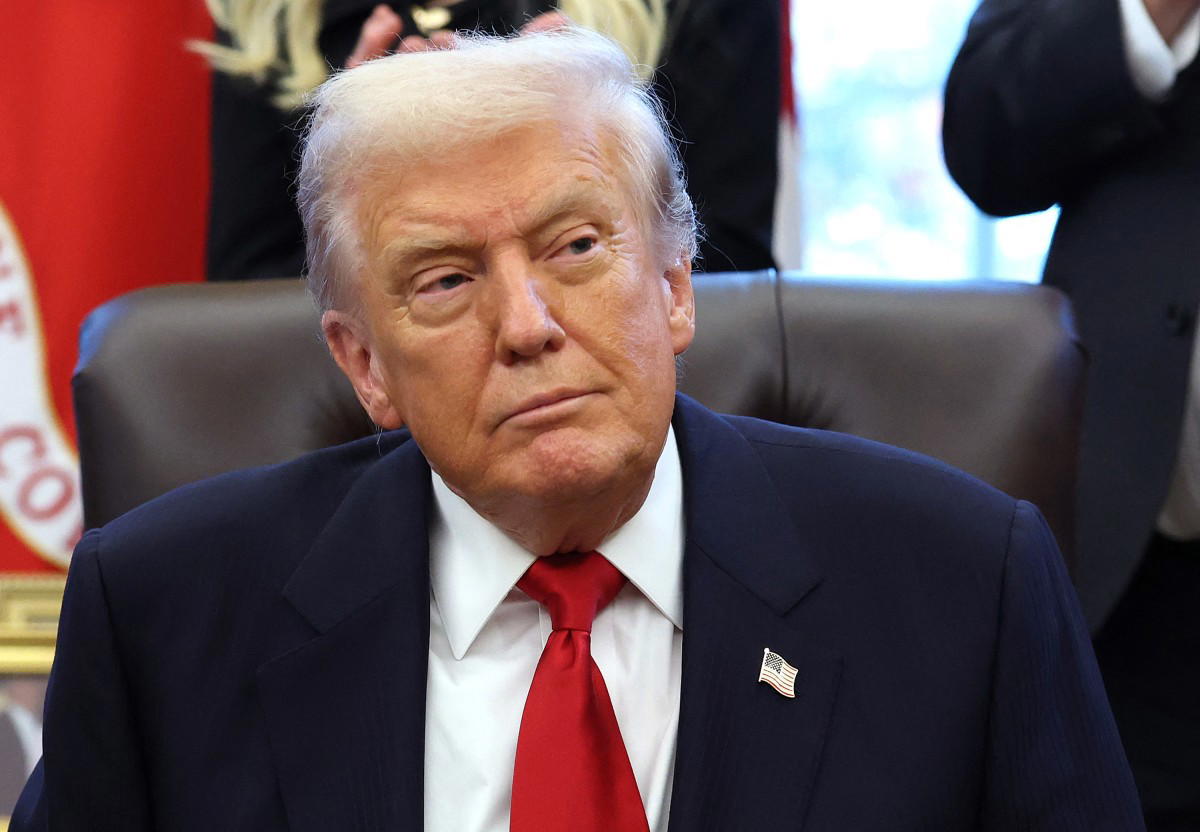
Trump
By Joseph Erunke, Abuja
The Independent Media and Policy Initiative (IMPI) has suggested that the United States’ recent posture toward Nigeria may be influenced by strategic defence and arms-trade considerations, rather than solely by concerns about human rights or religious freedom.
In a policy statement signed by its Chairman, Omoniyi Akinsiju, IMPI observed that the redesignation of Nigeria as a Country of Particular Concern (CPC) by U.S. President Donald Trump comes at a time when the Tinubu administration has significantly expanded its defence procurement from American military manufacturers.
According to IMPI, Nigeria committed about $801 million (over ₦1.15 trillion) to U.S. arms purchases between 2024 and 2025, marking a deepening of bilateral defence cooperation.
The group argued that the timing of Washington’s renewed criticism of Nigeria’s internal security record may be linked to efforts to reinforce U.S. influence in Nigeria’s growing defence procurement landscape, particularly as China continues to strengthen its presence in Africa’s arms market.
IMPI stated:
“Our consideration is that recent rhetoric from Washington may be aimed at encouraging greater engagement with American arms manufacturers.”
Major Defence Contracts Highlight Nigeria’s Strategy
The statement highlighted several key procurements by the Tinubu administration.
In March 2024, Nigeria signed a $455 million contract with Bell Textron, a U.S. aerospace firm, for 12 AH-1Z Viper attack helicopters — advanced platforms intended to bolster counterterrorism, anti-piracy, and other security operations.
A subsequent $346 million agreement was concluded in August 2025 for the purchase of 1,000 MK-82 500-pound bombs, 5,000 Advanced Precision Kill Weapon System (APKWS) rounds, programmable fuzes, and associated logistics support from U.S. suppliers.
IMPI said these investments reflect a deliberate strategy to improve precision targeting, enhance air-to-ground capabilities, and strengthen Nigeria’s fight against Boko Haram, ISWAP, and armed bandit groups.
“This level of investment underscores the administration’s determination to improve national security and boost military operational effectiveness,” the group said.
U.S.–China Competition in Nigeria’s Defence Market
IMPI noted that the U.S. scrutiny of Nigeria’s human rights record must also be viewed within the context of global competition, particularly with China.
Chinese defence sales to Nigeria totalled $152 million in 2024, covering equipment such as VT-4 main battle tanks, ST1 light tanks, and SH-5 self-propelled artillery. This, IMPI said, signals Nigeria’s continued diversification of its defence partnerships.
The group also referenced recent advisories from the U.S. International Trade Commission encouraging American defence companies to explore opportunities in Nigeria, including in surveillance systems, unmanned aerial vehicles, and detection technologies.
“This interest appears to reflect broader economic and strategic considerations rather than direct confrontation,” IMPI noted.
According to the organisation, Nigeria’s evolving defence strategy not only strengthens national security but also highlights the complex geopolitical competition shaping global arms diplomacy.
Disclaimer
Comments expressed here do not reflect the opinions of Vanguard newspapers or any employee thereof.