By Abiodun Salako
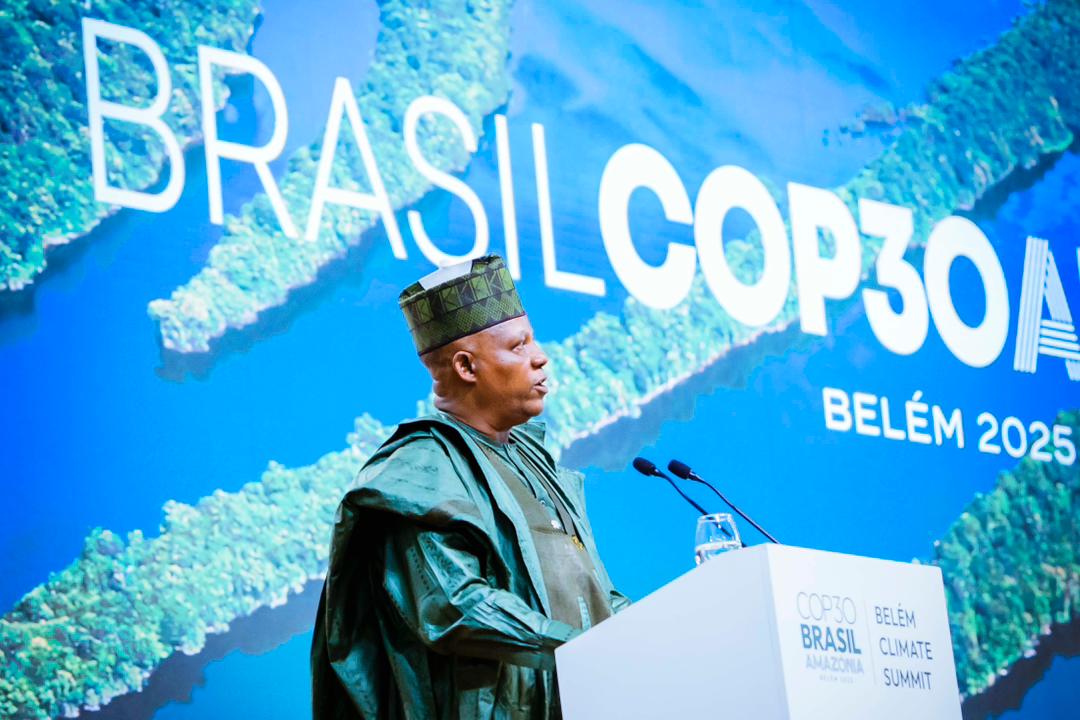
When the UN Climate Conference, COP30, commences in Belém, Brazil, on November 10, 2025, two instruments offer Nigeria a chance to change its prognosis: the Belém Health Action Plan (BHAP) and the influential global platform of the Health Pavilion. Nigeria’s principal duty and metric is to use them to exhaustively demonstrate a pathway to resilience that others can follow, built on data, tangible innovation, and a clear-eyed argument for justice.
First, the groundbreaking Belém Health Action Plan, a draft roadmap designed to strengthen health systems against climate change while emphasising equity and resilience, is a robust blueprint that transforms the abstract concept of “climate-health linkages” into a non-negotiable call to action. Complementing this is the Health Pavilion, co-hosted by the World Health Organisation (WHO) in the Blue Zone. The Pavilion will host events focused on driving climate-health action and integrating health equity into the global agenda. It will offer a rich two-week programme showcasing evidence, initiatives, and solutions to maximise the health benefits of tackling climate change across regions, sectors, and communities. This focus aligns with the overall COP30 Action Agenda, which is structured around six thematic pillars, with health featured prominently under “Human and Social Development.”
For Nigeria, a nation on the frontlines of this confluence, we have a potent foundation to stop being the patient and become the physician, to craft a model of climate-resilient health that can heal not just our nation but serve as a model for Africa. Remarkably, one thing that prepares us for the conversation around health is that for the very first time, Nigeria has integrated health into the NDC 3.0, committing to improve climate resilience in health services, such as achieving sustainable, reliable, clean energy access in 44 government tertiary care hospitals by 2030 and delivering 2,000 climate-resilient primary healthcare facilities by 2030. The next step is to turn our data into action.
Nigeria’s Climate and Health Vulnerability and Adaptation Assessment Report, released in October 2024, reveals that 21% of the national disease burden is expected to be climate-related by 2030. Cardiovascular disease is expected to rise by 10%, to over 4.5 million cases; diabetes to 450,000; and high blood pressure to 1.6 million. This data must now be operationalised. We need integrated surveillance systems that track both disease outbreaks and the very climatic variables that fuel them, moving from mapping malaria expansion with changing rainfall patterns, correlating heatwaves with spikes in maternal stress and preterm births, and forecasting cholera risks in flood-prone urban slums. This real-time intelligence enables us to transition from reactive treatment to proactive prevention, deploying resources precisely where the next climate-driven health shock is likely to occur.
The true test of this intelligence lies in building unshakable frontline defenses. Our primary healthcare centres, the first and often only refuge for millions, must be fortified. It’s a song we’ve been singing for decades now. In response to the current and expected impacts of climate change on health sector infrastructure and health service delivery, the Climate Resilient Infrastructure for Basic Services (CRIBS), a scalable programme came into being. Developed through partnerships among the UK Government, Nigeria’s federal and state authorities, UNICEF, the World Bank, WHO, Crown Agents’ UK Lafiya Programme, JigSaw, Fab Inc., and Sextant Foundation, CRIBS protects essential services from climate shocks. Eighty-four facilities have been inaugurated in Kano and Jigawa, with plans to expand to other states. While this is impressive, the country has an estimated 34,047 PHCs, according to the Nigeria Health Sector: Market Study Report. So far, more ground remains to be covered, and financial partnerships that move the needle on this should be a key metric for the Nigerian Government and the National Council on Climate Change (NCCC). Earlier last week, President Bola Tinubu said that his administration’s focus ahead of COP30 is to harness financing opportunities for climate-resilient projects and related interventions, and this is what we must see in Belém.
But resilience is not built in concrete alone; leadership demands a compelling narrative of justice and equity. Nigeria can champion this by anchoring its climate-health strategy within its visionary Just Transition Guidelines and Action Plan. The conversation must explicitly connect the health of a farmer in the scorching heat of the Sahel to the health of our national economy. We must advocate for resilient health systems as a fundamental social safety net for our agricultural workers, artisanal miners, and informal sector employees — populations whose health and livelihoods are directly impacted by climate change. This reframes the issue from a narrow environmental concern to a core argument for justice and development, a message that will reinforce the central demands of the Global South at COP30.
The Health Pavilion at COP30 is the global stage where Nigeria must not be just another vulnerable nation, but a solution-oriented leader showcasing a proven pathway. Nigeria should present the CRIBS model as a tangible, low-cost African solution, share the data and lessons from our V&A assessment, and establish the country as a continental knowledge hub. And we will forge partnerships, arguing evidently that investing in Nigeria’s climate-health resilience is an investment in a blueprint for the entire region.
All said and done, the Belém Health Action Plan provides the framework, and Nigeria possesses the evidence, the nascent models and the authority to lead. The imperative now is to ensure that our health systems are transformed to withstand the pressures of a warming world. If, as WHO Director-General Dr. Tedros Adhanom Ghebreyesus asserts, “the climate crisis is a health crisis,” then for Nigeria, health is not an afterthought of climate policy. Health is the entire story of our future.
Abiodun Salako, a journalist and African Liberty Writing Fellow, writes from Lagos.
Disclaimer
Comments expressed here do not reflect the opinions of Vanguard newspapers or any employee thereof.