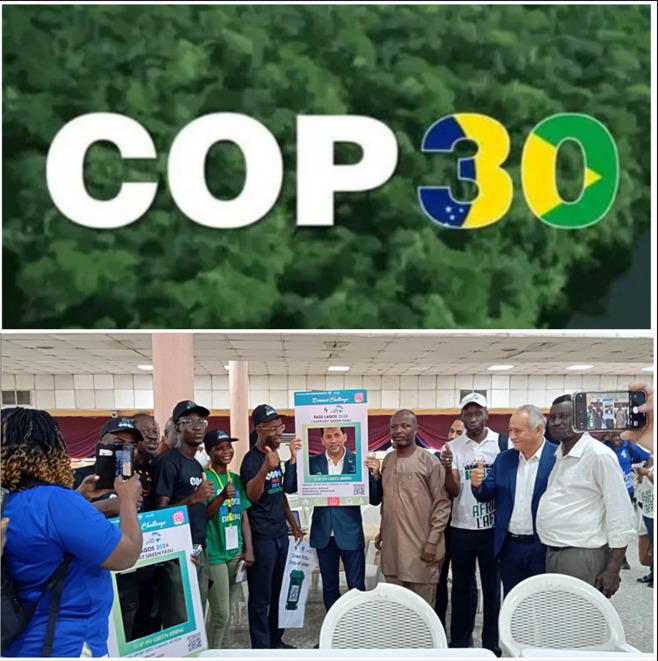
By Dr AbdulGaniyu Adelopo
As the world emerges from Brazil at the just concluded UNFCCC global climate convention – the 30th Conference of Parties otherwise known as COP30; Nigeria faces a historic opportunity to reshape its climate future through inclusive cultural transformation. With more than 60% of its population under 25, Nigeria’s pathway to achieving a just and low-carbon transition depends on how effectively it mobilizes its youth and not only as beneficiaries but as the driving force of change.
Today, the climate conversation can no longer remain confined to technical discussions or policy boardrooms. To reach the heart of communities, climate action must be culturalized. It should be translated into the language people live, play, and learn in. Across Nigeria, few platforms offer as powerful a medium for such transformation as sports, a universal language that transcends social, religious, and ethnic divides.
Sports as a Cultural Engine for Low-Carbon Awareness
Sports are more than games, they are culture in motion. Sports in Nigeria are more than recreation; they are a national identity and a bridge of unity. From the local football field to the university track, sports carry an emotional and social influence unmatched by any other tool of communication.
By integrating climate communication into sports, Nigeria can create a movement that connects emotion with evidence, competition with conservation, and community pride with environmental responsibility. Sporting activities can serve as climate classrooms, where messages about clean energy, circular economy, and ecosystem restoration are shared in a way that resonates deeply with young people.
Such an approach reframes the climate struggle from a technical challenge into a shared cultural mission and a story of resilience, health, and hope told through the rhythm of play and teamwork.
Youth at the Heart of a Just Transition
The concept of a just transition goes beyond energy systems. It is about fairness, inclusion, and opportunity. Nigeria’s youth must be positioned not as observers of climate policy but as active co-creators of the solutions that define their future.
With over 35 million students across the country’s schools and tertiary institutions, Nigeria has a ready force for climate innovation and cultural change. When these young minds engage through sports and creative communication, they can champion low-carbon lifestyles as part of daily living and not as
external demands but as internal values.
This cultural shift builds a foundation for Nigeria’s NDC 3.0 implementation is the one that recognizes that sustainable transition depends on people, not just policies.
The Culturalization of the Low-Carbon Economy
Culturalization means embedding sustainability within national consciousness achieved through storytelling, arts, music, education, and sports. It translates abstract climate concepts into relatable expressions of identity and community pride.
Through sporting festivals, youth tournaments, and school competitions, Nigeria can create inclusive spaces that model green behaviour. These events can promote low-carbon practices such as: Sustainable mobility (walking, cycling, shared transport to events), Eco-friendly venues powered by solar or hybrid energy, Plastic-free sporting environments encouraging reusable materials, Youth-driven media storytelling linking performance, resilience, and climate awareness.
Every cheering crowd becomes an audience for climate education. Every sports season becomes a campaign for eco-conscious citizenship.
From Competition to Communication: Inspiring Behavior Change
Sports are powerful because they inspire action. The same principles that drive athletes discipline, teamwork, and perseverance. It mirrors what is needed for climate resilience. When sporting platforms integrate environmental awareness, they do not only entertain; they educate, mobilize, and sustain change.
Programs like the “Sporty Planet Initiative”, a youth-led model inspired by projects such as Sporty Plastics, seek to engage thousands of young people through sports-based environmental campaigns. These programs demonstrate how sports can serve as a cultural entry point for climate communication is turning fields, courts, and playgrounds into sites of transformation.
Through such initiatives, climate literacy moves beyond classrooms into communities. The excitement of play becomes a vehicle for meaningful conversation about resource efficiency, waste reduction, and energy transition.
Building Partnerships for Impact
The next frontier for Nigeria’s climate journey is collaborative innovation that is linking academia, private sector, civil society, and youth movements to create scalable projects that blend sustainability with social impact.
Institutions like the University of Lagos Green Hub are leading the way. As a youth-centered environmental innovation platform, the Green Hub connects education, research, and community action to design practical circular economy solutions. It has successfully co-created climate initiatives in partnership with local governments, youth organizations, and the private sector—bridging the gap between knowledge and action.
The Hub’s focus on co-creation, communication, and inclusion makes it an ideal platform for expanding sports-linked climate programs across schools, universities, and communities. Such collaborations can pioneer new forms of Climate Literacy through Sports (CLS). where education, entertainment, and environmental responsibility converge.
Potential collaborators and impact-driven organizations are invited to join this movement. It uniting under a shared goal to inspire the next generation of climate-literate citizens. Together, they can design and deliver initiatives that: Create low-carbon sports events that demonstrate sustainable practices, build youth climate communication labs within universities and community centers, train eco-athletes and young ambassadors to use sports for advocacy and develop community green hubs that merge recreation with renewable energy learning.
By fostering such alliances, Nigeria can develop a model of people-powered climate transition. It is a global example of how culture, youth, and innovation can drive meaningful change.
The Path Forward: Play for the Planet, Communicate for Change
Nigeria’s climate transition will succeed only if it becomes part of everyday life. It is spoken in local languages, practiced in communities, and celebrated through culture. Sports offer the perfect stage for this transformation: they are visible, vibrant, and emotionally engaging.
Through inclusive communication, participatory education, and youth-led initiatives, sports can bridge the gap between awareness and action, helping Nigeria achieve its NDC 3.0 goals while strengthening social cohesion and national pride.
This is not just about playing games. It is about playing for the planet. It is about turning every competition into collaboration, every stadium into a classroom, and every athlete into an advocate for the Earth.
As Nigeria steps into the era of Just Transition and Low-Carbon Development, the call to action is clear: Let’s communicate climate through culture. Let’s teach sustainability through sports. Let’s empower our youth to lead the transition. One game, one goal, and one generation at a time.
Potential collaborators, partners, and impact investors are invited to co-create this journey—where every win for sports becomes a win for the climate.
Written by
Dr AbdulGaniyu Adelopo
Coordinator, University of Lagos Green Hub
Works Physical Planning Department.
Deputy Cluster Coordinator,
Tefund Centre Of Excellence in Biodiversity Conservation and Ecosystem Management,
University of Lagos.
Disclaimer
Comments expressed here do not reflect the opinions of Vanguard newspapers or any employee thereof.