By Matthew Johnson
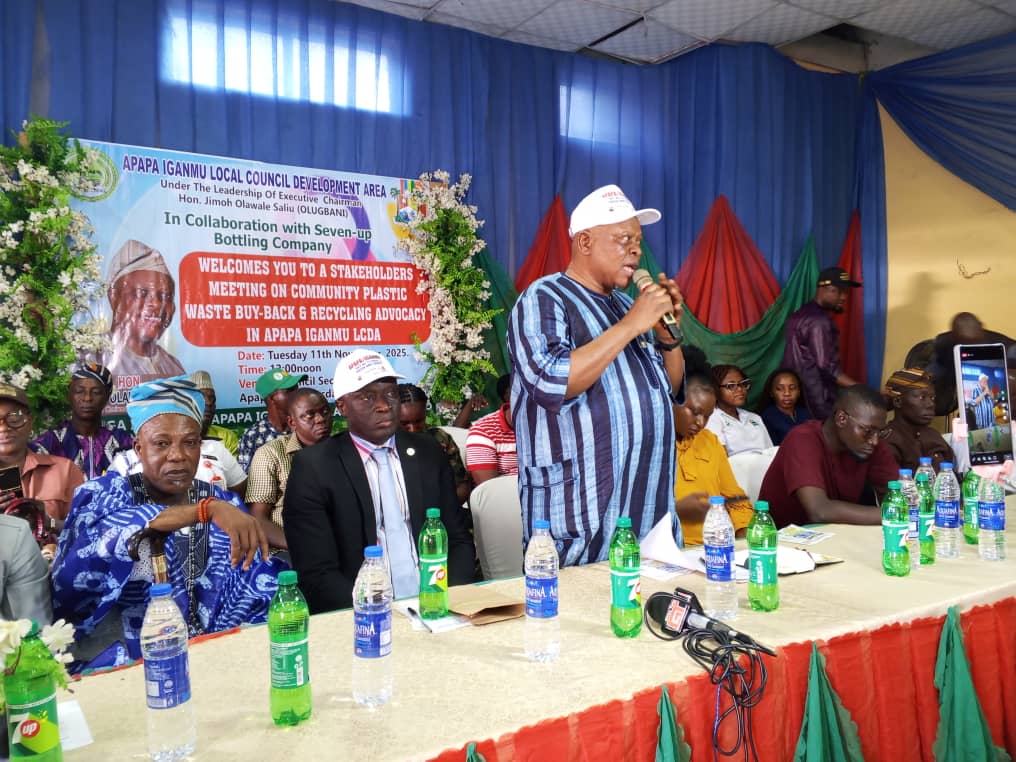
In a bold move to tackle plastic pollution and promote environmental sustainability, the Apapa-Iganmu Local Council Development Area (LCDA) has launched a plastic waste buy-back and recycling advocacy initiative in partnership with Seven-Up Bottling Company. The programme, unveiled on Tuesday, November 11, 2025, at the LCDA Secretariat Multipurpose Hall, seeks to turn plastic waste into economic opportunities while fostering a cleaner, healthier community.
Prior to the launch of the plastic waste buy-back and recycling advocacy initiative, residents alongside LCDA officials held an awareness rally against drug abuse within the community. Speaking during the rally, the organisers urged residents, especially youths, to say no to hard drugs, warning that substance abuse remains a major threat to Nigeria’s future.
According to the organisers, “Over 20,000 Nigerians die from hard drug abuse every year. Thousands of promising Nigerians have lost their sanity due to hard drug use. In the nearest future, these figures may increase if urgent action is not taken. Twenty thousand Nigerians die yearly due to hard drug abuse, 7,000 Nigerian youths are in jail for cybercrime, 43,000 Nigerians are serving jail terms for crimes committed under the influence of hard drugs, while countless young and vibrant youths are in prison for kidnapping. Twenty-one thousand promising Nigerians have lost their sanity due to drug abuse. If this continues, the numbers will keep rising. The best solution is simple — Quit Hard Drugs and Crime.”
Delivering his keynote address at the stakeholders’ community meeting, the Executive Chairman of Apapa-Iganmu LCDA, Hon. Jimoh Olawale Saliu, described the collaboration as a significant step towards building a circular economy and reducing the impact of plastic pollution on the environment.
“Plastic pollution has become one of the most critical issues of our time,” Saliu said. “Through this partnership with Seven-Up Bottling Company, we are not only addressing waste management but creating value by turning waste into wealth. We want our residents to see plastic as an economic resource, not just refuse.”
The chairman urged community members to actively participate in the buy-back programme, noting that the initiative would both improve environmental sanitation and provide income for residents. He added that the council plans to organize awareness campaigns, seminars, and educational workshops to enlighten citizens on the benefits of recycling and sustainable waste management.
“Together, we can make Apapa-Iganmu a model of excellence in recycling advocacy,” he said.
Speaking at the event, Lovely Okoye, Head of Sustainability at Seven-Up Bottling Company, said the engagement underscores the company’s commitment to corporate social responsibility and environmental protection.
“This is what we call stakeholders’ engagement. We want our operations to be a win-win, where both the company and the community benefit,” Okoye explained. “As part of our Sustainability Week, we introduced the P4P (Plastic for Product) initiative, which allows residents to exchange collected plastic waste for Seven-Up products. Our goal is to help people see plastic waste as a valuable resource rather than trash.”
She expressed appreciation to the LCDA chairman for his leadership and support, adding that Seven-Up would sustain and expand its engagement with Apapa-Iganmu residents through more partnerships and empowerment programmes.
Community stakeholders also commended the initiative, describing it as timely and impactful. Mr. Adebayo Sekiru, Secretary of Abete Community Development Association (CDA), said the buy-back scheme would improve sanitation and reduce littering in the area.
“It’s a very good programme. The initiative will make our community clean and also provide small income for those who participate. We thank the chairman for bringing this opportunity to our LCDA,” Sekiru said.
Similarly, Hon. Adigun Abdullahi Arogundade, Leader of the Apapa-Iganmu Legislative House, praised the project, calling it a “waste-to-money” movement that could stimulate local economic growth.
“When people know they can exchange plastic waste for money or useful items, they will be encouraged to manage their waste properly,” Arogundade stated. “This will not only keep our environment clean but also boost the local economy.”
The stakeholders’ meeting drew representatives from Seven-Up Bottling Company, community leaders, environmental advocates, and youth groups, all of whom pledged their commitment to supporting the recycling advocacy campaign.
Disclaimer
Comments expressed here do not reflect the opinions of Vanguard newspapers or any employee thereof.