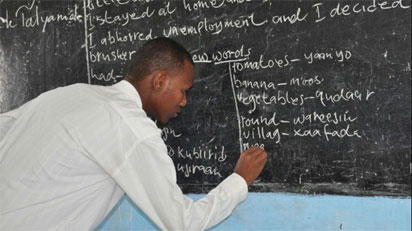
Teacher
As the world marked International Teachers’ Day, ITD-25, on October 5, 2025, the theme “Recasting Teaching as a Collaborative Profession” resonates profoundly. This year’s focus underscores the need to view educators as interconnected pillars of society, fostering shared innovation and support networks to nurture future generations.
In Nigeria, where education grapples with systemic strains, this theme calls for urgent collective action to honour and bolster those who illuminate minds. The adoption of this Day traces back to pivotal post-World War II efforts to elevate teaching’s global stature. In 1966, the International Labour Organisation, ILO, and UNESCO jointly issued the Recommendation Concerning the Status of Teachers, a landmark document outlining educators’ rights, responsibilities, and professional standards amid rising demands for equitable education worldwide. Adopted on October 5, it addressed the era’s challenges: teacher shortage and exploited working conditions.
UNESCO formalised World Teachers’ Day in 1994 to commemorate the anniversary, transforming a policy milestone into an annual global tribute that amplifies teachers’ voices. Teachers embody multifaceted roles that extend far beyond classroom instruction. They are knowledge architects, decoding complex concepts into accessible wisdom; moral compasses, instilling ethics and resilience. Teachers are social engineers, bridging cultural divides to cultivate inclusive citizens. In an era of rapid technological flux, educators increasingly serve as innovation catalysts, integrating AI and digital tools while addressing emotional voids left by fragmented families. Yet, their efficacy hinges on collaboration—peer mentoring, community partnerships, and administrative synergy—mirroring the 2025 theme’s ethos.
To extract the best from teachers, ideal conditions must prevail: competitive remuneration to attract talent, robust infrastructure like well-equipped labs and safe classrooms, and continuous professional development to keep pace with evolving methods. Respect from society and policymakers, coupled with autonomy in curriculum design, fosters motivation. Collaborative ecosystems—regular workshops, mentorship programmes, and interdisciplinary teams—enable knowledge exchange, reducing isolation and amplifying impact.
In Nigeria, however, teachers confront a gauntlet of crises across primary, secondary and tertiary levels. Chronic underfunding starves the sector, with annual budgets allocating mere fractions of needed resources, leading to dilapidated facilities and overcrowded classes exceeding 100 pupils per teacher. Salary/pension arrears and irregular payments exacerbate poverty, driving qualified educators to emigrate or abandon the profession, worsening shortages—over 30 per cent in Northern states amid insecurity like school abductions. Inadequate training leaves many teachers ill-equipped for modern demands.
Governments at all levels must act decisively. They should prioritise 26 per cent of budgets to education per UNESCO benchmarks, ensuring prompt salary disbursals and hazard allowances for welfare. For training upgrades, we must establish mandatory annual certifications via partnerships with universities and tech firms, subsidising online modules to reach remote areas.
Infrastructure investments, including secure school perimeters, and anti-corruption audits would reclaim diverted funds. Teachers remain the centre-piece of any effective educational system. We must care for them!
Disclaimer
Comments expressed here do not reflect the opinions of Vanguard newspapers or any employee thereof.