From last week concludes the narrative with the report of the Sub-committee on the Executive and Legislature of the Constitution Drafting Committee of 1975.The report defined how the powers of the Nigerian President could be operated.
Their report is as follows: “In the deliberations of the Sub-Committee, what has been uppermost in our minds is how to provide for an effective leadership that expresses our aspirations for national unity without at the same time building up a Leviathan whose power may be difficult to curb.
The Executive of a state is not just the single individual who is the head of state, it includes a host of aides and auxiliaries, executive assistants and administrators whose day-to-day tasks result in the many activities of the government. Admittedly, the report of the Sub-committee on National Objectives and Public Accountability and the debate on it, have set the tone and affected our own deliberations.
“Several papers were presented by members of the sub-committee; we were also able to glean as much as possible from the memoranda submitted to the main Committee in so far as they relate to our terms of reference. By and large, we have been very much influenced by the experience of political leadership in this country- both civilian and military; the need to de-commercialise politics (or to undecorate politics as one member put it); the need to balance the stakes of politics so that each section of this country will come to feel a sense of belonging to a great nation; the need to develop an approach of consensus to politics and finally the need to accentuate our national inclination towards a bargaining approach to decision- making rather than regarding politics as a game of the winner-take-all. Probably, more than any other aspect of our recommendation, two points need to be touched upon because they relate to one another and go to the whole basis of the exercise of executive authority.
“The first is our recommendation for a single Chief Executive who is both the Head of State and Head of Government. The sub-committee compared various models—the Presidential Executive, the Parliamentary Executive and even hybrid types, e.g. the Dual Executive where specified functions are assigned to the President and the Prime Minister separately.
“But the sub-committee considered that given the fact that a Chief Executive must perform and be seen as performing the following functions:
(a) That of being a symbol of national unity, honour and prestige;
(b) Being a national figure- a political leader in his own right; and
(c) That of being an able executive–someone who can give leadership and a sense of direction to the country.
It was imperative that Nigeria adopt the single Executive type. We also considered a suggestion that the Vice-President should be equipped to provide a political counterpoise to the President, but felt that this, like the dual executive, could create a paralysis in the executive structure itself. The relations of the President of the Republic to that of his Vice-President should be one of pilot and co-pilot, rather than the latter being a counterpoise to the former. The psychological position of the single Chief Executive is stronger in that it gives an image of strength, unity, single-mindedness and clear locus of responsibility.
“The second point is that of the Rotational principle embodied in the mode of election of the kind of President recommended. Here again, the question that bordered the sub-committee was how the kind of national figure which we envisaged could emerge. We were very much influenced by the debate on national objectives and public accountability and the need to avoid concentration of power in the hands of a few, or a sectional group; the need to replace ethnic with national politics, etc. In short, it is the intention of the sub-committee that anybody who wants to be a President must strive to become a national figure, and the method of his election is meant to provide him with a means of “nationalising” himself as well as test his standing as a national figure”.
The main objective of the President of Nigeria is to bring about the desired National unity and not to display Supreme powers as contained in the Constitution.
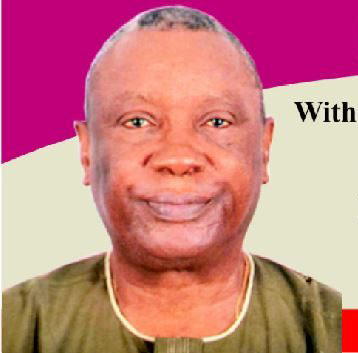
•Teniola, a former director at the Presidency, wrote from Lagos.
Disclaimer
Comments expressed here do not reflect the opinions of Vanguard newspapers or any employee thereof.