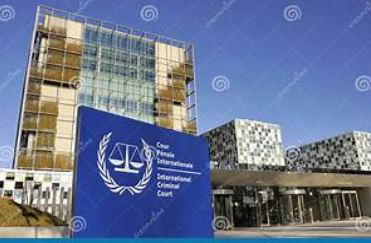
Last week (September 22, 2025), the Alliance of Sahel States, AES, comprising military-governed Burkina Faso, Mali and Niger Republic, announced their withdrawal from the International Criminal Court, ICC.
Their decision, formalised through a joint statement, stems from their perception of the ICC as a tool of “neo-colonialist repression” wielded by imperialist powers, particularly targeting African leaders, while failing to address crimes committed by Western actors.
The AES has also resolved to establish its own Sahelian Criminal and Human Rights Court, CPS-DH, a regional body “rooted in local realities” to handle terrorism, international crimes, organised crimes, and others, complete with its own high security prison. The withdrawal will take effect within a year of notification of the ICC.
This action, they said, aligns with the AES’s broader push for sovereignty and regional autonomy, having similarly exited from the Economic Community of West African States, ECOWAS, in January 2025. The rift stemmed from the instigation by Western powers for the regional body to use military action to remove Niger Republic’s military leader, General Abdulrahmane Tchiani, from power after the overthrow of former President Mohamed Bazoum.
The ICC has faced accusations of bias against developing countries, particularly in Africa, while overlooking crimes by leaders of powerful nations. Down the years, the ICC has targeted six African leaders for prosecution – the late Muamar Ghaddafi (Libya), Laurent Gbagbo (Cote d’Ivoire), Uhuru Kenyatta (Kenya), William Ruto (Kenya) and Omar al-Bashir (Sudan). Outside Africa, former presidents, Rodrigo Duterte (Philippines) and Ali Abdullah Saleh (Yemen), have been similarly targeted.
Russian leader, Vladimir Putin, was also indicted for war crimes in Ukraine in 2023, but which Putin simply ignored. Russia is not even a signatory to the Rome Statute which established the ICC. No Western leader has ever been indicted despite the fact that the USA and North Atlantic Treaty Organisation, NATO, are constantly at war around the world.
After US President, Donald Trump’s scathing censure of many practices of the United Nations which cast it in partisan colours, the AES’s withdrawal from the ICC is another wakeup call for the Court to be repositioned to effectively fulfill its original mandate as enshrined in the Rome Statute of 1998 which went into effect in 2002.
It is charged with the mandate to prosecute individuals for the most serious international crimes committed after 2002, such as genocides, terrorism, war crimes, crimes against humanity and the crime of aggression. The need for deterrence and accountability in handling of conflicts and crises is strong. This is why we think the ICC remains relevant.
However, there cannot be two rules – one for the rich and powerful on the one hand, and another for leaders of developing countries on the other. Africa feels particularly targeted with the disproportionally high number of those indicted.
Every legal or enforcement system must be fair and accountable.
Disclaimer
Comments expressed here do not reflect the opinions of Vanguard newspapers or any employee thereof.