By James Ogunnaike, Abeokuta
The Ogun State government has partnered with the European Union to provide solar power for 40 rural health centres across the state in a bid to improve healthcare delivery and reduce dependence on unreliable electricity supply.
Speaking at the programme, the State Governor Dapo Abiodun the initiative, which integrates renewable energy with healthcare delivery, speaks directly to government’s vision of a modern Ogun State, a state that is not only industrially advanced, but also socially equitable, environmentally responsible, and people oriented.
Represented by the State Commissioner for Finance and his Chief Economic Adviser, Mr. Dapo Okubadejo, Abiodun said in many rural and semi-urban areas, power disruptions compromise the quality of medical services. Vaccines lose potency without refrigeration, emergency surgeries are delayed, basic diagnostic tools cannot function effectively, stressing that these are not merely technical inconveniences, but they are matters of life and death.
He said, “this project addresses that gap by providing clean, renewable, and sustainable solar power to selected health facilities across our state. It will ensure uninterrupted service delivery, particularly in rural communities where the need is most critical.
While pointing out that his government has invested massively in infrastructure, healthcare, education, youth development, and ICT, Abiodun noted that “the Solar for Health initiative aligns perfectly with these priorities and strengthens his resolve to deliver a people-centred government.
He added “through the initiative, health facilities will operate seamlessly, 24 hours a day, without reliance on generators, vaccine cold chains will remain unbroken, improving child immunisation outcomes, digital and tele-medicine platforms will thrive on stable energy, enabling better connectivity between health professionals and patients, environmental sustainability will be advanced through reduced carbon emissions, youth employment will be stimulated through the training and engagement of solar technicians and maintenance teams”.
“The project is about enabling our healthcare system to stand independently and sustainably”, the governor said.
“By embracing solar power in our health sector, Ogun State positions itself as a forward-thinking sub-national leader, one that is preparing for tomorrow’s challenges today.
“This initiative will also enhance our State’s climate credentials, in alignment with Nigeria’s National Renewable Energy and Energy Efficiency Policy, as well as the Sustainable Development Goals, particularly Goal 3, Good Health and Well-being, and Goal 7, Affordable and Clean Energy.
Strategic Implementation and Local Ownership”
While commending the partnership between the European Union, NTU International, and the government of Nigeria, for making the project possible, Abiodun pledged that the implementation will be well coordinated through the inauguration of the State Steering Committee, drawn from relevant ministries and agencies of government, stressing that the committee will serve as the engine room for planning, monitoring, and accountability.
He said, for the sustainability to go beyond installation, the state government will work closely with local governments, communities, and development partners to ensure proper maintenance, capacity building, and local ownership.
In her remarks, the State Commissioner for Health, Dr. Tomi Coker said the project will enable every health facility in the state have access to reliable, affordable, and clean energy, stating that it reinforces government vision of equitable access to quality healthcare, especially for those in the most remote and vulnerable communities.
While stressing the importance of
power to healthcare delivery, Dr. Coker, said reliable energy is the backbone of modern healthcare delivery.
“In Ogun State, we have already seen what is possible. By the end of this year, one out of 6 PHCs will be solarized from ongoing interventions. These efforts are already improving service delivery, reducing costs, and providing our healthcare workers with the tools they need to deliver care confidently and safely”.
“Yet, many of our secondary facilities still spend heavily on fuel and diesel each day to keep the lights on – collectively the state and general hospitals spend over 100 million naira monthly on energy, resources that could be redirected towards essential drugs, capacity building, and community outreach. This reality underscores why today’s intervention is so critical.
“The Nigeria Solar for Health Project, supported by the European Union, will extend clean, renewable energy to about forty more primary health centres, with nearby small and medium enterprises benefitting as secondary users. This collaboration embodies what we mean by smart investment in health – an investment that yields long-term dividends for people, the environment, and the economy”.
In his goodwill message, the Programme Manager, Energy and Circular Economy at the European Union delegation to Nigeria and ECOWAS, Mr Godfrey Ogbemudia,
said the initiative was designed to bring 24/7 power to rural health centers, and productive economic activities by ensuring reliable energy supply drive improved healthcare services, and greater climate resilience.
He noted that the reinforced the EU’s steadfast commitment to strengthening Nigeria’s healthcare and energy sectors.
“He said, This visionary initiative, spanning 2024 to 2028, will provide solar micro-grid solutions to public health facilities, improving service delivery, particularly in underserved productive economic activities in communities. In Ogun State, we will be electrifying 20 sites, one in each of the 20 LGAs, he said.
On her part, the Special Adviser to the governor on SDGs and Water Resources, Damilola Otubanjo said
while the Solar for Health Project focuses on powering healthcare facilities, the government recognizes that nearby businesses can also benefit from the clean energy generated, saying that Small and Medium Enterprises (SMEs) operating around these health centers to legally connect to the solar network under regulated and affordable terms.
“This will boost productivity, create jobs, and generate revenue for maintenance and expansion. It strengthens local economies, encourage private-sector participation, and foster collaboration among the relevant ministries.”
END
Caption:
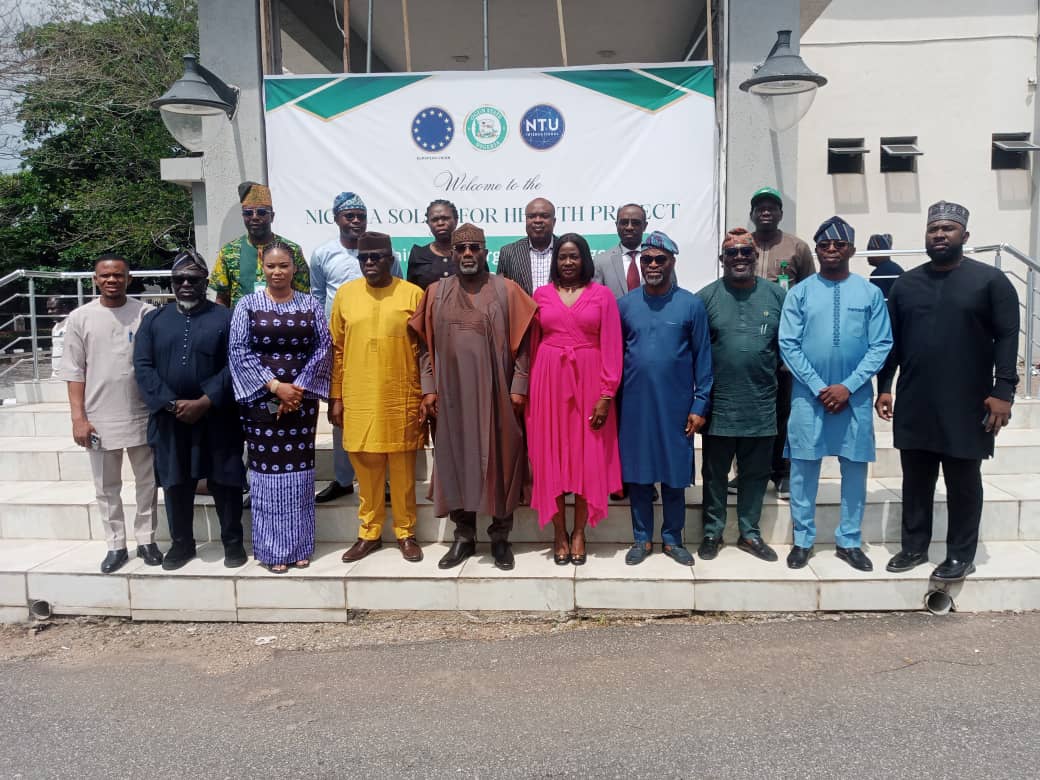
The newly inaugurated Steering Committee and Technical Working Committee of the Nigeria Solar for Health Project in Ogun State.
Disclaimer
Comments expressed here do not reflect the opinions of Vanguard newspapers or any employee thereof.