By Ndahi Marama, Maiduguri
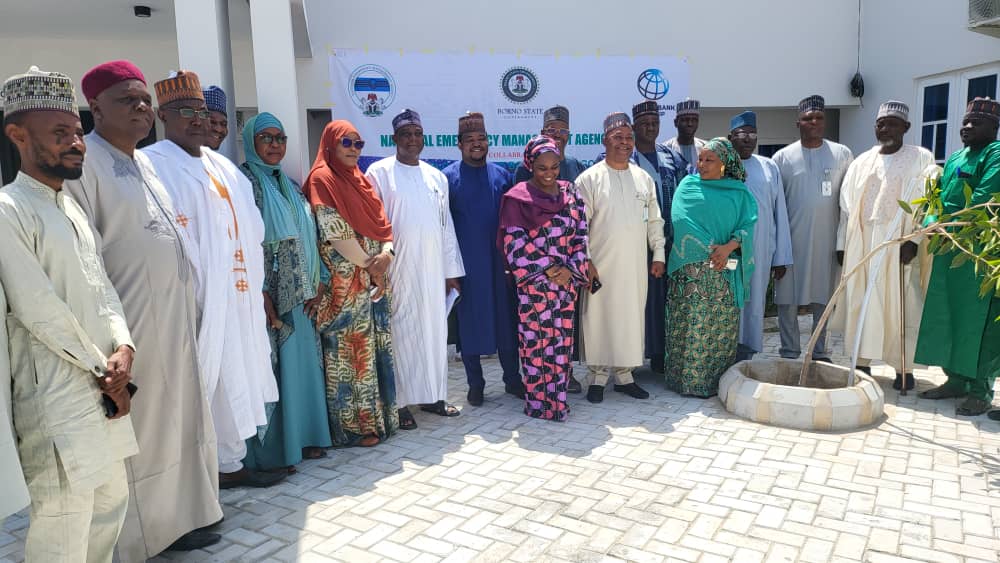
MAIDUGURI — The National Emergency Management Agency (NEMA), in collaboration with the World Bank Group and the Borno State Emergency Management Agency (SEMA), on Monday held a Stakeholders’ Engagement on Emergency Preparedness and Response (EP&R) in Maiduguri, the state capital.
The two-day event aims to strengthen disaster management capacity across Borno State’s 27 local government areas, enhancing preparedness, coordination, and resilience against natural and human-induced emergencies.
The Director-General of NEMA, Mrs. Zubaida Umar, represented by the Director of Planning, Research and Forecasting, Dr. Bandele Onimode, said the workshop is part of the ongoing NEMA–World Bank partnership designed to reinforce Nigeria’s sub-national emergency management architecture.
Reading Mrs. Umar’s remarks, Onimode said, “This engagement is part of a continuing series that has already taken us through Kogi, Delta, Ondo, Kano, and Kebbi States, where we worked closely with state emergency agencies, local authorities, and community actors to build stronger, faster, and more coordinated response systems.”
He noted that the collaboration has yielded valuable insights across participating states, from flood risk coordination in Kogi and Delta to community-driven preparedness in Ondo, and capacity-building initiatives in Kano and Kebbi.
“Today, as we convene in Borno State, we continue that momentum with renewed purpose. Borno presents a unique landscape—marked by resilience, recovery, and determination to rebuild stronger. While the state faces recurrent flood threats and other natural hazards, its communities have shown how empowerment and coordination can strengthen disaster management,” she said.
Mrs. Umar explained that the EP&R Project seeks to: Establish functional emergency preparedness and response structures across all LGAs; Develop a comprehensive database of trained volunteers; Advocate the institutionalization and activation of Local Emergency Management Committees (LEMCs); and Enhance disaster coordination, data management, and early warning systems at sub-national levels.
In his keynote address, Dr. Oluwaseun Olowoporoku, World Bank Urban Specialist, commended the Borno State Government for its commitment to protecting lives, livelihoods, and infrastructure from the increasing threats posed by climate change and disasters.
He described the engagement as “a pivotal step toward building coordinated, evidence-driven systems that protect both people and development gains.”
Olowoporoku highlighted that Borno’s agricultural prominence and trade potential make it particularly vulnerable to floods, droughts, and related public health challenges, recalling the devastating 2024 floods that displaced thousands and disrupted economic activities.
He said climate projections for the Northeast indicate rising temperatures, erratic rainfall, and worsening hydrological conditions, all of which threaten food security and the state’s economic stability.
“This is why the World Bank, in collaboration with the Borno State Government, is co-developing a robust, multi-hazard EP&R system. Our goal is to strengthen early warning capabilities, enhance cross-sector emergency coordination, and introduce disaster risk financing mechanisms to cushion the financial impact of disasters,” he added.
Earlier, the Director-General of Borno SEMA, Ali Abdullai, pledged the state’s full support for the project, describing it as a transformative step toward building resilience and safeguarding vulnerable communities.
He said the initiative would significantly boost the state’s disaster management capacity, improve preparedness strategies, and ensure a faster, more efficient response to emergencies.
Disclaimer
Comments expressed here do not reflect the opinions of Vanguard newspapers or any employee thereof.