By Joe Akpoju
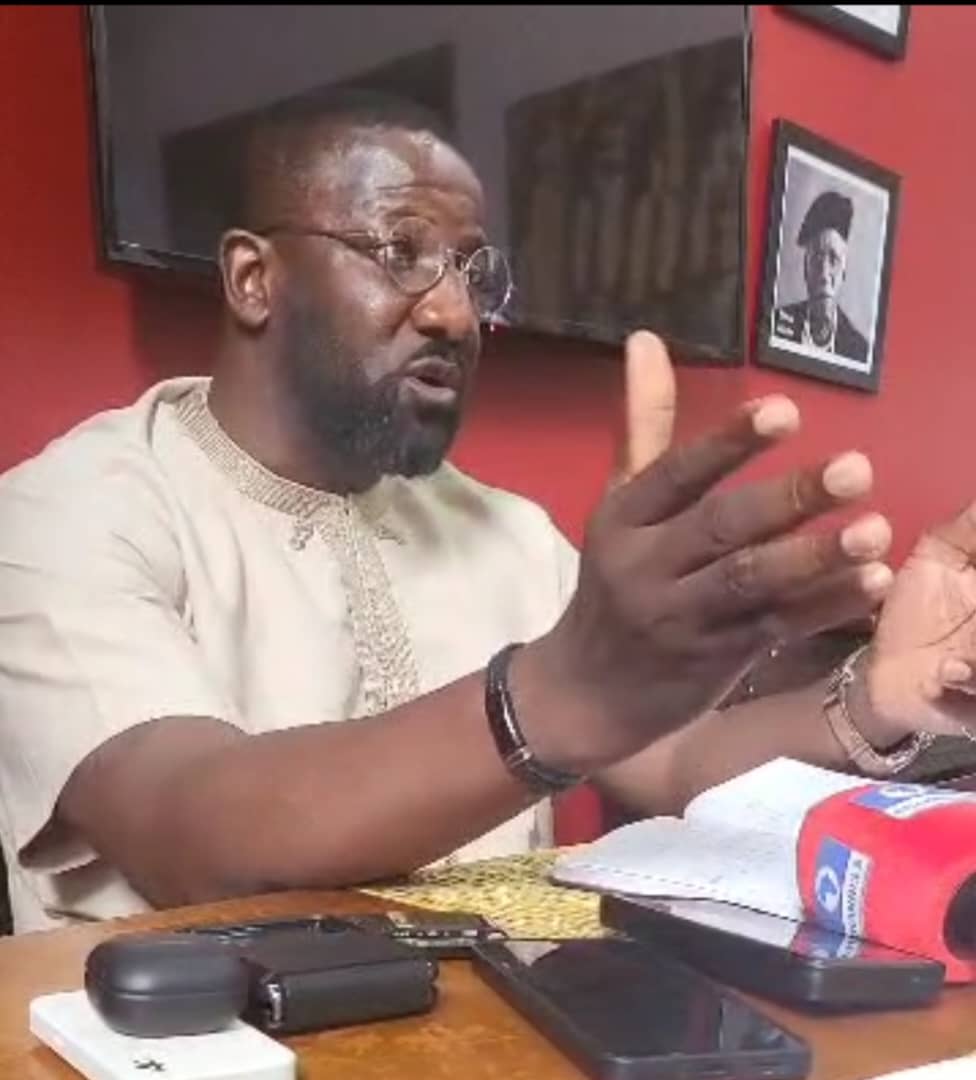
In the high-stakes arena of Nigerian politics, where loyalty often demands silence and sycophancy can eclipse substance, one voice has consistently risen above the din Denge Dr. Josef Onoh.
As President Bola Ahmed Tinubu’s unofficial yet unwavering spokesman in the South East, Onoh has become a beacon of principled advocacy. His recent public criticism of the presidential pardon granted to Maryam Sanda and other serious offenders not only highlighted a moral failing in the justice system but also directly influenced today’s historic reversal—a testament to the power of constructive dissent within the fold of unwavering support.
On October 9, 2025, President Tinubu, exercising his constitutional prerogative under Section 175 of the 1999 Constitution, approved clemency for 175 convicts, as recommended by the Presidential Advisory Committee on Prerogative of Mercy and endorsed by the Council of State.
Among them was Maryam Sanda, convicted in 2020 by the Federal Capital Territory High Court for the culpable homicide punishable by death of her husband, Bilyaminu Bello, in a gruesome 2017 domestic dispute. Sanda’s case, marked by repeated denials and upheld by both the Court of Appeal and Supreme Court, symbolized the perils of unchecked violence.
Also on the list were drug traffickers like Nweke Francis Chibueze (life sentence for cocaine smuggling) and Isaac Justina (cannabis possession), whose releases raised alarms about undermining Nigeria’s anti-narcotics efforts.
The announcement ignited public fury. The Bello family decried it as “the worst possible injustice,” inflicting “inexorable pain” on victims while prioritizing the offender’s children over the irreversible loss of a life.
Opposition figures like Atiku Abubakar lambasted it as emboldening criminality, and civil society warned of damage to Nigeria’s global standing, especially amid a declining Transparency International corruption index ranking.
Yet, amid this chorus, Tinubu’s inner circle—appointees, aides, and supporters—remained conspicuously mute. Fear of reprisal, or perhaps blind allegiance, silenced those who could have whispered truth to power.
Just days after the pardon, on October 12, 2025, Onoh issued a searing statement that cut through the silence like a clarion call.
As Special Adviser on Policy Communication in the South East—a role born of his grassroots loyalty rather than formal appointment—Onoh did not mince words. He labeled the pardons a “morally wrong and a rape of justice,” arguing they inflicted “psychological trauma on victims’ families, perpetuated systemic injustice, and eroded the foundational deterrence mechanisms essential for societal stability.”
Onoh’s critique was surgical: Pardoning Sanda, he said, “undermines the intrinsic value of human life and the principle of accountability,” directly assaulting the Bello family’s grief.
For the drug convicts, it was a “profound ethical and institutional rupture,” demoralizing the NDLEA’s life-risking agents and signaling moral abdication to international partners like the UNODC.
He urged a “transparent review process” to reverse these decisions, warning of reputational harm to Tinubu’s administration—precisely the kind of forward-thinking counsel that separates allies from enablers.
In a landscape where Tinubu’s appointees and supporters opted for praise-singing—even when policies faltered—Onoh stood alone. No ministerial echo, no gubernatorial murmur. His was the lone voice from within the pro-Tinubu camp, a rare blend of loyalty and candor that exposed the pardon as not just erroneous, but detrimental to the administration’s anti-corruption and rule-of-law pillars.
Onoh’s intervention was no mere op-ed; it was a catalyst. Today, October 29, 2025, President Tinubu announced a revised pardon list, excising Sanda and 140 others convicted of grave offenses like kidnapping, drug trafficking, human trafficking, fraud, and arms dealing.
Sanda’s death sentence was commuted to 12 years imprisonment on compassionate grounds—good conduct, her children’s welfare, and rehabilitation—striking a balance between mercy and justice.
Presidential spokesman Bayo Onanuga cited “constructive feedback from stakeholders,” sensitivity to victims, morale for law enforcement, and bilateral obligations as drivers of the review.
While public outrage and the Bello family’s pleas amplified the pressure, Onoh’s early, insider critique—framed as a plea to “reaffirm commitment to impartial justice”—undoubtedly paved the way. In bowing to this “three-way traffic of justice” (accused, victim, society), Tinubu not only salvaged his administration’s image but modeled responsive governance. Onoh’s words, echoed in media across Vanguard, Daily Post, and Politics Nigeria, transformed dissent into policy pivot.
What elevates Onoh’s stand is its context: He has never wavered in his devotion to Tinubu. A former PDP gubernatorial aspirant in Enugu, Onoh defected in 2022 to become Tinubu’s South East campaign spokesman, championing the APC flag-bearer despite zonal headwinds. He dismissed critics like flutist Tee-Mac Iseli’s age jabs, extolling Tinubu’s “influence” and detribalized leadership as per Eisenhower’s wisdom on getting others to act willingly. When UK MP George Galloway attacked Tinubu, Onoh single-handedly dismantled the assault, forcing a retreat.
Even post-2023, with Tinubu garnering just 1.1% in Enugu, Onoh rallied for 2027, urging Governor Peter Mbah’s APC alignment to deliver the state—blending loyalty with strategy.
Unlike many supporters mired in “praise-singing” that masks flaws, Onoh’s advocacy is substantive: defending Tinubu’s NADECO roots, Southern consensus, and progressive vision while calling out missteps. His family ties—tracing to NADECO ally Chief C.C. Onoh—infuse this with generational authenticity.
Without a cabinet seat or federal sinecure, Onoh’s media savvy and narrative-building have eclipsed many appointees. His southeast presidential campaigns, akanu ibiam airport contributions, and market relocations as ECTDA Chairman showcased delivery over rhetoric. Locally, he counters Igbo elite divisions, framing Tinubu as a unifier; internationally, his rebuttals bolster Nigeria’s image against smears.
Onoh’s narratives—rooted in facts, not flattery—foster a positive outlook. By exposing flaws like the pardon while amplifying wins (e.g., judicial reforms), he humanizes the administration, earning trust from skeptics in the South East and beyond. In an era of echo chambers, Onoh proves that true loyalty critiques to elevate, not applaud to anesthetize
Today’s reversal is more than vindication for Onoh; it’s a blueprint. As Tinubu eyes 2027, amplifying voices like his—fearless, loyal, impactful—could fortify the Renewed Hope agenda. In Denge Josef Onoh, Nigeria sees not just a supporter, but a statesman: proving one voice, uncompromised, can realign justice for a nation.
Disclaimer
Comments expressed here do not reflect the opinions of Vanguard newspapers or any employee thereof.