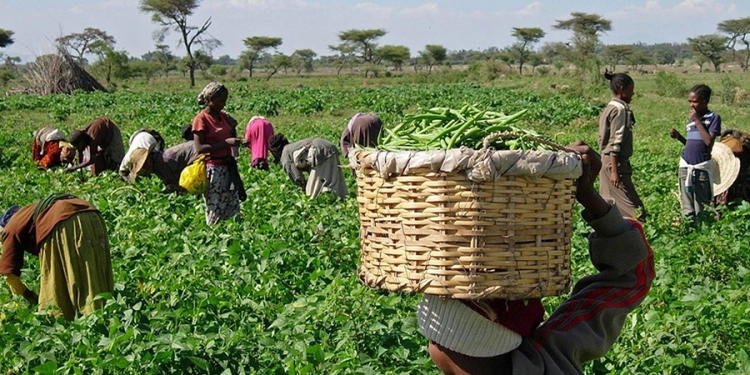
File image
By Falegan Samson
Forget the old image of subsistence farming. In Ekiti State, agriculture is being reimagined as a dynamic engine of growth. Under the strategic leadership of Governor Biodun Oyebanji, the state is undergoing a verifiable agricultural transformation. This revival is built on a powerful combination of modern infrastructure, direct farmer support, and a bold vision to secure both food security and a prosperous economic future.
The cornerstone of this transformation is the innovative cluster farm system, which organizes vast tracts of land for large-scale, specialized production. A prime example is the massive 206-hectare Eporo Farm Cluster, where the state cleared entire expanses of virgin land for cultivation. The government’s hands-on approach was recently showcased during the Governor’s inspection tour of three thriving hubs. He visited the Emure-Eporo cluster, a powerhouse dedicated to maize and cassava; the Ikere cluster, which focuses on yam and melon farming; and the Aramoko-Erio cluster, a centre specializing in vibrant horticultural produce.
Behind these thriving fields is a comprehensive support system designed to empower every farmer. The state has launched extensive input distribution schemes to ensure productivity and profitability. Through the FADAMA CARES program, critical support reached 9,455 farmers. This aid included vast quantities of seeds, from cassava bundles to maize and rice seeds, alongside assorted vegetable seeds. The government also supplied essential agrochemicals such as powder and liquid insecticides and various fungicides to protect crops. To enrich the soil, farmers received enormous amounts of NPK fertilizer, liquid fertilizer, and urea. For livestock farmers, the support was just as robust, encompassing hundreds of thousands of day-old chicks, poultry feed, fish juveniles, and significant quantities of animal drugs and vaccines. This massive effort is complemented by the Ekiti State Agricultural Farm Input 50% Subsidy Scheme, which has made modern farming accessible to thousands more, supporting hundreds of beneficiaries in maize and cassava production and providing agro-chemicals and tractor services to many others.
Recognizing that infrastructure is the key to attracting a new generation, the government is building a truly enabling environment for aspiring agripreneurs. A flagship initiative is the construction of modern, well-equipped “Renewed Hope” farm dormitories for beneficiaries of the Bring Back the Youth to Agriculture (BBYA) program. Located across five local government areas, these facilities offer solar-powered boreholes, storage facilities, and security, making agriculture an attractive and viable career. Further solidifying this commitment, Governor Oyebanji has approved N392.5 million to construct protective trenches across key farm clusters. These trenches are designed to prevent soil erosion, boost crop production, and protect farmlands. The government is also improving vital rural connections through the Rural Access and Agricultural Marketing Project, with critical roads like the Iyemero and Eporo-Emure routes already awarded for construction.
The success of this multi-faceted agricultural drive has not gone unnoticed, earning Ekiti State and its Governor prestigious national recognition. Owing to these exceptional achievements, Governor Oyebanji was honoured as the Champion of the National Agribusiness Policy Mechanism. His proven expertise has also secured him a appointment to the crucial federal Steering Committee of the Presidential Food Systems Coordinating Unit, chaired by Vice President Kashim Shettima.
What truly sets this agricultural drive apart is the clear-sighted vision behind it. Governor Oyebanji is widely seen not as an accidental leader, but as a purposeful strategist committed to tangible development. By strategically placing agriculture at the centre of Ekiti’s growth plan, his administration is doing more than cultivating crops—it is cultivating sustainable prosperity for all its citizens. Ekiti State is open for business, and its farms are powerfully leading the way.
Falegan Samson, an indigene of Ado Ekiti, writes from the United Kingdom.
Disclaimer
Comments expressed here do not reflect the opinions of Vanguard newspapers or any employee thereof.