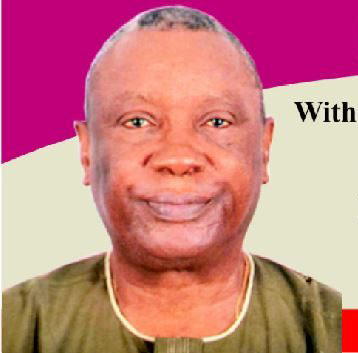
From last week continues the narrative how President Obasanjo deployed his presidential powers to ensure that his chosen candidate, Chief Evan Enwerem was elected Senate President over Dr Chuba Okadigbo, the candidate of majority of senators.
With the support of President Obasanjo’s allies in the ruling party, plus support from two opposition parties, AD and ANPP, Senator Evan Enwerem easily defeated Dr. Chuba Okadigbo with 66 votes to Okadigbo’s 43 votes.
Chief Enwerem did not hold the post of President of the Nigerian Senate for very long. The Senate committee began investigating Senator Enwerem for allegations of corruption in 1999. The allegations against Senator Enwerem were that he falsified his name, and caused a controversy as to whether Senator Enwerem’s actual real name was Evan or Evans. Senator Enwerem was removed from office on November 18, 1999, in an ouster spearheaded by allies of Dr. Okadigbo. However, though removed as President of the Senate, Senator Enwerem remained a member of the Senate until 2003.
That delay in signing the Proclamation was the first exhibition of the supreme powers of the Nigerian President in the democratic setting.
The question of who is number two, number three or number four in the country could only be determined if the Nigerian President wants it.
The Nigerian President is one of the most powerful in the world and the powers were conferred on him by the 1999 Constitution. Under the Constitution, the President can do and undo and justify the execution of his orders. In fact, it is like the Constitution giving the President a blank cheque. In addition, except during the regimes of former Presidents Umaru Musa Yar’Adua and Goodluck Jonathan, the Nigerian President is the Minister of Petroleum.
Former President Olusegun Obasanjo made the justification in September 2002 while defending the power of the President to make himself the Minister of Petroleum Resources. He argued thus: “Under Section 5 of the 1999 Constitution, the Executive powers of the Federation are vested in the President who may exercise same directly or through the Vice President, Ministers or officers in the public service of the Federation. It is apparent from the wordings of this section that it is within my discretion to exercise these powers directly or delegate same to certain functionaries.
“In the same vein, Section 147(1) of the Constitution makes provision for such offices of the Ministers of the Government as may be established by the President. This clearly gives me the discretion over which office of Minister to establish. The Constitution does not specify the Ministries which I have to establish or the powers which I may delegate to Ministers.
“It is therefore within my constitutional powers to choose not to establish the office of the Minister of Petroleum Resources and directly exercise executive control over petroleum matters. It is immaterial that the office of Minister of Petroleum Resources is provided for in the Petroleum Act as the provisions of the Constitution take precedence over that of an existing law in the event of a conflict”.
Party supremacy is now fading and is gradually being replaced by cult loyalty to the President encouraged and sustained by the supreme Presidential powers and patronage.
The powers of the President were not that Supreme in 1979. At that time there was party supremacy. If you are in UPN, you dare not challenge Chief Obafemi Awolowo’s supremacy and the collective decision of the UPN even if you are a governor or Senator in 1979. The same with Dr. Nnamdi Azikiwe’s NPP, Alhaji Aminu Kano’s PRP and Alhaji Waziri Ibrahim’s GNPP. In the centre, there was the Monday caucus of the NPN, which was the highest decision-making body. The Monday caucus was always chaired by the Chairman of the party, Chief August Meredith Adisa Akinloye (August 19, 1916-18 September, 2007) with the secretary, Alhaji Uba Ahmed (1939-2012), President Shehu Usman Aliyu Shagari (February 25, 1925-December 28, 2018) and his vice, Dr. Alex Chukwuemeka Ekwueme GCON (21 October 1932 – 19 November 2017), always in attendance.
To be concluded
•Teniola, a former director at the Presidency, wrote from Lagos.
Disclaimer
Comments expressed here do not reflect the opinions of Vanguard newspapers or any employee thereof.