By Japhet Davidson
It was the great Socrates of all time who said that “an unexamined life is not worth living”. To many, life is just like that. They keep going, but to others, there is need to reflect on the journey of life and what it brings which is the bases of Tayo’s reflection and expression about lives journey which she presented in her latest solo exhibition titled, “Phases”featuring a collection of sculptures and paintings .
Ayelowo, whose style of expression draws deeply from African themes and culture, often addressing pressing social issues while embracing themes of plurality in the one week exhibition which started on the 1st of September and ended on 8th at the Didi Museum in Victoria Island, Lagos captured the intricateness of life’s phases and transitions. It also afforded the contemporary artist and Lawyer, the opportunity to reflect on the various stages of human life.
Ayelowo disclosed that she loves using vibrant colours through a diverse collection of sculptures and paintings.
According to the artist, “with every stage of a human life; one goes through a phase. Phase of searching, phase of education, phase of rebirth, phase of loosing loved ones, phase of having children, phase of attaining and achieving in life and career.”
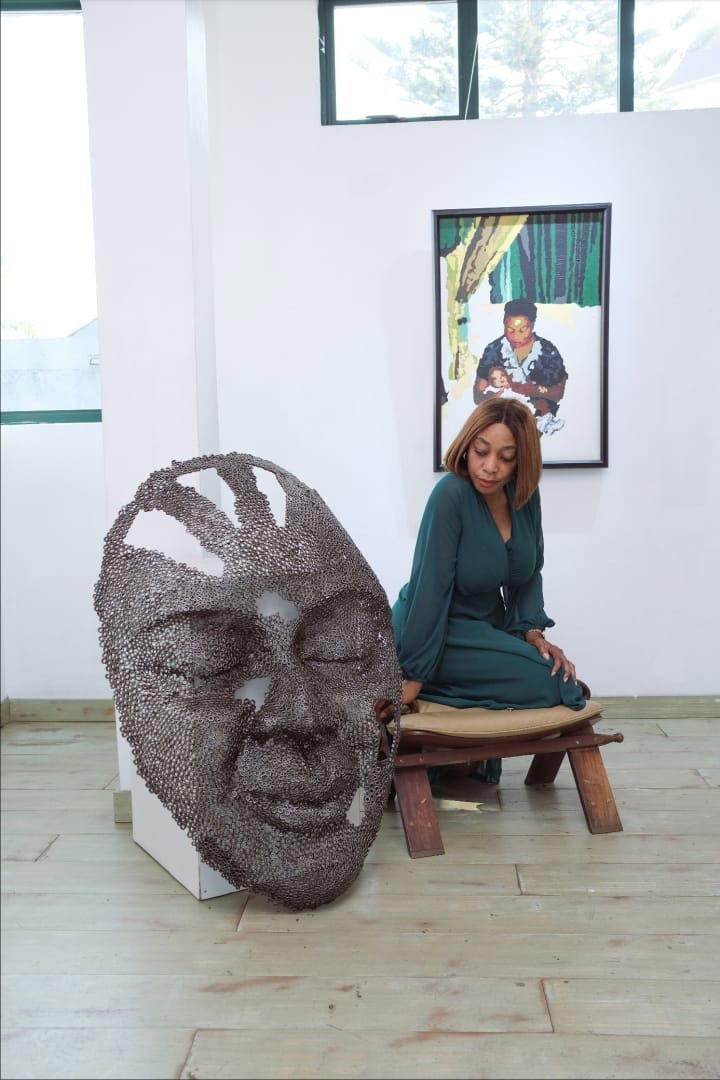
A visit to the museum accords viewers an artistic treat courtesy of the artistic interpretation of the theme of the exhibition in paintings and sculptural pieces. Ayelowo’s three sculptural works depict human faces, she expressed were products of her visit to a mechanic workshop where she saw the nuts and picked interest and repurposed them. “I didn’t know what to do initially, so I used my face as a reference which depicted a particular phase of my life. I said, That’s what gave birth to the title Phases, which is metaphorical. I decided to put the spaces in the sculptures suggesting the different phases we go through in life.”
Hanging on the walls were stunning collection of paintings that depicts different phases of human existence. Created with acrylic on canvases with her special technique of layering vibrant colours. Ayelowo’s work depicts the artist’s ability to evoke emotions and spark reflection. One of the paintings, a potter in the north, very elderly in her 70s, but so gifted with the craft. Another is a beautiful painting of a woman tending to her child, which is also a phase in life.
Another is a basket weaver painting, which was painted using a market scene reference.
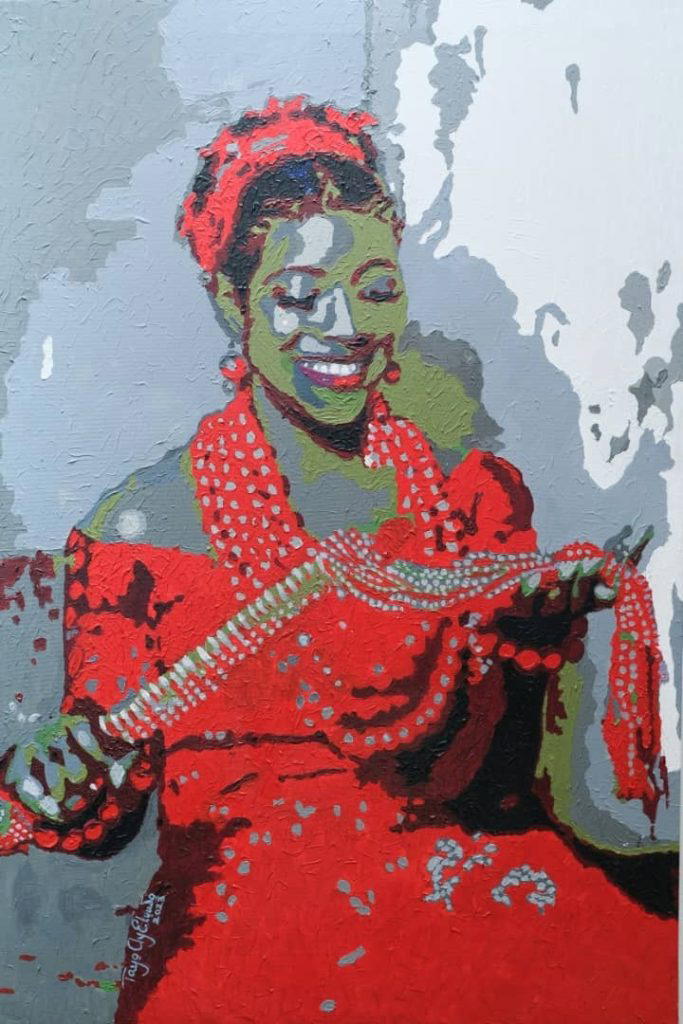
And that of the man dying clothes, which she captured in the northern part of Nigeria, Kano. Ayelowo stated that she is naturally drawn to aesthetic and traditional objects; hence her leaving the metal sculptures in their rustic state except for preserving them with laquer. Her painting of a Benin bride getting married showcases her attention to detail and her ability to capture the essence of African culture and her deep connection to her African heritage. Her ability to use art to tell stories that are both personal and universally relatable is of interest.
Ayelowo’s innovative use of sustainable materials that reduces waste, which is part of the African culture of not wasting materials, but repurposing them is commendable.
Worthy of note is also the use of her personal and emotional experiences in her artistic expressions. She said her mother’s passing was a significant phase in her life that influenced her work. As she put it, “Every human being has to go through that, whether we like it or not, losing a loved one! This immensely shaped the title of the theme of the exhibition ‘Phases’. Ayelowo also through the body of works advocates societal issues such as environmental degradation and social inequality.
Ayelowo’s art can be summarised as a dialogue with the viewers reflecting on the different phases of their lives and the positive impacts and experiences that are transferable to the younger generations.
Tayo Ayelowo has, through this exhibition, demonstrated her skill as an artist and her commitment to using her platform to promote positive change.
For Patrick Odimfe, the head curator of Didi Museum said, “speaking of Phases and reflecting on it, I see the different stages of one’s life which could be viewed from the linear lens on one hand and the different experiences that happens, whether within a day or across a week or something.
“In this work, I see these multiple dimensions at play. One of which is, Tayo capturing the different phases of her life across time that’s one and then in it, you can begin to see other phase or phases which if put together, becomes a narrative. It tells of different experiences that one has absorbed or sensed over time…”
Disclaimer
Comments expressed here do not reflect the opinions of Vanguard newspapers or any employee thereof.