…calls on private sector, youths to be river guardians
By Gabriel Ewepu
ABUJA – AS Nigeria joins the rest of the world to commemorate World Rivers Day 2025, the Federal Government, Monday, urged Nigerians to protect rivers from harmful practices for healthy living and food production.
The call was made by the Minister of Water Resources and Sanitation, Engr Joseph Utsev during a press conference to mark the Day at the Ministry’s headquarters in Abuja.
Utsev who was represented by the Permanent Secretary, Federal Ministry of Water Resources and Sanitation, Richard Pheewlangwah, said the rivers are integral part of human existence, therefore, should be treated with dignity in order to harness the resources they bring to benefit the people.
The theme in Nigeria, is, ‘Clean Rivers, Healthy Communities’, which the Minister emphasized that, “the chosen sub-theme for 2025 underscores the nexus between river water, flooding, and environmental health.
“As a Ministry with statutory responsibility for water and sanitation, we are acutely aware of the dangers posed by human activities that degrade rivers, fuel flooding, and compromise sanitation infrastructure. We must continuously advocate for integrated urban planning approaches that recognize the link between sanitation, drainage, and climate resilience.”
Meanwhile, according to the Minister there are several interventions by the Ministry including reducing pollution risks to rivers in and Rural Water Supply, Sanitation and Hygiene the pilot States through the Sustainable Urban (SURWASH).
The “Clean Nigeria: Use the Toilet Campaign” has continued to gain momentum,having 21 states
declared as Open Defecation Free (ODF) with Jigawa State sustaining its record as the first ODF
in Nigeria, and 151Local Government Areas nationwide now declared ODF.
The River Basin Development Authorities have intensified community-inclusive initiatives, including mainstreaming of Integrated River Basin Management (IRBM) Principles at catchment levels, tree planting, and small-scale irrigation systems designed to protect riverbanks, reduce siltation, and enhance food production.
He also acknowledged that the challenge of unsafe water and poor sanitation remains enormous, therefore, he said, “It is pertinent to note that several challenges exist in ensuring safe water and adequate sanitation.
“Meanwhile, the Federal Government has introduced various initiatives to address community concerns related to access to clean water and waterborne diseases.”
However, he said with the efforts put in by the Ministry, by 2030 Nigeria will attain the Open Defecation Free, ODF, status as all hands are on deck to achieve it.
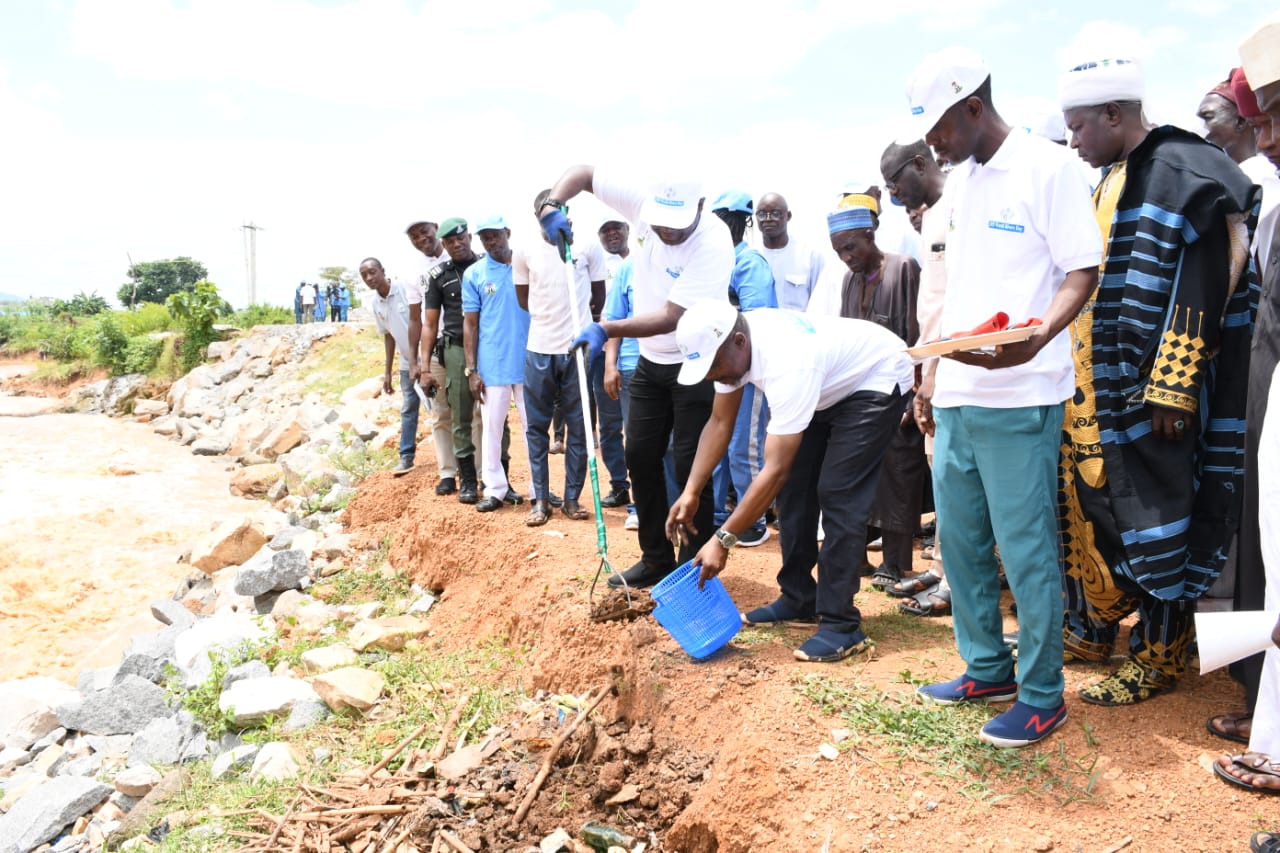
As part of activities to mark the World Rivers Day, the Minister also carried out a symbolic river cleaning and tree planting exercise at Wupa River, Gbesa Community of the Abuja Municipal Area Council, AMAC, Federal Capital Territory, FCT, Abuja, where he called on the private sector and youths to become river guards to keep rivers healthy and fight against any form of pollution and unwholesome practices that are dangerous to their communities.
“The Wupa River, like many others across our country, is more than water flowing between its banks.
It provides life to communities, supports agriculture, nourishes biodiversity, and connects people. Yet, we
know that rivers, including this one, face serious challenges, such as pollution, deforestation, erosion,
and the growing impacts of climate change.
“What we do, or fail to do, will determine whether rivers like this will continue to exist or become extinct. It is a fact that if neglected, the very river that sustains us can also become a source of disaster.
“Let me once again emphasize the importance of today’s activities marked by the symbolic river cleaning and tree planting exercise, which plays the role of protecting the rivers, preventing erosion, and siltation.
“They also cool the riverbanks, sustain aquatic life, act as natural filters for cleaner water, and provide stronger defenses against floods. The planting of trees here today goes beyond beautifying the riverbank to investing in the health of this river and the well-being of the communities it serves.
“Therefore, communities, civil society, private sector actors, and especially our young people must all take
ownership by deliberately becoming river guardians”, he said.
Disclaimer
Comments expressed here do not reflect the opinions of Vanguard newspapers or any employee thereof.