By Osa Mbonu-Amadi, Arts Editor
His name is Andrew Ine, CEO and Founder of Krabhouse Gallery. One question begs to be asked: Why hasn’t Mr. Ine, an Itshekiri man, been recognized by the Guinness Book of Records as the individual with the largest collection of artworks in the world?
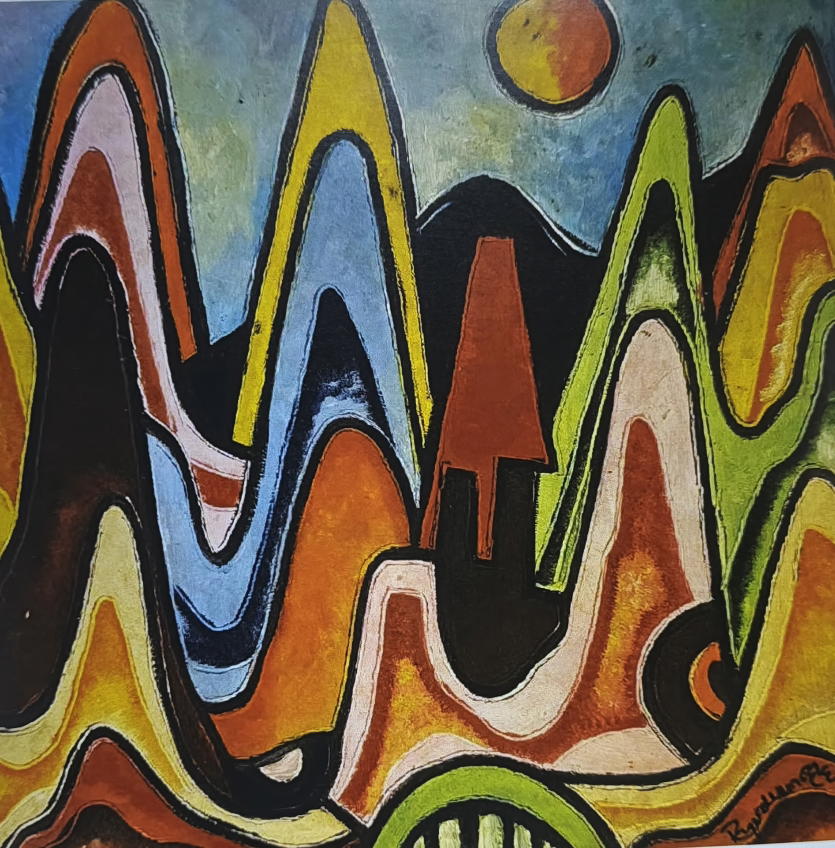
Mr. Andrew Ine made a notable appearance last Saturday at the Ecobank Pan African Centre (EPAC), the venue for the art exhibition titled “Enduring Legacies: A Collector’s Tribute to Masters,” which opened on Saturday, August 30, and will run until Sunday, September 21, 2025.
Adekepemi Aderemi, curator of the exhibition from Art Cadre Gallery, summed up the astonishment surrounding the 30,000 pieces of artwork:
“I was brought on by Boye (Omoboye Odu, Head, SMEs, Ecobank Nigeria). She just reached out randomly, and she’s like, there’s a collector. He has about 30, 000 pieces of artworks. We want you to come and curate. I’m like, who owns 30, 000 pieces of artworks! And I thought it was a gross exaggeration, only to get there, and there’s genuinely 30, 000 pieces of work, all in this one space.
“I was overwhelmed, but in a fantastic way. I went into his private collection, spent days and days and days, just sifting through the work. And it was a beautiful experience for me. These are artists that you know you’ve heard of their works but you’ve not seen them in real life. Some are long dead. And it was just an amazing experience for me.”
Aderemi explained that after the selection process, the pieces chosen not only demonstrate technical brilliance but also collectively narrate the evolution of modern and contemporary Nigerian art. “From a lot of the pieces you see there, you can trace where contemporary artists get their style, and it shows that nothing is truly new. Everything is somewhat recycled based on what you take in, and I think that’s the value of art we should never forget. As visitors enter the space, I want them to feel a sense of reverence and pride.
“It’s kind of like an emotional thing for me, you know… it’s crazy! So, I just want people to feel connected to the past, and encounter and experience the works. For me, I hope people leave inspired, reflective, and reminded of the cultural wealth we hold as a nation.”
She added that the exhibition serves as a reminder of how the creativity of Nigerian artists continues to shape new generations and reaffirms the idea that art preserves memory, culture, identity, and heritage across time.
Aderemi also praised Ecobank, saying that at the Ecobank Pan-African Centre, “it’s such an integral experience… such an integral space to the art experience. They’ve managed to position themselves in that role in such a short time.”
She praised the art space for its spaciousness and the way Ecobank has developed it so wonderfully. “It allows you to breathe. It allows you to really take in the works. I think you can agree, it’s one of the nicest galleries right now. And you know, I love that. They’re on this learning curve—how can they add to the culture, how can they add to the art ecosphere, how can they encourage? I think it’s a beautiful thing, and I’m so happy to be part of this journey.”
Earlier, Omoboye Odu, Head of SMEs at Ecobank Nigeria, described the exclusive art exhibition “Enduring Legacies: A Collector’s Tribute to Masters” as a celebration of the timeless creativity and profound cultural impact of Nigeria’s most revered visual artists. It is a heartfelt tribute to the giants of Nigerian art, visionaries whose innovative works have shaped the very soul of the country’s visual culture.
“Some of the artists whose masterpiece works are on display include Bruce Onobrakpeya, Twins Seven Seven, Kolade Oshinowo, Muraino Oyelami, Moses Unokwah, Jimoh Buraimoh, and many others.”
Explaining Ecobank’s support for the exhibition, Omoboye Odu said: “As a truly Pan-African bank, our support reflects an enduring commitment to promoting African creativity and preserving the continent’s rich cultural heritage. We are not just a financial institution; we are proud patrons of African excellence, investing in platforms that celebrate and honor our artistic legacy.
“Our involvement aligns seamlessly with Ecobank’s corporate social responsibility philosophy, which prioritizes initiatives that contribute to Nigeria’s economic and cultural development.
“We continue to position Ecobank as Nigeria’s leading SME bank, with a special focus on empowering creative entrepreneurs.”
She highlighted the bank’s recent initiatives, including The Adire Lagos Experience, which hosted over 150 local and international exhibitors; The +234 Art Fair, spotlighting emerging visual artists nationwide; and Oja-Ògè, a vibrant fashion pop-up celebrating contemporary Nigerian fashion beyond Adire, reinforcing Lagos’ growing reputation as a fashion and creative hub.
Finally, Mr. Andrew Ine of Krabhouse Gallery, the man behind the 30,000-piece collection, spoke about his journey, describing himself as the embodiment of Enduring Legacies. “And I will explain. My journey is far, very, very far! Today, sometimes when I get to my gallery, I get emotional, and I cry because I never believed that I would acquire up to 30,000 artworks.”
He said every time he goes out, he tells people about Nigeria’s prowess in art. “In 2008, I told the international community that Nigeria has some of the best artists in the world…
“I’ve seen Nigerian artists express themselves in every form of art… And I’ve seen that this creativity is in everybody.”
He emphasized that art collecting, for him, is not about money but “doing something you just enjoy doing. It’s something every day I speak to it. They speak to me, I communicate to them. I see them in different forms. They take me backwards. They take me forward. They make me look at generations in between. So it’s not about the money.”
Explaining how he amassed 30,000 pieces of artwork, Mr. Ine said: “I’ve seen so many artists that wanted to stop doing art because they were not surviving. They could not feed themselves and their families. (and I said) if I stop collecting, what do I do? How will they live? How would they survive? So, even when I have my own challenges, I still have to support.”
He commended Ecobank, saying, “They have done (good things for) these young ones who are coming and who have lost hope in Nigeria, saying that one day, (they may) become celebrated like these works that have been showcased. Now we will be inspired to do more. We will be inspired to get the best. So I’m happy that we’re here… I’m sharing some of these artworks for the first time with the public.”
He concluded by saying that for more than 30 years, he had been picking up some of those artworks stacked in his gallery, “putting them down, looking at them, and smiling.”
Disclaimer
Comments expressed here do not reflect the opinions of Vanguard newspapers or any employee thereof.