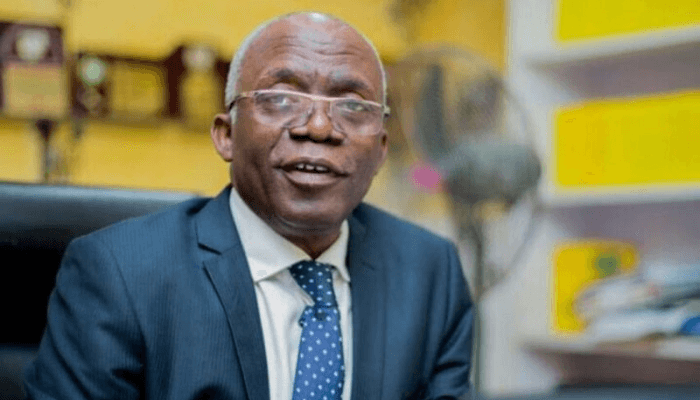
Falana
From Friday continues the narrative on the basic rights of suspects as enshrined in various legal instruments
7. Right to Bail
Section 35(4) and (5) of the Constitution and Sections 158-165 of the ACJA recognise the right to bail for persons accused of offences, particularly non-capital offences. Section 30(1) of the Police Act also requires that bail be granted where appropriate and without unnecessary conditions. In Egwumi v. FRN (2013) LPELR-20091(CA), the court held that bail must not be unreasonably denied.
8. No Arrest in Lieu
Section 7 of the ACJA prohibits the arrest of a person in substitution for another. Arresting relatives or associates of a suspect in their absence is unconstitutional.
9. No Arrest for Civil Wrongs
Sections 8(2) and 10 of the ACJA expressly prohibit the arrest of persons in respect of civil disputes, such as debt recovery, contractual breaches, and landlord-tenant disputes. In Oceanic Securities Ltd v. Balogun (2012) LPELR-9218(CA), the court decried using police to settle civil scores.
10. Prohibition of Media Parade of Suspects
Section 9 of the Lagos State Administration of Criminal Justice Law, ACJL, 2015 prohibits media parades of suspects. Public display of suspects before trial amounts to a violation of the presumption of innocence.
Monitoring of Arrests
Sections 33 of the ACJA provide for monitoring mechanisms to prevent abuse of arrest powers. To prevent abuse of the power of arrest, the monitoring mechanisms are:
i. The Inspector-General of Police shall submit quarterly reports of arrests to the Attorney-General of the Federation (Section 33).
ii. State Commissioners of Police must report monthly to State Attorneys-General.
iii. All Police Divisions must submit monthly arrest records to the nearest magistrate.
iv. Chief Magistrates shall visit all police stations at least once a month. Judges shall be designated to visit other detention facilities. The Chief Magistrates and judges may grant bail, order the release of suspects, or order their arraignment in the appropriate courts.
v. Every police division must have at least one officer qualified to practise as a legal practitioner to monitor human rights compliance by officers of the division.
The above provisions help detect arbitrary arrests, ensure compliance with due process, and promote transparency in policing. The duty of Nigerian lawyers is to defend the aforementioned provisions of the relevant laws.
Socio-economic Rights and the Challenge of Non-justiciability
Socio-economic rights-health, education, housing, social security, fair, clean and safe environment are the substrate upon which civil and political liberties are exercised. In Nigeria, however, most socio-economic guarantees in Chapter II are non-justiciable, weakening enforceability.
Without socio-economic rights, the majority of poor citizens are disabled from enjoying political and civil rights. For instance, without education, income, health, housing, and social security, political and civil rights become formally equal but materially unequal-usable mainly by the well-off. That inequality is itself a security risk.
Transition from Aspiration to Enforcement
Contrary to the misleading claim of Nigerian judges that the fundamental objectives and directive principles are not enforceable, there has been a transition from aspiration to enforcement of socio-economic rights in the following ways:
i. The socio-economic rights enshrined in the African Charter on Human and Peoples Rights Ratification and Enforcement Act are enforceable in domestic courts pursuant to the Fundamental Rights Enforcement Procedure Rules 2009.
ii. Socio-economic rights enshrined in the African Charter on Human and Peoples Rights and other international human rights instruments are enforceable in the Community Court of Justice of the Economic Community of West African States, otherwise known as Ecowas Court.
iii. Laws made pursuant to Chapter II of the Constitution are enforceable in domestic courts. Some of these laws include the Compulsory, Free Universal Basic Education Act, Child Rights Act, Discrimination Against Persons with Disabilities Act, National Social Investment Programme Agency Act, etc.
iv. The National Industrial Court protects the rights of Nigerian workers enshrined in the conventions of the International Labour Organisation that have been ratified by the Federal Government of Nigeria in line with the provisions of section 254C of the Constitution.
Role of Lawyers, Courts and Citizens in the protection of Human Rights
The realisation of socio-economic rights in Nigeria ultimately depends on the courage, creativity, and commitment of legal actors. Lawyers, courts, and the Nigerian Bar Association, NBA, have vital roles to play in shifting socio-economic rights from the realm of aspiration to practical enforcement. In order to expand the democratic space for the promotion and defence of the human rights of the Nigerian people, the roles that should be played by all relevant stakeholders include the following:
1. The Role of Lawyers
Lawyers stand at the frontlines of this struggle. By framing socio-economic claims creatively, they can pierce the constitutional shield of section 6(6)(c). For instance, socio-economic entitlements can be linked to justiciable civil and political rights under Chapter IV of the Constitution – such as arguing that denial of education violates the right to dignity of the human person, or that environmental degradation amounts to a breach of the right to life. Beyond litigation, lawyers must take on the role of educators, enlightening citizens about the rights that exist in law and the avenues available to enforce them. Public interest litigation is a powerful tool that lawyers can deploy, bringing test cases that challenge governmental neglect and expand the frontiers of judicial recognition.
2. The Role of the Courts
The courts must move away from a narrow, technical reading of the Constitution and embrace purposive, transformative interpretations. Just as Indian courts have elevated socio-economic rights to enforceable entitlements, Nigerian judges can interpret Chapter II in light of the Constitution’s preamble, the Fundamental Rights in Chapter IV, and binding international treaties like the African Charter. Section 6(6)(c) of the 1999 Constitution, while often cited as a bar, contains interpretive openings that courts can utilize to make Chapter II provisions meaningful. Landmark decisions such as Gbemre v. Shell (2005) 1 AHRLR 151 demonstrates that the judiciary can creatively expand rights protection, thereby ensuring that constitutional justice is not reduced to abstractions.
3. The Role of the Nigerian Bar Association, NBA
As the umbrella body of the legal profession, the NBA has both the platform and the responsibility to push socio-economic rights into the mainstream of legal and political discourse. Through its conferences, continuing legal education programmes, and advocacy engagements with the government, the NBA can press for constitutional reforms that make Chapter II fully enforceable. The bar should also build coalitions with civil society, labour unions, and professional associations to sustain pressure for legislative and policy change.
4. Citizens’ Mobilisation and Mass Action
Beyond courtrooms and bar conferences, the wider citizenry must be mobilised to see socio-economic rights as integral to their dignity and security. Lawyers and bar associations can spearhead grassroots legal empowerment programmes, enabling communities to recognise violations and take action. Strategic litigation combined with mass advocacy can create the political momentum necessary for reform. By linking socio-economic justice to daily struggles – food, jobs, healthcare, education – lawyers can translate abstract rights into lived realities for ordinary Nigerians.
In short, the pursuit of enforceable socio-economic rights is a collective enterprise. Lawyers must litigate boldly, courts must purposively, and the bar must advocate vigorously. Together with citizens’ actions, these efforts can gradually erode the barriers of section 6(6)(c) and secure a future where rights are not mere promises but enforceable guarantees.
Immediate Tasks for NBA
Nigeria has one of the best human rights regimes in the world. But the rights guaranteed by the Constitution and the African Charter on Human and Peoples Rights Ratification and Enforcement Act are observed in breach by the government and powerful and members of the ruling class.
The duty of the Nigerian Bar Association is to position its members to defend all victims of human rights abuse in every part of the country. Permit me to make the following suggestions:
i. The NBA should lead a campaign for the enforcement of the socio-economic rights guaranteed by the African Charter on the Human and Peoples Rights (Ratification and Enforcement) Act.
ii. The NBA should direct SPIDEL to institute cases with a view to compelling the government to enforce all welfare laws in the interest of the Nigerian people.
*Being paper presented by Femi Falana SAN at the 2025 Annual General Conference of Nigerian Bar Association held at Enugu
iii. The NBA should direct its 130 branches to take up cases of human rights abuse of the poor and vulnerable groups in the country.
iv. The NBA should direct the human rights committees of the branches to accompany magistrates and judges during the monthly visits to police stations and other detention facilities in the Federal Capital Territory and all the states of the Federation.
v. The NBA should mount pressure on the National Assembly to appropriate funds to enable the Police Service Commission to employ legal practitioners to ensure observance of human rights in all police divisions in accordance with Section 63 of the Police Establishment Act.
vi. The NBA should request the Inspector-General of Police and other heads of law enforcement and anti-graft agencies to issue directives on the basic rights of suspects enshrined in the Administration of Criminal Justice Act 2015 and the Police Establishment Act 2020.
Conclusion
The Nigerian Constitution does not give us the luxury of choosing between rights and security. It commands us to pursue both. Security without welfare is brittle; welfare without security is fragile. The duty of our generation – at the bar, on the bench, in civil society and government, is to insist that rights are not paper promises but living guarantees. That is how the Republic can be stabilised, and that is the only way we make citizenship meaningful for every Nigerian.
Permit me to conclude this presentation by recalling the statement of the late Dr. Akinola Aguda, in his keynote address, was delivered at the 1985 Annual General Conference of the Nigerian Bar Association. The respected jurist warned Nigerian lawyers to appreciate that “equality before the law is nothing but a myth created by our political rulers and the lawyers to give cold comfort to the poor so that they, the political rulers and lawyers, can have peace of mind.”
Disclaimer
Comments expressed here do not reflect the opinions of Vanguard newspapers or any employee thereof.