By Nnasom David
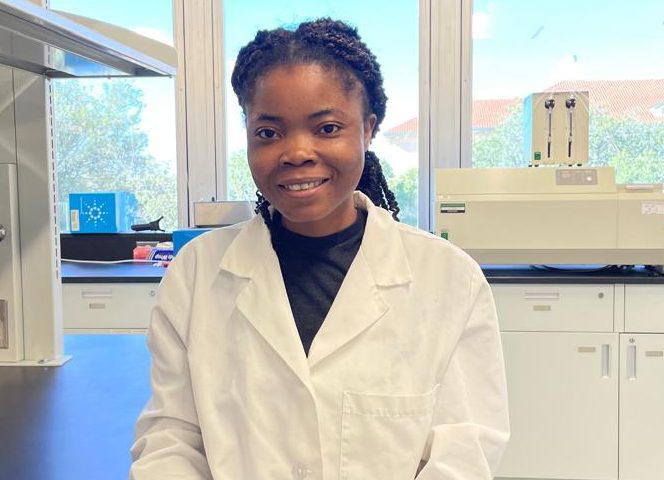
Joy Ikedichi Agbawodike, a recent graduate of New Mexico State University, has developed a pioneering clean-label ice cream formulation that’s catching the attention of America’s top food scientists. As she prepares to begin her PhD at the University of Minnesota this fall, we sat down with her to discuss her research findings, the challenges she overcame, and the health implications of her work.
What motivated you to focus your Master’s research on clean-label ice cream?
Ice cream is a beloved treat, yet many consumers are wary of the long list of additives on ingredient labels. Clean label isn’t just a trend, it’s a consumer demand for honesty and simplicity. I wanted to prove that natural stabilizers can deliver the same creamy texture and stability as synthetic ones, so ice cream could be both delicious and transparent.
Can you describe the main technical hurdles you faced?
Absolutely. Natural stabilizers vary widely in molecular structure and behavior under freezing conditions. Some cause coarse ice crystals; others lose effectiveness during storage. My challenge was to identify which stabilizer type and concentration could control ice crystallization, bind water, and maintain air incorporation. Using microscopy, rheology, and the gravimetrical method, I mapped how each stabilizer interacted with dairy proteins and fats at various temperatures.
Your work secured finalist status in ADSA’s Dairy Foods Oral Competition and second place in the 3-Minute Thesis contest. What did those recognitions mean to you?
Those competitions were pivotal. ADSA’s judging panel includes R&D leaders from top dairy companies and academics specializing in food engineering. Being a finalist validated the practical value of my research. The 3-Minute Thesis challenge forced me to distill complex science into clear, impactful messages an essential skill when you want your work adopted by industry.
You also won multiple NMSU-wide research awards. How did competing outside your immediate field shape your research perspective?
Competing in interdisciplinary forums exposed my work to engineers, chemists, and biologists. Their questions and critiques highlighted broader implications like how stabilizer interactions might inform plant-based product development or even bakery applications. Those experiences reinforced the idea that solid fundamental science can cross industry boundaries.
How did your education in Nigeria prepare you for this work?
At Moshood Abiola Polytechnic, I learned to approach problems from first principles. The curriculum emphasizes understanding why processes work, not just how to run them. That mindset was crucial when I faced unexpected results like a stabilizer blend that worked well at pilot scale but failed in larger trials. I reverted to fundamentals, adjusted processing parameters, and identified a balance between ingredient concentration and freezing rate.
Your PhD at Minnesota will focus on low-carbohydrate dairy products for diabetic consumers. What specific techniques will you employ?
I’ll build on my clean-label expertise by employing lactose conversion, enzymatically transforming lactose into glucose and galactose to reduce sugar content and ultrafiltration to concentrate proteins and remove residual sugars. These techniques, combined with texture-modulating natural stabilizers, will allow me to create products that are lower in carbs yet maintain the mouthfeel and flavor consumers expect.
Why focus on diabetes-friendly foods?
Over 38 million Americans live with diabetes, and dietary management is a cornerstone of treatment. Yet many people sacrifice taste and enjoyment for health. I aim to bridge that gap, offering foods that support blood sugar control without compromising the eating experience.
What impact do you hope your PhD research will have on the dairy industry and public health?
My goal is twofold: to provide manufacturers with a clear, science-based roadmap for low-carb formulations, and to improve nutritional options for diabetic and health-conscious consumers. If successful, these products can help reduce complications of diabetes and possibly lessen healthcare burdens associated with chronic disease management.
How do you see your role evolving as a Nigerian scientist in the U.S. research community?
I see myself as a bridge between two worlds, bringing the problem-solving rigor instilled by my Nigerian training and the cutting-edge resources of U.S. institutions to tackle global food challenges. I hope to inspire more collaborations that leverage international talent for mutual benefit.
What advice would you give Nigerian students aspiring to international research careers?
Master the fundamentals, seek interdisciplinary feedback, and cultivate strong communication skills. Science doesn’t exist in a vacuum, your ability to articulate the “why” behind your work to diverse audiences will determine its reach and impact.
Beyond ice cream, where do you see your research principles applying?
Any food system that relies on stabilizers, yogurts, sauces, plant-based cheeses can benefit. The same structure-function framework applies to textures in bakery, emulsions in dressings, and even encapsulation in nutraceuticals. The key is understanding ingredient behavior at the molecular level.
What’s next after your PhD?
After completing my PhD, I plan to lead R&D teams in the dairy and food processing industries, focusing on health-focused product development. My goal is to drive innovation in functional foods while contributing to industry standards that promote both consumer health and commercial viability.
Disclaimer
Comments expressed here do not reflect the opinions of Vanguard newspapers or any employee thereof.