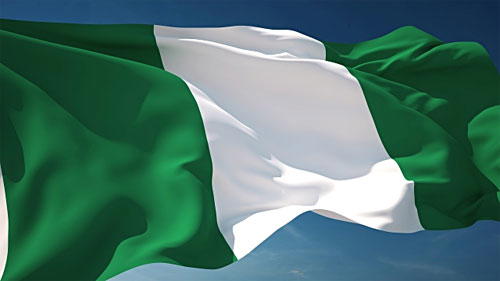
Nigerian Flag
By Dr. Michael Tidi
Rome, the historical cradle of republican democracy, bequeathed to the modern world not only the architecture of constitutional governance but also the metaphor of Janus—the two-faced god who looked simultaneously to the past and the future. While Janus symbolised transition and paradox, his spirit seems to have found curious expression in Nigeria’s contemporary political theatre.
Across the country’s political landscape, from legislative chambers to executive villas, one witnesses a disturbing rise in Janus-like conduct. Politicians increasingly wear one face in public and another in private—proclaiming allegiance to a political party while quietly dancing to the rhythm of another. The contradiction is not subtle; it is glaring.
Today, several high-profile political actors maintain formal affiliation with one political party yet hold appointments, privileges or unofficial alliances with opposing parties. They remain influential power brokers in their traditional bases while simultaneously enjoying the protection and patronage of the ruling establishment. In some instances, they openly deny defection, yet their actions betray divided loyalties.
This pattern of political duplicity is not only disingenuous, it is dangerous. It erodes public trust, fractures party cohesion, and weakens the institutional fabric of democratic governance. What we are seeing is the slow institutionalisation of contradiction—where ideology is dispensable and consistency is sacrificed on the altar of expediency.
More concerning is the fact that this duplicity is no longer the exception—it is fast becoming the norm. It has evolved into a template, especially for rising political actors, who now study and replicate it as a survival strategy. The lessons being passed down are troubling: that principle is secondary, that ambiguity pays, and that power resides not in conviction but in cunning.
This conduct manifests at both state and federal levels. In some cases, opposition figures enjoy federal protection while retaining control of their original structures back home. They extol party discipline while simultaneously undermining it. They speak of democracy but operate with impunity. The electorate is left disoriented, asking: who is truly serving the people, and who is playing both sides?
While Machiavelli may have asserted that moral considerations must sometimes give way to political necessity, Nigeria’s still-developing democracy cannot afford to anchor itself on such cynicism. This is not a sanctimonious rebuke but a call for ethical sobriety from a concerned Nigerian who believes that politics, though imperfect, can still be honourable.
Indeed, Karl Marx—though preoccupied with class conflict—understood the importance of competition. In democratic society, the contestation of ideas is sacrosanct. That competition withers when political actors are cowed, coerced or incentivised into conformity. When opposition is silenced not by superior argument but by pressure or inducement, democracy loses its soul. Nigeria proudly refers to itself as the giant of Africa. But that stature must be matched by democratic integrity. If our political system slips into de facto one-party dominance under the guise of cooperation or political convenience, then our claim to leadership on the continent rings hollow. The current administration, led by President Bola Ahmed Tinubu, must be reminded of his longstanding democratic credentials. If he truly remains a democrat, as history suggests, then he must allow opposition office holders the space to function freely.
Should they choose, of their own volition, to align with the ruling party, so be it. But any action—subtle or overt—that smacks of coercion or compromise must be resisted by all who believe in democracy.
To be clear, Nigeria’s political history is replete with shifting alliances. Political mobility is not inherently wrong. But the growing brazenness of present-day duplicity sets a dangerous precedent.
Young Nigerians, many of whom are observing with interest, are absorbing the wrong lessons—that success lies not in merit or conviction, but in how well one can navigate both sides of the aisle.
If democracy must thrive in Nigeria, multiparty pluralism must be preserved and protected. Our political institutions must resist the slide toward uniformity, however attractively cloaked. A true democracy requires friction, debate and divergence. The Janus mask must be retired. Nigeria deserves leaders who show one face—clear, principled and sincere. That is the leadership that builds nations. That is the leadership that inspires generations.
•Tidi, lawyer, economist, poet and writer, may be reached at [email protected]
Disclaimer
Comments expressed here do not reflect the opinions of Vanguard newspapers or any employee thereof.