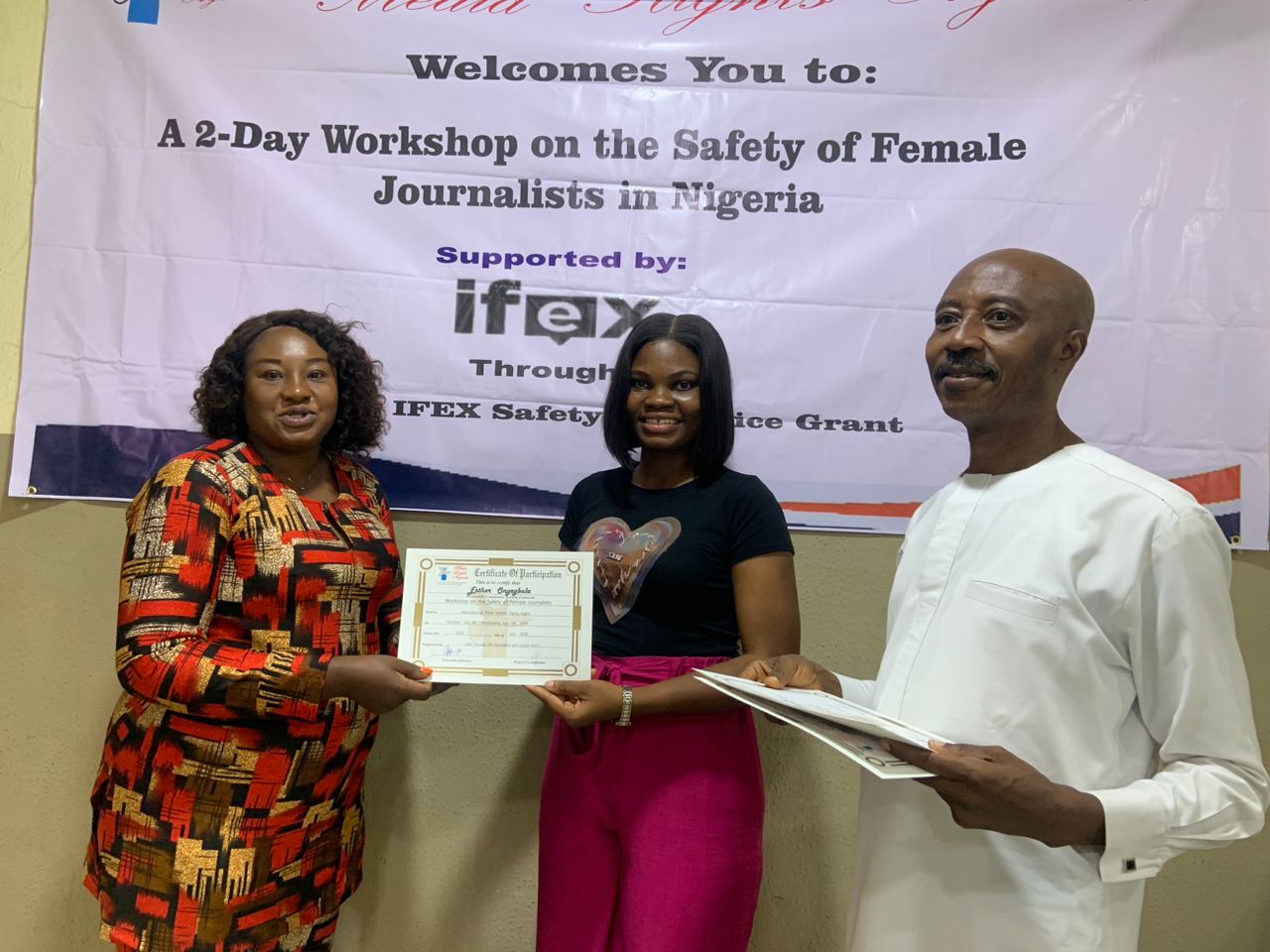
By Esther Onyegbula
Amid rising cases of harassment, violence, and gender-based attacks on female journalists in Nigeria, a coalition of journalists and media stakeholders have called for urgent reforms to protect women in the media space, citing a growing climate of impunity and institutional neglect.
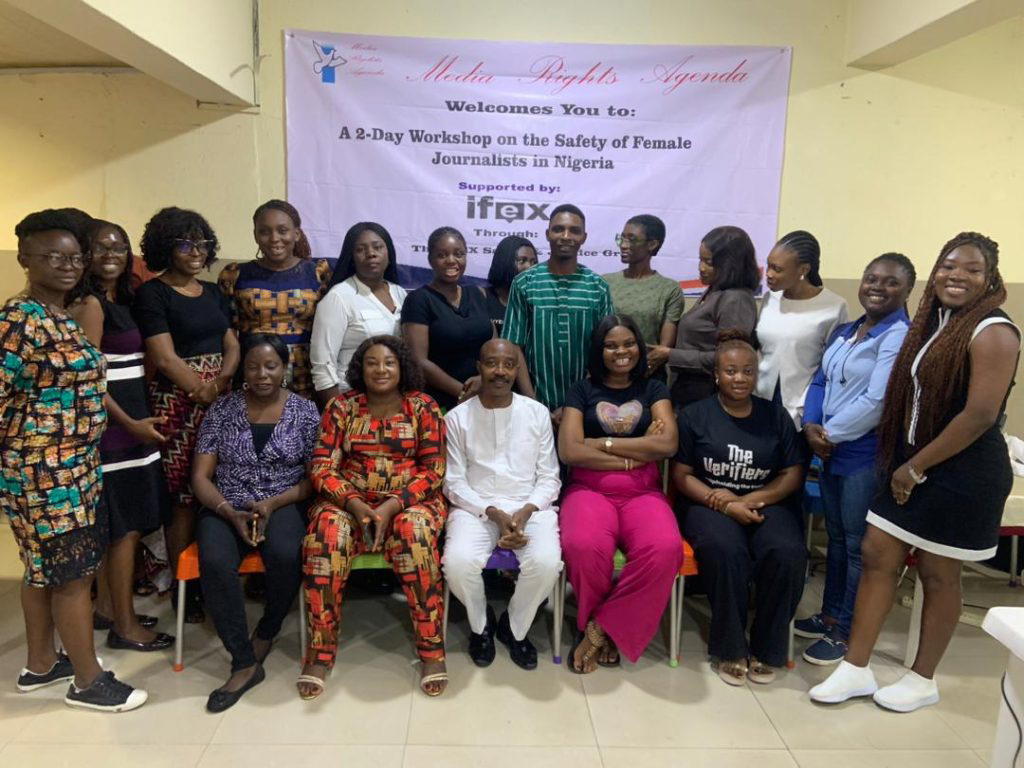
This was the core outcome of a two-day workshop on the Safety of Female Journalists in Nigeria, convened by Media Rights Agenda (MRA) with support from the International Freedom of Expression Exchange (IFEX), and held at the International Press Centre in Lagos on July 29 and 30, 2025.
The event, which brought together 24 female journalists from across print, broadcast, and online media platforms, spotlighted the physical, emotional, and digital risks female journalists face daily, and the failure of media houses and government institutions to shield them or hold perpetrators accountable.
According to Deputy Executive Director of MRA, Mr. Ayode Longe, “Female journalists are being attacked not just because they are journalists, but because they are women. The threats are unique, relentless, and often met with silence from the very institutions that should protect them.”
Participants noted a sharp increase in both online and offline gender-specific attacks, including sexual harassment, cyberbullying, intimidation by security operatives, and workplace discrimination. They lamented the absence of gender-sensitive safety policies within media organizations and professional bodies, describing existing legal protections as “inadequate” and “poorly enforced.”
“Perpetrators, whether political actors, security agencies, online trolls, or even newsroom colleagues, are rarely investigated, let alone prosecuted. This silence emboldens more abuse,” one participant stated during a session on legal redress mechanisms.
The communiqué issued at the end of the workshop outlined a comprehensive list of 12 recommendations, including:
A public condemnation of attacks on female journalists by federal and state governments.
The review of laws by the National and State Assemblies to explicitly protect women journalists from gender-based threats.
The creation of gender-sensitive newsroom policies with clear mechanisms for reporting and redress.
Provision of legal, psychological, and physical protection tools for female journalists by employers.
Establishment of a national protective network, possibly under the Nigeria Association of Women Journalists (NAWOJ), to promote solidarity and joint advocacy efforts.
Participants also emphasized the importance of mental health and self-care, urging female journalists to prioritize their well-being through adequate rest and utilization of leave days.
In an emotionally charged session, several journalists shared personal stories of trauma and workplace neglect, underscoring the urgent need for media employers to provide safe accommodations, secure transportation, and non-punitive environments for whistleblowing.
The event formed part of the implementation of the United Nations Plan of Action on the Safety of Journalists, which emphasizes the need for gender-responsive strategies to protect media workers.
The workshop ended with participants extending their appreciation to MRA for organizing the workshop and to IFEX for the financial support that enabled its execution.
They also reaffirmed their commitment to advocating for safer media spaces and called on all stakeholders, including media owners, civil society, and law enforcement, to recognize that the safety of female journalists is non-negotiable for media freedom, democracy, and national development.
Disclaimer
Comments expressed here do not reflect the opinions of Vanguard newspapers or any employee thereof.