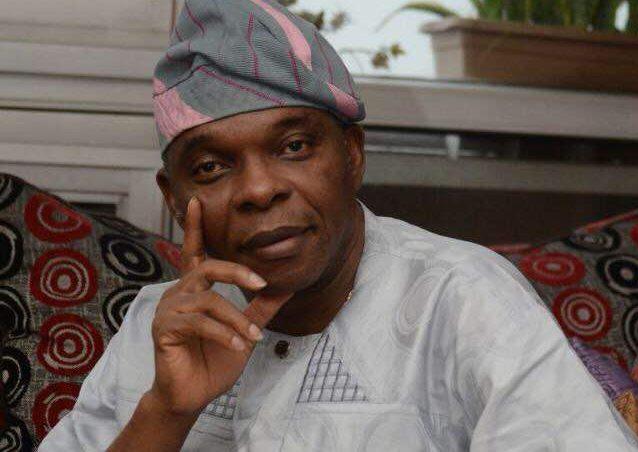
Muyiwa Adetiba
The ways of our politicians are confounding sometimes. The constitution is the document that binds people of diverse backgrounds and nationalities together and therefore must be seen to be truly representative. Unfortunately, it is not often available. It is also often worded in a legal and technical manner that makes it difficult for an average person to want to read for pleasure or interest. It is worse in a country where the reading culture is low.
This is the document members of the National Assembly are taking to Town Hall meetings to be discussed by people who have never seen the constitution let alone read it. I would have expected a massive education on contentious areas. I would have expected a high enlightenment and awareness level on the implications and seriousness of a constitutional amendment so that we do not end up with a worse document. The contentious issue is the nature of our federalism. The sticky points are clear. The enormous power of the presidency needs to be addressed.
The cost of running the National Assembly itself needs to be addressed. Revenue generation and especially revenue sharing need to be addressed if the country is to continue meeting its financial obligations. What role has the constitution played in promoting religion and creating separate identities? What about fundamental Human Rights of a citizen? These are serious issues that are best addressed if they are brought to the front burner. They can’t be without enlightenment. As it is, emotions are holding sway. Sectional or even personal interests are holding sway.
I am thus not surprised that the loudest noise in the ensuing cacophony is the creation of States. Each and every one of the thirty-six States wants to be broken down further. Even the FCT wants to be further divided. If tiny Ogun State had its way, it would be broken to at least three States. The same thing with Anambra State. The ostensible and often repeated reason is that this would bring development to the grassroots. The real reason is that it would bring more, often unearned income, to their people.
What the agitators don’t consider however, is the law of intended consequences. One of them is accentuating the differences between erstwhile neighbors instead of blurring the lines and encouraging co-operation for the common good. What they are often silent about is the enormous cost that attends this fractionalization. What they throw to the winds is where the money would come from. Each State would aspire to have a Government House. It would create its own often poorly trained Civil Service, promoting greenhorns to unearned levels of responsibility.
The Governor would demand the luxuries of a Lagos State Governor irrespective of its internally generated revenue. There would be Personal Assistants and Senior Special Assistants at his beck and call. There would be a convoy of cars to follow him everywhere. In the end, he becomes a big fish who begins to believe that the pond is equally big. He ends up being removed and very distant from the people – the very reason the State was created. What seems developed are the appurtenances of power and not the people. What seems developed is the State Capital and not Human Capital. We have seen this play out before. But we are yet to learnt our lesson.
The solution for grassroots development is already with us. It is the institution of Local Government Administration. The Councilors and Chairmen are from the people. They live and have their being among the people. They should therefore know where the shoe pinches and what the people really need at every point in time because they should be the closest to the people. But much more important is that it should serve as a crucible for training future leaders. It is where they should learn about public administration and accountability. It is where abilities are identified and tested and the more accomplished ones are pushed up to greater roles.
This is what China does among other things. This is what countries which are serious about public administration and management do. Lagos State recently had its Local Government election. I can’t think of any of my friends who went out to vote. I don’t know of any who knows his Chairman either let alone his Councilor. The Local Government Officials on the other hand, see the people as mere revenue potentials. They don’t feel accountable to the people. Worse, they don’t feel obliged to them. They know who put them there and where their alliance lies. What we have therefore, is a bastardization of what Local Government Administration should be. There is no synergy. There is no empathy. It is unfortunate as it also makes the clamor for State creation louder.
Another method of reaching the grassroots is through the traditional route. This route served us well in the past. The traditional Chiefs and Obas live among the rural people who consult and pay obeisance to them. They know the needs and aspirations of their people. Although Obas in the past were powerful and autocratic, they were also accountable to the people. There were traditional checks and balances. A good Oba is concerned primarily about the development, peace, prosperity and unity of his people while the people know instinctively, that their ruler has their back and could lay his life on the line in times of war.
Unfortunately, politicians in their quest for control have tampered with the delicate balance between Traditional Rulers and their people. Although Obas are still from the people, they are not often the people’s choice. More poignantly, the traditional processes for selecting an Oba is no longer adhered to. The result is that the spiritual connection and mutual allegiance between the so called ‘divinely chosen’ and his people is no longer strong. Allegiances have also shifted from the people to whomever is in the Government of the day. I believe traditional rulers have a big role to play in the mobilization and development of rural Nigeria.
For this role to be effective, I also believe traditional norms and precepts should not be abridged in the name of political control or modernization. These precepts cover birth, selection, tenure and death of Chiefs and Obas. In other words, the life and times of a Traditional Ruler should be dictated by tradition. We need the traditional institutions to be relevant to deliver services – spiritual, moral and material – to the grassroots. But this relevance is compromised if the very process that nurtures and gives it being get compromised.
Disclaimer
Comments expressed here do not reflect the opinions of Vanguard newspapers or any employee thereof.