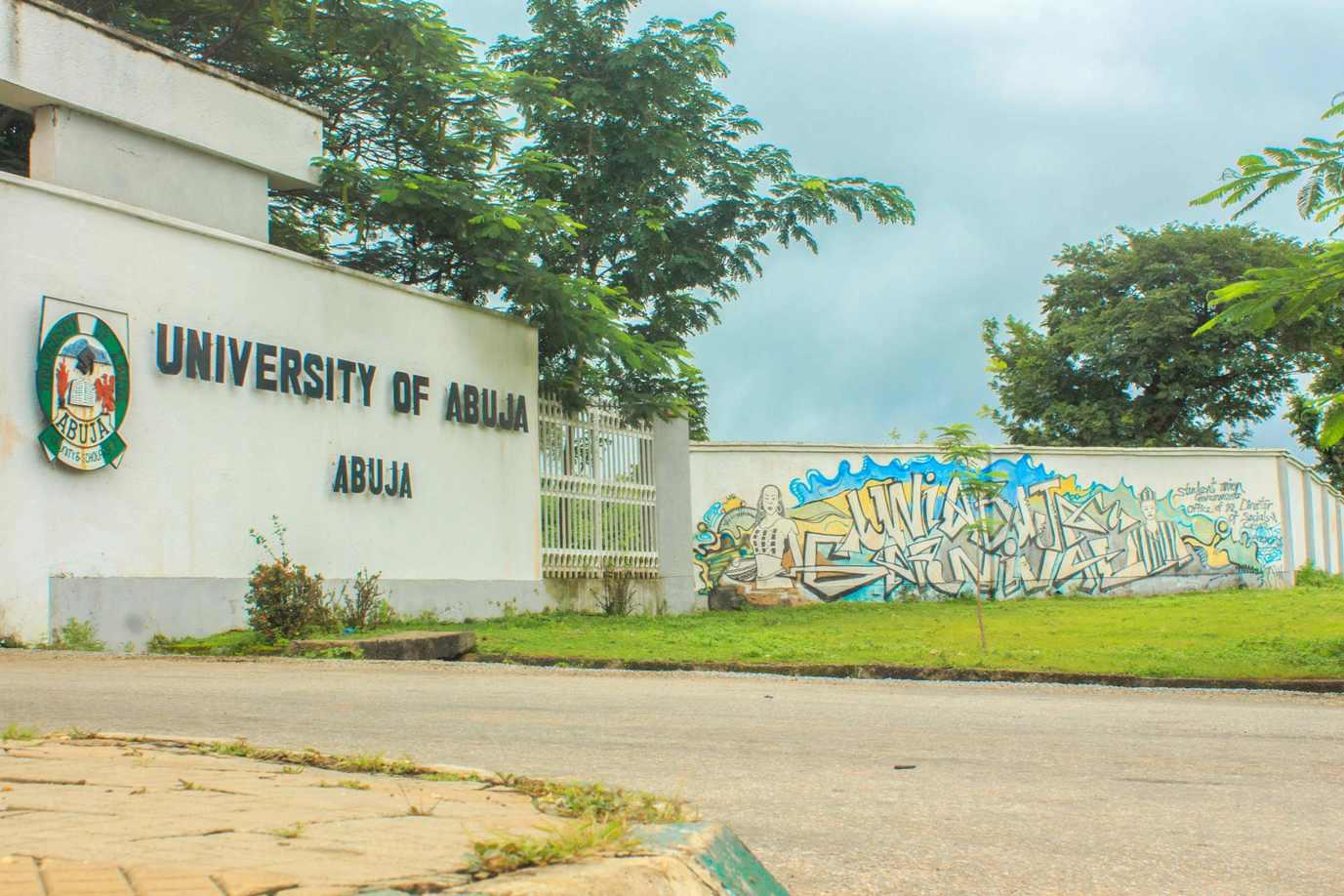
It is a basic assumption of normal life that ‘what is good for the goose should be good for the gander’. This is more pertinent in a formal, rule-based setting, such as the operations of government machinery and its various agencies, where it is assumed that decisions and actions are thorough, regulated, and devoid of the whims and fancies of the operatives.
In the context of our national milieu, nowhere should this be more pronounced than in the Nigerian University system, which has evolved and continued to grow based on uniform principles, procedures, processes, and practices by the universities. This is anchored or hinged on the existing rules or guiding precepts established or prescribed by the government or relevant authorities for their operations from time to time.
However, a recent disturbing trend of undue external interference in the governance and affairs of universities orchestrated by a Minister of Education, has been threatening the application of this self-evident truth in the governmental oversight and supervision of the institutions.
For the first time in Nigeria, different principles and or yardsticks are being invented or applied by the Federal Ministry of Education to various universities, even when they face the same situation or experience requiring a similar solution or way out.
It is no longer news that how the reinstatement of the Vice-Chancellor of the Alvan Ikoku Federal University of Education, Owerri, Professor Stella Ngozi Lemchi came about, while deliberately leaving out Professor Aisha Sani Maikudi of the University, with whom they were unlawfully removed from the office on the reported authorisation of President Bola Ahmed Tinubu in early February this year.
The letter reinstating Professor Lemchi, signed by the Pro-Chancellor and Chairman of the University’s Governing Council, Senator Ahmed Sani Stores, attributed the decision to the findings and recommendations of a Ministerial Fact-Finding Committee. The blatant, grotesque scenario whereby the Minister, following purported approval of the President, removed the Vice-Chancellor, which the Governing Council is only now being used to legitimise, confirms the illegality of the original act.
It would be recalled that the unwarranted removal of the two female Vice-Chancellors via a press statement was part of the actions taken by the government, purportedly “aimed to strengthen governance and academic excellence within Nigeria’s tertiary education sector”. Other universities affected by the unilateral actions included the Nnamdi Azikiwe University, Awka, the University of Nigeria, Nsukka, and the University of Health Sciences, Otukpo. Specifically, the two female academic chief executives were immediately replaced by acting Vice-Chancellors appointed by the government for a six-month term that expires in early August.
The government’s actions not only contravene the existing rules governing the operations but have also usurped the autonomy of the universities. In the particular case of the dislodged helmswomen at Owerri and Abuja, the baselessness of their removal has just been proven by the reinstatement of Professor Lemchi. As widely reported in the media and now confirmed by the letter referred to above, her reinstatement was consequent upon the approval of the recommendations of a Ministerial Committee which established that Professor Lemchi’s appointment met the statutory requirements in terms of both due process and eligibility criteria. That being the case, the question to ask is, why has Professor Aisha Maikudi been out of the equation and left in the lurch by the Minister of Education? Should the case of the University of Abuja not be similarly resolved accordingly?
This question is pertinent and require urgent attention, promoting justice, fair play, good governance, inclusivity, and national cohesion. There is no justification on earth to return Professor Ngozi Lemchi to her office and refuse to return Professor Aisha Maikudi to her office too. Both were properly appointed by the Governing Councils of their respective universities after due process.
Their unlawful removal from the office on the same day without explanation or reason given to date by the government. It also explains why they have not been served with the letter removing them from the office.
In terms of eligibility, Professor Maikudi is two years ahead, as she attained the rank of professor in 2021 and became a substantive Vice-Chancellor in January 2025, while Professor Lemchi was promoted to the rank in 2023 and was also appointed Vice-Chancellor in January 2025. Before becoming a substantive Vice-Chancellor, Professor Maikudi rose through the ranks and had previously served in numerous important capacities, including Head of Department, Deputy Dean of the Faculty of Law, Director, Deputy Vice-Chancellor (Academic), acting Vice-Chancellor, and member of the Council at the University of Abuja. For her part, Professor Lemchi had spent the bulk of her teaching career at the Alvan Ikoku College of Education, where she became its Provost, and upon its upgrading to a university, became the acting Vice-Chancellor.
Given the foregoing, it smacks of gross injustice and outright persecution to whimsically decide to restore the proper leadership governing structure at the Alvan Ikoku Federal University of Education while encouraging the University of Abuja.
For the other universities, notably Nnamdi Azikiwe University, Awka, University of Health Sciences, Otukpo, and Alvan Ikoku University, an interface involving meetings held between them and the Federal Ministry of Education, authorised by the Minister, was established before the unilateral actions of the government.
In the case of the University of Abuja, neither such interaction nor any form of investigation was allegedly conducted at the institution. Instead, besides removing the Vice-Chancellor, the entire Governing Council, including the internal members appointed by the University Senate and Congregation, was dissolved. Only the University of Abuja suffered the illegal removal of its internal members from the Council, which further deepened unwarranted government involvement in the leadership. Appointed by the University Senate and Congregation, it was not within the purview of the government to relieve them of their duties in the Council.
What remains unclear is whether this vendetta, especially against Professor Aisha Maikudi, as part of the larger perceived neglect and marginalisation of the interests of the ‘core North’ by the current regime. Herself from Katsina, along with the Pro-Chancellor from the North-West, who was also unilaterally removed, it is inexplicable that such illegalities is being committed directly against the affected duo from such a strong geo-political base of President Tinubu.
Hence, one will be perfectly correct to contemplate the execution of a pre-determined script in the seeming perpetuation of the current University of Abuja leadership saga. Otherwise, why should those from the southern part of Nigeria, like Professor Lemchi, who was affected along with Professor Maikudi, be reinstated, while the latter is not? Or, is it because of the alleged influence of a powerful political figure and Lemchi’s godfather from Imo state, as being speculated by sources privy to current happenings? Even at that, the insinuation of primordial undercurrent remains.
Although Senator Ali Ndume has recently commended President Tinubu for the renewed efforts towards running an inclusive administration through the spread of his new appointments, such a noble Presidential gesture is being rubbished by the antics of ethno-regional supremacists. Perhaps the retention of President Tinubu’s hard-earned political capital across the length and breadth of the country is not a major concern, to a man who, until his appointment in the cabinet, had sojourned in the diaspora and may not have been directly involved to appreciate the gritty electoral and political battles that brought his principal to power in 2023. In a civilian dispensation as currently practiced in Nigeria, perception is key, and it can serve to elevate or otherwise a political regime or movement among the followers or electorates.
With the contest in the fast-approaching 2027 general election promising to be titanic and not likely an easy sail for anyone, the minders of the Tinubu Presidency should not be engaged in an arrogant display of power that is capable of strengthening a wrong perception and muddying up its image and credibility across the various geopolitical and electoral spectrums in the country. Alausa must appreciate that it is not acceptable, in this case, to require a just and fair handling; he opted to snub the daughter of Katsina state and, by extension, the North, while reinstating the daughter of Imo state and, by extension, the South. This matter is not only about justice for Aisha Maikudi, but also people from her side of the country perceive the government’s handling of her current career predicament as unjust, discriminatory, and unacceptable.
In this context, it is difficult not to feel a deep sense of disappointment at Professor Aisha Maikudi’s continued silence in the face of this unfolding saga. Beyond her initial, dignified acceptance of the situation as the will of God—kaddara Allah—the trailblazing first female Professor of Law from the North-West has remained largely absent from the public discourse surrounding her removal. While this response aligns with a broader cultural and religious tendency among many Northern Muslims to submit to fate and avoid open confrontation, especially through legal channels, such restraint may come at a cost. In a nation where individuals are routinely marginalised on the basis of region, religion, and other entrenched divisions, silence does not remedy injustice—it entrenches it. Justice, after all, does not descend like manna from the heavens; it must be pursued.
Her dignified composure, though admirable, has inadvertently allowed a grave injustice to fester unopposed. In a country where silence is often misread as acquiescence or weakness, such passivity risks not only personal loss, but also a broader erosion of institutional accountability. Yet, this issue extends far beyond the personal. It strikes at the heart of institutional integrity, the rule of law, and the collective responsibility to preserve fairness and equity within Nigeria’s university system. This is no longer merely a personal matter; it speaks to the integrity of our academic institutions, the credibility of due process, and the collective duty we owe to fairness and equity in Nigeria’s university system.
One is consoled that the matter has persisted because it touches on the raw nerves of impunity, lawlessness, and injustice that must be addressed to ensure both justice and a national balancing act, necessitated by the similar situation at the two universities under reference. To reiterate the beginning of the write-up, what is good for the goose should be good for the gander!
For this singular reason, the Alvan Ikoku Federal University of Education and the University of Abuja cannot be treated differently. Hence, the reinstatement of Professor Lemchi and Professor Maikudi should be a result of the same crisis of impunity and undue interference in the affairs of their respective universities. Leaving the latter in the lurch and restoring the former to her job will complicate matters for the Tinubu Presidency, forever stain its record and legacy from which Dr. Alausa will not escape the attendant opprobrium and damning verdict of history. But more importantly, Nigerians from Professor Maikudi’s part of the country and others with a good conscience will never accept the blatant injustice of not reinstating her as Vice-Chancellor of the University of Abuja. This is simply because she is not a second-class citizen!
Labaran Muhammad PhD wrote from Bayero University, Kano
Disclaimer
Comments expressed here do not reflect the opinions of Vanguard newspapers or any employee thereof.