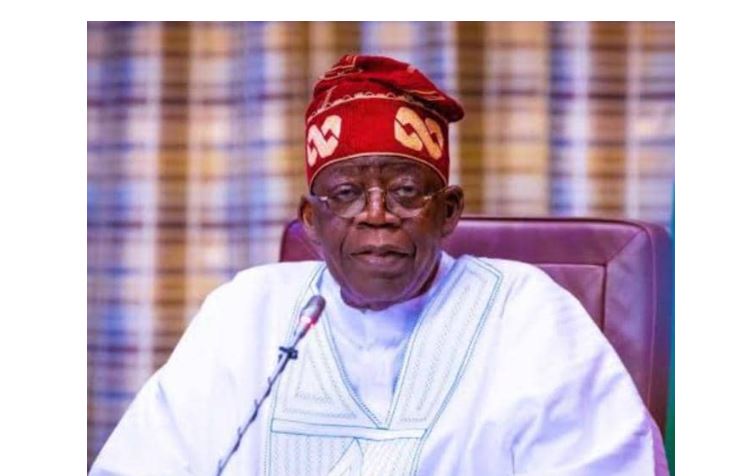
President Bola Tinubu
President Bola Ahmed Tinubu has done something few Nigerian leaders have ever dared. He has cracked open the hardened crust of our tax system and poured in a new order. On the surface, the Tax Reform Bills he recently signed into law look like a balm, a set of well-meaning adjustments aimed at fairness, modernization, and efficiency. But beneath the ink and ceremony lies a deeper question. Can any tax reform, however noble in theory, truly work in a country where the social contract has all but collapsed?
Let’s begin with what appears to be progress.

Renaming the Federal Inland Revenue Service to Nigeria Revenue Service is more than cosmetic. It signals a shift from a centralization of fiscal authority under one body empowered to collect revenue across agencies like Customs, NUPRC, NPA, and NIMASA. This move, if properly implemented, may curb the duplication and leakage that have long plagued our revenue channels. It is the kind of bold bureaucratic streamlining that technocrats often recommend. But Nigerians have seen many name changes. NEPA became PHCN. SARS was rebranded and disbanded. But the underlying rot often stayed the same. A new name means nothing without a new culture.
Then there’s the populist angle. Workers earning 800,000 naira or less annually are now exempt from income tax. This is a welcome relief for millions living on the knife-edge of poverty. Similarly, small businesses, many of them run by women, youth, and informal traders, are now exempt from corporate tax. These are moral victories. But they also raise an important question: when the poorest are exempt and the richest are few, where will the revenue come from?
Now to the high earners. A new 25 percent income tax for individuals earning above 50 million naira a year sounds fair. Even progressive. But will the super-rich many of whom dance nimbly between legal loopholes and political privilege actually pay? In a country where tax compliance is more of a suggestion than a civic duty, enforcement will determine whether this is real reform or just another policy on paper.
The government has maintained the VAT rate at 7.5 percent and spared essentials like food, school fees, electricity, and pharmaceuticals. In a nation where inflation is a daily tormentor, this is a thoughtful move. But what happens when the state is broke, and temptation knocks to expand that VAT net?
Perhaps the most contentious part of the reform is the introduction of a Development Levy, ranging from 2 to 4 percent. The money is meant to fund institutions like NELFUND, TETFund, NITDA, and NASENI. On paper, these bodies sound like agents of progress. But in reality, how many Nigerians can point to visible impact from them? For this levy to gain public trust, these institutions must begin to justify their existence in plain sight. Nigeria cannot afford any more black holes in its budget.
Beyond the fine print, this reform invites a larger conversation about trust.
We have always known how to collect taxes in Nigeria. What we have never learned is how to earn them. How do you tax a people who see no value in governance? Who fund their own security, dig their own boreholes, pay bribes for public services, and endure roads that lead nowhere? A country cannot tax its way to development if it refuses to develop its way to legitimacy.
And legitimacy begins with transparency. Where will this new tax money go? Will lawmakers still earn obscene salaries and allowances while teachers go unpaid? Will government agencies still spend millions on SUVs while health centers collapse? Will the presidency still budget billions for refreshments and honoraria while universities beg for chalk?
This is not just a new tax law. It is a moment of reckoning.
If Tinubu’s administration gets it right, history may remember this reform as the spark that lit a new fiscal dawn. But if they fail, if implementation becomes another theatre of corruption and selective enforcement it will go down as just another chapter in Nigeria’s long tradition of promising revolutions and delivering routines.
So what must be done?
First, this reform must come with brutal transparency. Let Nigerians see in simple, public dashboards where the money goes.
Second, we must build automated digital systems that reduce human discretion and enforce compliance across all income brackets, especially among the powerful.
Third, tax justice must be matched by visible service. Nigerians will pay taxes when they begin to see working schools, functioning hospitals, and reliable infrastructure.
Finally, we must stop taxing pain and start rewarding productivity. Instead of squeezing the few who already carry the weight, we must grow the base by creating an economy that works where employment is not a miracle and growth is not a hoax.
In the end, taxation is not just policy. It is a relationship. Between the government and the people. Between demand and delivery. Between power and accountability.
This law is not the end. It is just the first page in a long story we are yet to write.
And it will only be credible if it is written in the ink of justice, the grammar of service, and the punctuation of real results.
This law is not the end. It is the opening line of a story that will be judged not by signatures and ceremonies, but by outcomes.
And if this government is serious, then let it prove it not with promises, but with performance.
Because Nigerians are not asking for miracles. We are simply asking that the taxes we pay no longer feel like ransom to a system that gives nothing in return. The signing of the Tax Reform Bills by President Tinubu is one of the most consequential economic moves in recent years. It affects every working Nigerian, small business owner, and even large corporations. Your commentary addresses it in real time, giving readers the clarity they crave. Let this reform not be another chapter in Nigeria’s long history of motion without movement.
Let it be the moment we finally turn the page.
Disclaimer
Comments expressed here do not reflect the opinions of Vanguard newspapers or any employee thereof.