By Musa Ubandawaki, Sokoto
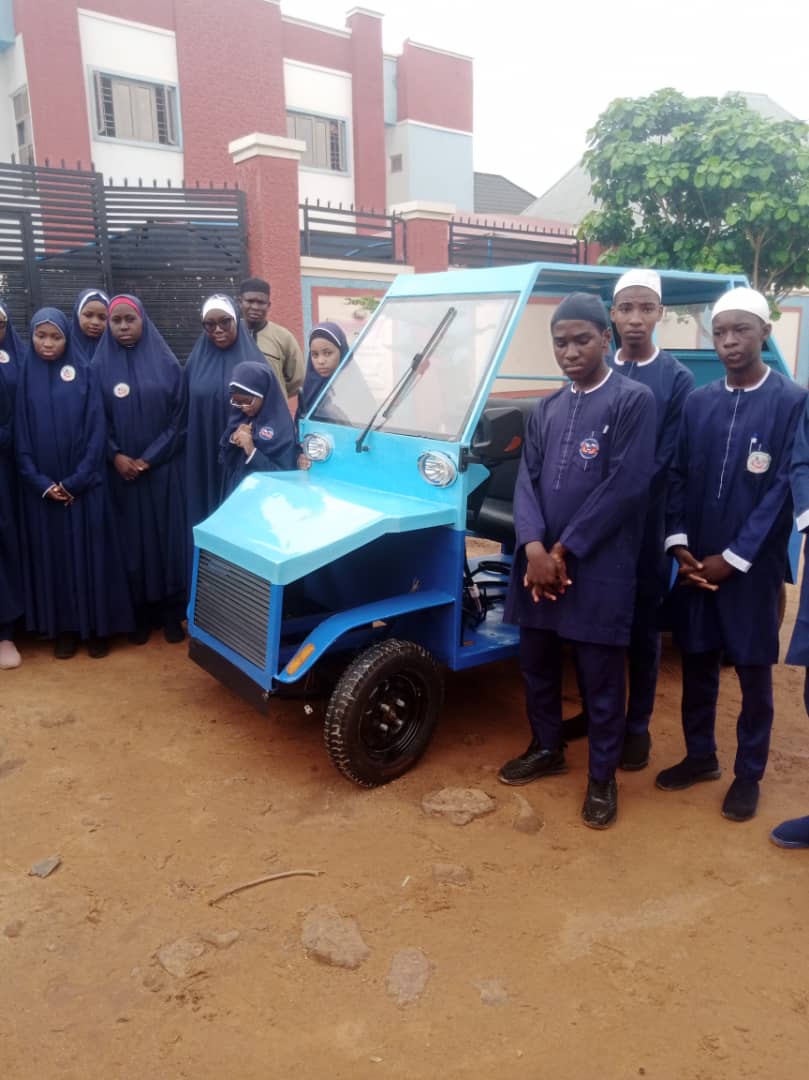
SOKOTO — In a bold demonstration of homegrown innovation and youthful ingenuity, students of Brilliant Footsteps International Academy in Sokoto State have stunned the nation with the successful design and construction of an electric vehicle, sending waves of optimism across Africa’s technological and educational landscape.
The electric vehicle, aptly named BMT 1.0, was developed by Senior Secondary School III students as their final graduation project, and unveiled on Saturday in Sokoto. Entirely conceptualized, engineered, and assembled by the students, the project places the school at the forefront of grassroots science and technology education on the continent.
The feat was accomplished with technical guidance from Maglush Electrical Company, which served as consultants throughout the design and assembly process.
Speaking during a media briefing, Dr. Shadi Sabeh, Proprietor and General Manager of the academy, described the project as a symbol of hope for Nigeria and Africa.
“This isn’t just a graduation project. It’s a message that we can build and innovate locally. For too long, Africa has been treated as a dumping ground for foreign used vehicles—this changes the narrative.”
The vehicle integrates three core engineering systems: mechanical structure, electrical configuration, and external body design. According to the student team leader, Ahmed Sadi, the car features a Battery Management System (BMS) that requires 3 to 4 hours of charging, after which it can travel up to 30 kilometers on a single charge.
“This is not just about building a car,” Sadi said. “It’s about showing what young Nigerians can do when given the tools and support to innovate.”
Among the 15 students who contributed to the project, Aisha Ahmed stood out for her passion and advocacy.
“If sustained, this project could reduce transportation costs, protect our environment, and lessen dependence on imported vehicles. It’s about our future—green, affordable, and built right here in Africa.”
The success of BMT 1.0 has drawn attention from educators, policymakers, and tech enthusiasts alike, sparking calls for increased investment in STEM education and local innovation—especially in underserved regions like Northern Nigeria.
Experts say the students’ achievement proves that, with proper support, Nigerian youths can provide sustainable solutions to local challenges—ranging from climate change to mobility and unemployment.
Dr. Sabeh urged government agencies and the private sector to take note.
“What these students have done should be a wake-up call. We need deliberate collaboration to scale this kind of innovation. Imagine the potential if every school had the means to encourage practical science and technology.”
In a region often plagued by underinvestment in education and infrastructure, the BMT 1.0 represents more than just a working electric vehicle—it is a beacon of possibility. It shows that the future of Africa’s mobility doesn’t have to be imported. It can be built, charged, and driven from within.
Disclaimer
Comments expressed here do not reflect the opinions of Vanguard newspapers or any employee thereof.