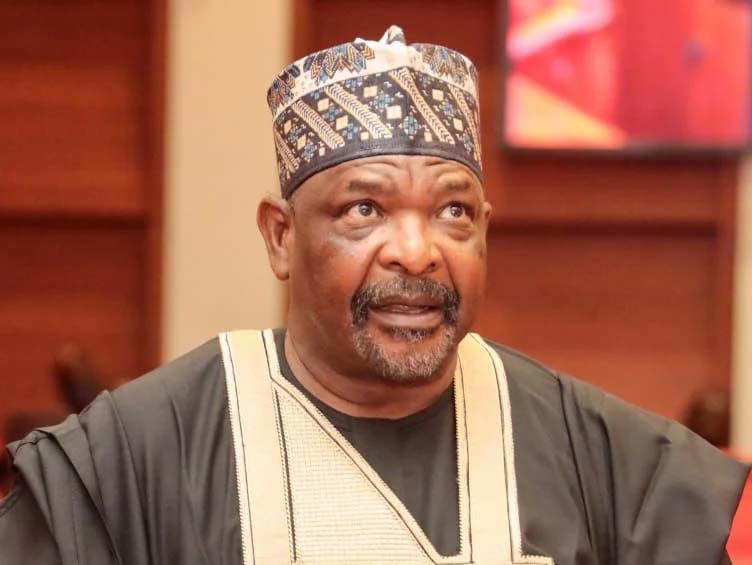
Senator Abdul Ningi
…calls for clarity on debt use, impact
Prominent lawmaker Senator Abdul Ningi has taken a decisive stance against the recently approved $21 billion foreign loan sought by President Bola Ahmed Tinubu’s administration, stating that the request lacks transparency, clarity of purpose, and sound financial grounding. His objection, which comes in the wake of the Senate’s approval of the facility, reflects deepening public concern over Nigeria’s debt sustainability and financial governance.
Senator Ningi, known for his consistency on matters of fiscal accountability, questioned the rationale behind the loan, which he believes was rushed through legislative approval without sufficient scrutiny or concrete information about its structure and objectives.
“We are lawmakers, not loan enablers,” Ningi asserted. “It is our duty to interrogate any borrowing proposal thoroughly. I could not, in good conscience, support a $21 billion request that fails to provide Nigerians with specifics—no project details, no sectoral breakdown, no repayment roadmap, and no assurances of impact.”
According to Ningi, the government must do more than invoke the need for infrastructure or development. He insisted that every dollar borrowed must be traceable to tangible outcomes, adding that Nigeria can no longer afford the pattern of opaque borrowings that contribute little to economic productivity while deepening the debt crisis.
The loan, as part of the medium-term external borrowing plan covering 2022 to 2024, was passed by the Senate with the stated aim of funding infrastructure and social investment programmes. However, Ningi argued that beyond the political framing, Nigerians are entitled to know where the money is going and what measurable benefits it will bring.
“Transparency is not optional; it is constitutional,” he said. “At a time when the country is struggling with inflation, high debt servicing costs, and declining purchasing power, any additional debt must be tied to real economic gains.”
His rejection has sparked renewed conversation within policy circles, with economists warning that Nigeria’s external loan appetite must be approached with caution. Many have applauded Ningi’s intervention, describing it as a necessary check on executive powers and a call for responsible legislative oversight.
Analysts also note that Ningi’s concerns highlight a broader issue in Nigeria’s budget process—where loan approvals are often treated as procedural formalities, rather than serious fiscal decisions that affect the country’s economic sovereignty.
While the Presidency maintains that the loan will unlock critical infrastructure, enhance energy capacity, and boost agricultural productivity, critics argue that the lack of transparency and proper public engagement erodes trust in the process.
As expectations mount for further disclosures from the executive, Senator Ningi has called on his colleagues in the National Assembly to insist on full accountability in the loan’s implementation phase. He also urged civil society and the media to remain vigilant.
“This is about the future of our country. We must make borrowing a tool for growth, not a trap. Nigerians deserve to know the truth behind every dollar borrowed in their name,” he concluded.
With the spotlight now on how the approved funds will be managed, Senator Ningi’s bold stance may signal a turning point in legislative-executive relations over financial policy and marks a strong reaffirmation of the role of oversight in a functioning democracy.
Disclaimer
Comments expressed here do not reflect the opinions of Vanguard newspapers or any employee thereof.