..Demand Decisive Action on Food Security
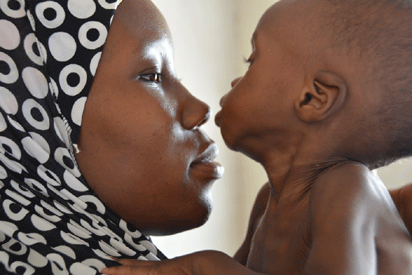
The House of Representatives has raised concerns over rising malnutrition and worsening food insecurity in Nigeria, calling for urgent and coordinated national action to reverse the trend, which it says is costing the country billions annually.
Speaking at a three-day National Summit on Nutrition and Food Security in Abuja, Vice President Kashim Shettima—represented by Senator Ibrahim Hadejia—described the malnutrition crisis, particularly among children under five, as unacceptable. He emphasized the need for stronger collaboration among federal, state, and local governments to tackle the crisis, highlighting initiatives such as the N774 Programme and the National Legislative Network on Nutrition as key tools for intervention.
Chairman of the House Committee on Nutrition and Food Security, Hon. Chike Okafor, painted a bleak picture of the economic impact of malnutrition, revealing it costs the nation an estimated $56 billion annually, equivalent to 12.2% of Nigeria’s Gross National Income. He also noted that post-harvest losses amount to over $2 billion each year. He stressed the need to urgently protect farmers from insecurity, warning that frequent bandit attacks have forced many to abandon their farms, worsening food shortages and hunger.
Speaker of the House, Hon. Tajudeen Abbas, echoed the call for immediate action, stating that Nigeria must transition from “rhetoric to results” through a comprehensive, multi-sectoral response.
“These numbers should alarm us into action,” he said. “We are working with all 36 states to develop and implement targeted legislation, build capacity, and conduct cross-sectoral consultations to address the root causes of food insecurity and malnutrition.”
Experts at the summit also emphasized the scale of the crisis. Mr. Michael Ojo, Country Director of the Global Alliance for Improved Nutrition (GAIN), cited climate change, insecurity, and rapid population growth as key drivers of food insufficiency and poor dietary quality.
“We are facing a dual crisis—lack of food and lack of nutrition,” Ojo said.
On the security front, Nigeria’s Chief of Army Staff, Lt-Gen. Olufemi Oluyede—represented by Major-General Olufemi Dare—called for a shift from open grazing to ranching. He urged lawmakers to enact legislation banning open grazing to reduce farmer-herder conflicts that continue to disrupt agriculture and food production.
The summit also showcased the impact of the Accelerating Nutrition Results in Nigeria (ANRiN) programme. With support from the World Bank, ANRiN provided vital nutrition services to over 13.7 million women and children across 12 states between 2019 and 2024.
As Nigeria confronts growing hunger and economic challenges, lawmakers and stakeholders at the summit agreed that urgent reforms, increased investment, and bold policy decisions are essential to saving lives and securing the nation’s future.
Disclaimer
Comments expressed here do not reflect the opinions of Vanguard newspapers or any employee thereof.