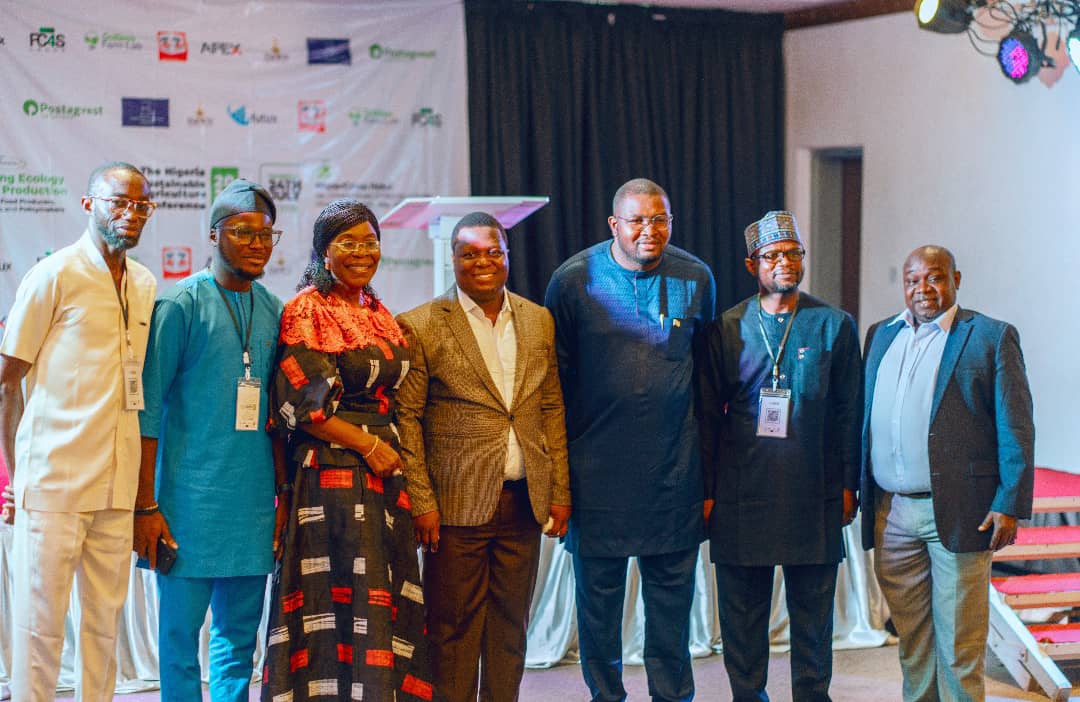
Stakeholders in the agriculture sector have expressed dismay over the regulatory frameworks that guide agriculture in Nigeria, saying given the urgent ecological realities farmers face, current policies are lagging behind.
Lead Strategist, FutuX Agri-consult Limited, Mr Babatunde Olarewaju, also expressed concerns over the degraded lands in Nigeria, noting that compared to 2019, the situation has worsened due to unsustainable practices and a changing climate.
Olarewaju, however, said there was a need to build a resilient and enabling policy environment that would actively promote ecological stewardship for sustained food production.
He spoke at the Nigeria Sustainable Agriculture Practice 2025 themed: ‘Sustaining Ecology for Food: The Role of Food Producers, Agri-investors and Policy Makers,’ held in Lagos.
Speaking at the event, he said: “The United Nations Convention to Combat Desertification, UNCCD, reported about 21.07 million ha of degraded land in 2019, which constitutes about 23.41 per cent of the total land area.
“Six years later, the situation has worsened due to unsustainable practices and a changing climate. We witness firsthand the impacts of erratic rainfall, prolonged droughts and devastating floods in both the Northern and Southern regions, directly affecting the yields and livelihoods of our hardworking farmers.
“Our policymakers hold the power to craft the regulatory landscape that either nurtures or stifles our collective efforts. For too long, policy has sometimes lagged behind the urgent ecological realities our farmers face daily. Our on-the-ground experience in guiding farms to sustainable food production and implementing various food safety systems gives us a unique vantage point. We see where the current frameworks shine, and critically, where they inadvertently create bottlenecks for sustainable practices. Therefore, we need to build a resilient and enabling policy environment that actively promotes ecological stewardship for sustained food production. What does this mean?
“Designing coherent, forward-looking policies that integrate climate resilience directly into agricultural planning moving beyond reactive measures to proactive adaptation strategies. This includes incentives for soil health regeneration, water conservation, and biodiversity protection.
“Creating clear, stable investment incentives that make green agricultural projects attractive and less risky for Agri-investors, unlocking the vital capital needed for sustainable transformation. Strengthening research and extension policy to ensure that cutting-edge. Enacting strong regulatory frameworks for food safety, quality and traceability that safeguard both consumer health and our natural resources.”
Also speaking, Country Representative at AFOS Nigeria, Juliet Adekoya, represented by Olatunji Moses, called for a sustainable food system, saying it would deliver food security without compromising environmental, social and economic foundations.
According to her, to ensure a sustainable food system, policymakers must create the enabling policy environment that focuses on land tenure reforms, water rights, support taxes incentives and corporative incentives as well as small and medium enterprises.
Adekoya said: “Sustainable food systems are not built by chance. They are shaped by the deliberate and coordinated actions of key actors: the food producers, agric-investors and the policymakers. These are vital pillars in the development of sustainable food system within any nation.
On his part, Director of Federal Department of Agriculture, Mr Iwara Bassey, in his address, urged those into agriculture to adopt climate resilient agricultural practices that prioritise soil health, efficient water use and cropp identification by leveraging innovations like precision farming and smart irrigation systems because it could enhance productivity.
Disclaimer
Comments expressed here do not reflect the opinions of Vanguard newspapers or any employee thereof.