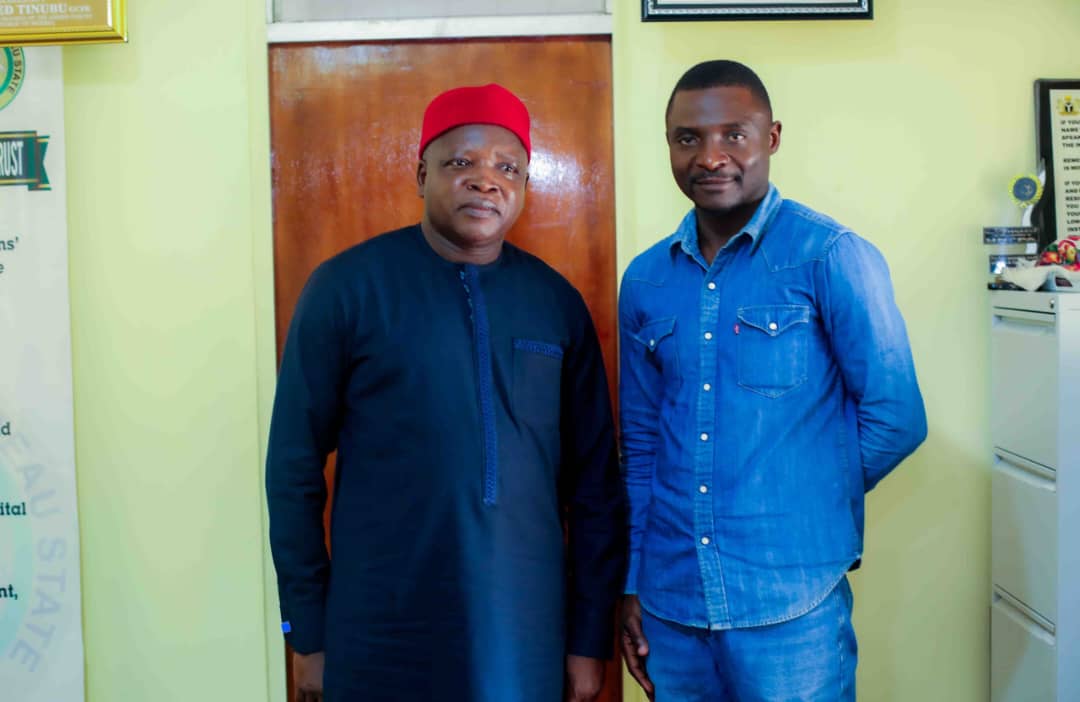
From left: Commissioner Lekshak and Mr. Pwakim during the visit
By Marie-Therese Nanlong
Jos – In a move to reimagine Plateau State’s development architecture through the lens of peace and resilience, the Ministry of Budget and Economic Planning has expressed readiness to integrate Preventing and Countering Violent Extremism (PCVE) into the State’s long-term planning frameworks.
This commitment followed a strategic advocacy visit by the Partnership Against Violent Extremism (PAVE) to the State Commissioner of the Ministry, Mr. Bulus Lekshak.
Led by Mr. Jacob Pwakim, Chair of PAVE Plateau and Executive Director of the Youth Initiative Against Violence and Human Abuse (YIAVHA), the delegation urged the State government to institutionalize PCVE strategies within its Medium-Term Expenditure Framework (MTEF), annual budget, and local government development plans.
The appeal comes amid increasing concern over fragmented peacebuilding initiatives and dwindling donor funding, especially in rural communities that remain vulnerable to extremist ideologies and cycles of violence.
“The Ministry is the nerve centre of Plateau’s development thinking. Without peace, there can be no meaningful progress. We are advocating for the inclusion of specific PCVE budget lines, planning directives, and a dedicated focal desk to sustain and localize our collective response to violent extremism,” Pwakim told the Commissioner during the visit.
PAVE, a national multi-stakeholder platform supported by the Office of the National Security Adviser and development partners, is already working in 13 high-risk states, including Plateau.
Through community-driven interventions and capacity-building efforts, the network addresses root causes of extremism such as marginalization, unemployment, and distrust in institutions.
In his response, the Commissioner described the advocacy as timely and reaffirmed the administration’s belief that “development is impossible without peace.”
He committed to reviewing the proposals, engaging the Head of Service on the establishment of a PCVE focal point, and collaborating with key agencies like the Plateau Peace Building Agency, Ministry of Local Government and Chieftaincy Affairs, and the Gender and Equal Opportunities Commission.
“This government is committed to sustainable peace. We will study your submission, and I will personally follow up with relevant institutions to ensure that your recommendations are given the attention they deserve,” the Commissioner assured.
As part of its recommendations, PAVE proposed a four-pronged strategy: inclusion of PCVE indicators in State planning documents; creation of a PCVE desk within the Ministry; co-development of a budgeting toolkit with civil society partners; and allocation of specific PCVE budget lines across relevant MDAs and local councils.
The group pledged to provide technical support, tools, and training to aid the integration process.
The visit formed part of a coordinated national advocacy across 13 States aimed at ensuring government ownership of PCVE interventions, especially in contexts where community resilience is strained by insecurity, trauma, and underdevelopment.
A week earlier, PAVE had also engaged the Plateau Council of the Nigeria Union of Journalists (NUJ) in a separate advocacy visit. There, the team, including representatives from youth groups, peacebuilding organizations, and CSOs, called for stronger media commitment to peace narratives.
They urged journalists to mainstream PCVE reporting, investigate intervention fund usage, and host regular roundtables involving State actors, civil society, and the media.
State NUJ Chair, Mrs. Ayuku Pwaspo, welcomed the proposals and described the media as “critical stakeholders in peace governance.”
She pledged NUJ’s commitment to dedicating more editorial space to peacebuilding and promised to include PCVE as a focal point in the upcoming Press Week Media Summit.
As violent extremism continues to mutate and adapt in Plateau State, PAVE’s advocacy for deeper State involvement signals a new chapter in the fight for peace.
With government buy-in and multi-stakeholder collaboration, there is cautious optimism that a more coordinated, resilient, and homegrown PCVE framework will take root in the State’s policy landscape.
Disclaimer
Comments expressed here do not reflect the opinions of Vanguard newspapers or any employee thereof.