By Providence Ayanfeoluwa
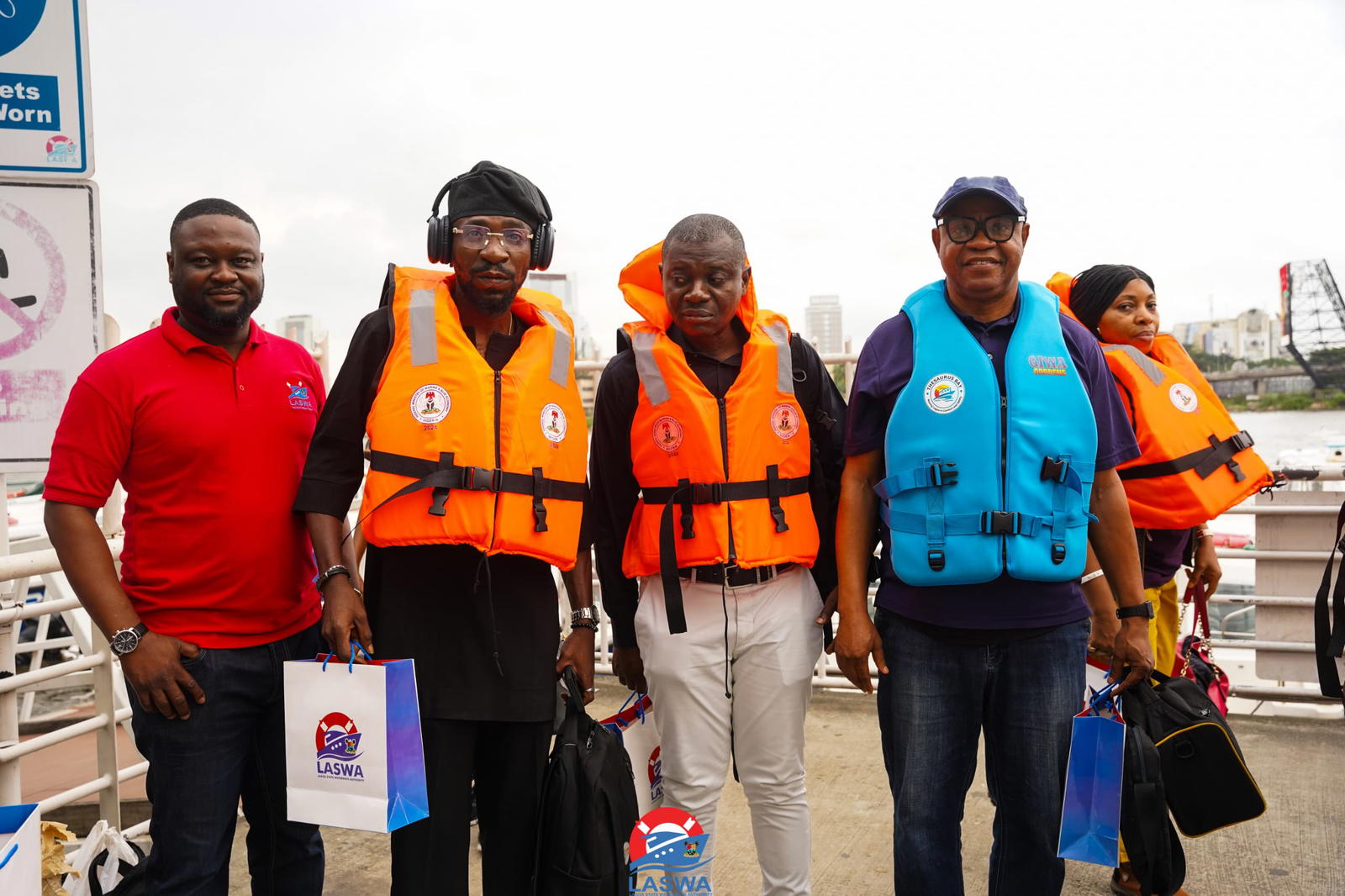
To enhance safety and boost public confidence in water transportation, the Lagos State Waterways Authority, LASWA has commenced the 2025 Safety Sensitisation Program, with distribution of life jackets across major jetties and riverine communities.
The initiative is part of LASWA’s continuous effort to promote a safety-first culture among waterway users while reducing incidents of boat mishaps on Lagos inland waterways.
The sensitisation program covers key operational jetties and terminals including Falomo, Ijede, Sangotedo, Badore, Ito-Omu, Tarzan and Baiyeku jetties where LASWA officers engaged passengers, boat operators, and community members in live demonstrations, safety talks, and distribution of certified life jackets for free.
The sensitisation sessions focused on proper life jacket usage, emergency response procedures, and LASWA’s mandatory safety guidelines for boarding and operating ferries. The program also served as a platform to buttress the authority’s “No Life Jacket, No Boarding” policy.
To reinforce these safety messages, the team distributed a range of safety materials including branded life jackets, safety souvenirs, informational leaflets, branded pen and notebooks.
A statement from the authority stated that the distribution of these items not only encouraged compliance but also fostered a stronger culture of safety consciousness among waterways users.
The authority stated: “This year’s initiative is particularly significant as it comes during the peak of the rainy season, a time when waterway risks are heightened due to high tides, wind surges, and reduced visibility.
“LASWA’s proactive approach aims to mitigate these risks through community education and safety gear accessibility.”
Meanwhile, passengers and local stakeholders commended the authority’s consistency in safety advocacy and its growing presence in riverine areas often underserved by public infrastructure.
Disclaimer
Comments expressed here do not reflect the opinions of Vanguard newspapers or any employee thereof.