By Elizabeth Osayande
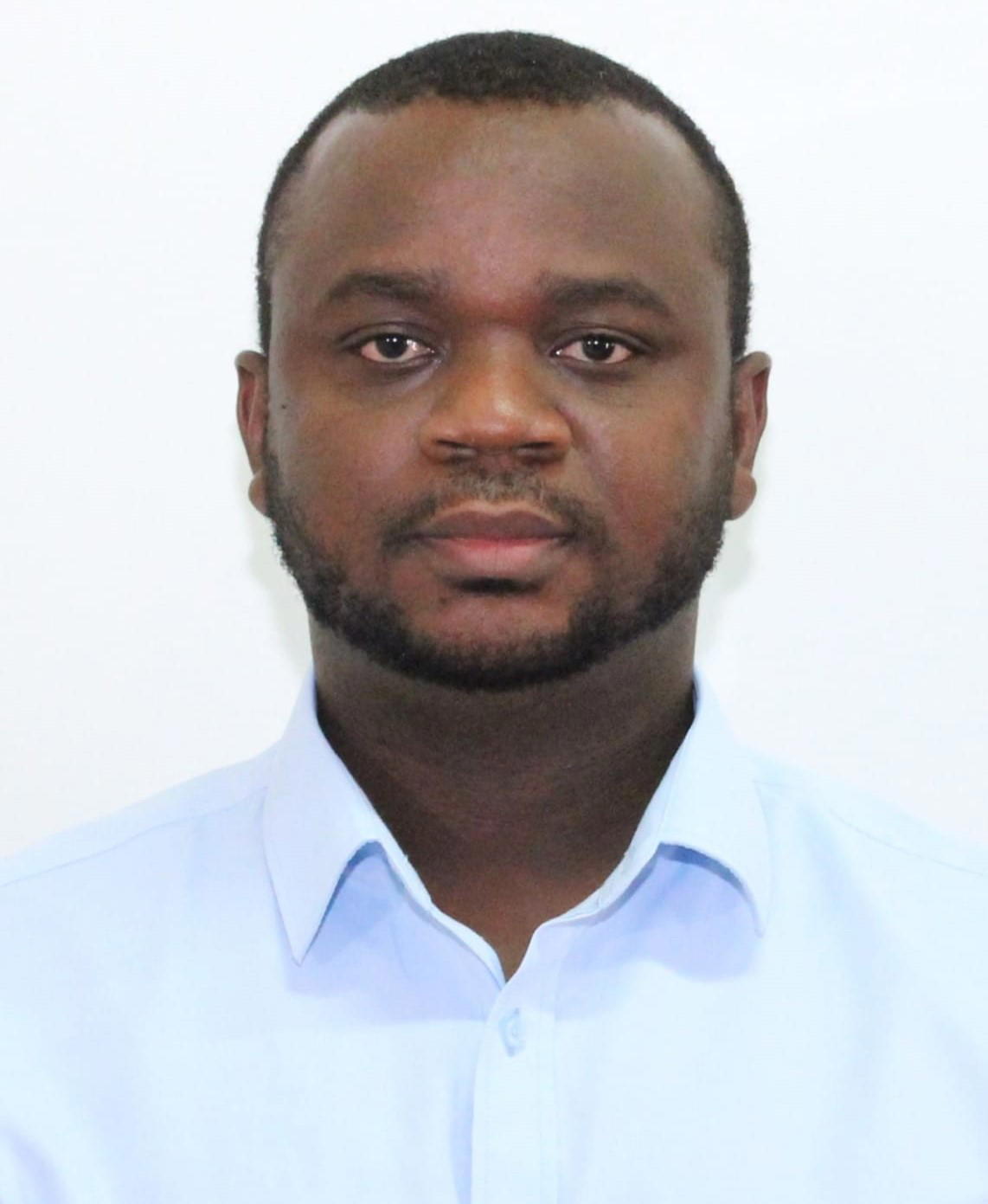
Dr. Isaiah O. Oyewole is a leading research scientist specialising in AI-driven predictive analytics and physics-based modelling, with focused applications in sustainable energy storage and battery management technologies. His work bridges AI, data science, and engineering to improve the performance, safety, and reliability of energy storage systems across sectors such as electrified transportation, decentralised power, and renewable grid integration. He holds a Ph.D. in Industrial and Systems Engineering and an M.S.E. in Energy Systems Engineering from the University of Michigan-Dearborn, USA, as well as a B.Tech. in Mechanical Engineering from Ladoke Akintola University of Technology, Nigeria.
Driven by a mission to enhance the efficiency and resilience of modern energy systems, Dr. Oyewole who has made groundbreaking contributions, including the development of a controllable deep transfer learning framework and hybrid methods that combine mechanistic and data-driven techniques for battery prognostics and degradation analysis, multi-physics modelling, and optimisation strategies for energy storage systems, shares his insights:
Excerpts:
Nigeria’s electricity crisis is not just a policy dilemma—it is a daily life sentence for over 90 million Nigerians who live without access to reliable power. For the rest—connected but underserved—the national grid offers little reprieve, with power supply disruptions occurring nearly 85% of the time. Behind these statistics lies a deeper truth: Nigeria’s energy poverty is not due to a lack of sunlight or solutions, but a lack of scalable innovation to store and distribute power where it is most needed.
At the forefront of changing this narrative is Dr. Isaiah Oyewole, a research scientist and energy systems expert whose pioneering work in battery modelling, predictive analytics, and AI-driven diagnostics offers a compelling roadmap for transitioning Nigeria from energy fragility to national resilience.
Innovation without infrastructure is incomplete
For years, Nigeria has tried to build its way out of an energy crisis—expanding grid lines, licensing independent power producers, and deploying solar pilot projects. But experts like Dr. Oyewole argue that infrastructure alone is not enough. Without smart and adaptable energy storage systems, solar energy remains underutilised and unstable, especially in rural and underserved communities where power can make the difference between subsistence and productivity.
“The sun is abundant,” says Dr. Oyewole. “What Nigeria lacks is not energy, but the capacity to store and distribute it efficiently, especially when the sun sets.”
From his research base at the University of Michigan-Dearborn, where he earned his Ph.D. in Industrial and Systems Engineering, Dr. Oyewole developed intelligent battery models that integrate innovative machine learning techniques, Bayesian methods, physical law constraints, and controllable transfer learning to forecast and optimise health conditions of battery systems. These data-driven models deliver unprecedented effectiveness in estimating battery State-of-Charge and State-of-Health, even under operational and environmental uncertainty, thereby enabling safe and efficient deployment in Nigeria’s data-scarce and infrastructure-limited environments.
Battery systems as the backbone of grid resilience
Battery energy storage systems, BESS, are central to bridging Nigeria’s reliability gap. Whether integrated into mini-grids, hybrid power systems, or backup solutions, BESS stabilises power delivery, reduces diesel reliance, and enhances the viability of renewable energy.
Among these, second-life batteries—repurposed from electrified vehicles (xEVs)—stand out as a cost-effective and sustainable option. Retaining up to 80% of their original capacity, these batteries can serve 5–8 additional years in stationary applications. For clinics, schools, and agricultural sites, they can provide dependable storage at 30–50% less cost than new battery systems. Second-life batteries represent a realistic path to energy equity, particularly in rural and peri-urban areas.
Yet maximising these benefits requires intelligent diagnostics. Dr. Oyewole’s models can leverage AI to identify, screen, and characterise second-life batteries before deployment, ensuring safety, longevity, and economic viability. His developed hybrid models blend electrochemical knowledge with real-time data to deliver remote condition monitoring, early fault detection, and degradation forecasting.
Predictive analytics for decentralised solar advancement
Dr. Oyewole’s research is particularly suited to the decentralised solar market. With solar irradiance averaging over 5.5 kWh/m² daily across Nigeria, off-grid systems are key to universal electrification. But without intelligent and sustainable storage, these systems struggle to deliver long-term value.
Among his suite of innovations is a predictive model—developed using controllable deep transfer learning—tailored for low-data environments. It rapidly adapts to local battery chemistries and operating conditions, enabling consistent performance monitoring, improved lifecycle management, and reduced maintenance costs.
“These models allow batteries to become intelligent systems—capable of adapting to their environment and serving as the backbone of rural electrification,” he notes.
Solving energy storage challenges in the tropical regions
Battery systems in Nigeria must perform under high temperatures, irregular load conditions, and limited technical support. Dr. Oyewole’s physics-informed deep learning models incorporate environmental stressors into predictive maintenance routines, helping batteries self-optimise by adjusting charging behaviour, usage cycles, and thermal management strategies.
His research also enables the development of mobile diagnostic tools—small embedded systems that assess battery health in the field, eliminating the need for large-scale testing infrastructure.
Policy, investment, and scalable deployment
To translate innovation into impact, Nigeria must align technology with policy and financing. Dr. Oyewole envisions a National Battery Strategy that:
Incentivises the importation and repurposing of EV batteries,
Supports effective battery health monitoring protocols,
Builds local capacity for AI-based diagnostics and prognostics,
And enables pilot projects through public-private collaboration.
Similar to other advanced nations such as Australia—which launched a National Battery Strategy as part of its “Future Made in Australia” agenda—Nigeria has the opportunity to build a resilient, inclusive, and forward-thinking battery ecosystem. The Australian strategy highlights the benefits of supporting a domestic battery industry that enhances energy security, secures a place in global battery supply chains, drives economic growth, and fosters social and environmental progress. Nigeria can adapt this framework to support its unique energy challenges and socio-economic development goals.
Partnerships with organisations like the Rural Electrification Agency REA the Energy Commission of Nigeria, ECN, Nigerian Electricity Regulatory Commission, NERC, can bring Dr. Oyewole’s models to life in rural mini-grids, while climate finance and PAYGo schemes can scale second-life batteries for low-income consumers.
A roadmap to Nigeria’s energy sovereignty
Dr. Oyewole’s roadmap focuses on inclusive innovation:
Technical integration of state-of-the-art predictive analytics techniques into national electrification programs,
Policy reform to enable second-life battery supply chains,
Local skills training in intelligent storage system maintenance,
Data infrastructure for battery health tracking,
Cross-sector adoption in health, education, and microenterprise.
“This isn’t just about electricity,” says Dr. Oyewole. “It’s about the life-changing services that energy enables—safe childbirth, digital education, effective medical services, productive businesses, and technological advancements.”
Conclusion: Reimagining electric power infrastructure for every Nigerian
To achieve true energy equity, Nigeria must embrace a bold and inclusive vision for its electric power future—one built on intelligent battery systems, predictive analytics, and locally adapted innovations. With abundant solar potential, second-life battery availability, and a growing ecosystem of technical expertise, the country is uniquely positioned to lead a new era of energy transformation.
But technology alone is not enough. Nigeria must invest in supportive policies, scalable deployment strategies, and human capacity to ensure that every community—urban or rural—can access reliable, affordable, and sustainable electricity. By drawing on global best practices while responding to its local realities, Nigeria can build an electric power infrastructure that is not only smarter but also more just, resilient, and inclusive. The challenge is urgent—but the opportunity is greater. With strategic action, Nigeria can store the sun, empower its people, and light the path toward a more secure and sustainable future.
Disclaimer
Comments expressed here do not reflect the opinions of Vanguard newspapers or any employee thereof.