By James Ogunnaike, Abeokuta
Ogun State Governor, Dapo Abiodun has called for continued efforts in prioritizing the role of laboratory scientists and public analysts in addressing climate change for food security in Nigeria.
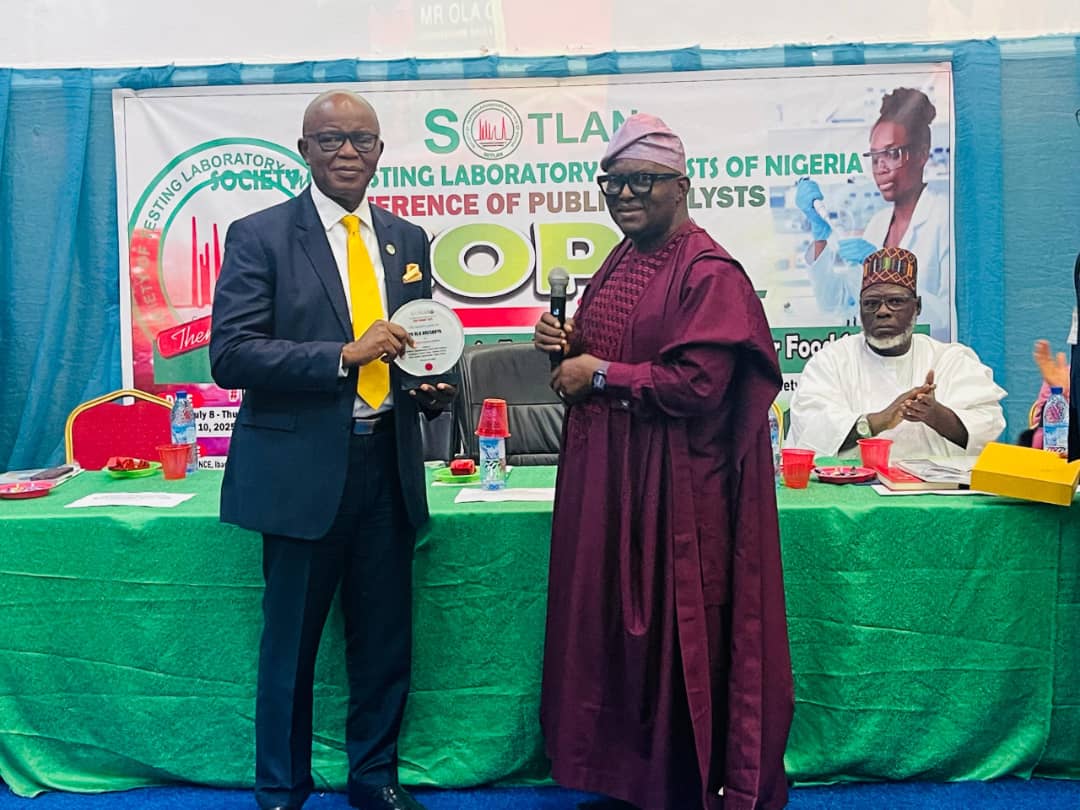
Abiodun, who made the call, while declaring open the Conference of Public Analyst (COPA), tagged ‘OLUMO 2025’, put together by the Society of Testing Analytical Laboratories of Nigeria (SoLTAN), in Abeokuta, the State capital, emphasised the need to ensure the accuracy and credibility of every environmental analysis in the country.
The conference has as its theme, “The Role of Public Analyst in Tackling Climate Change For Food Security “.
Abiodun, who was represented by the State Commissioner for Environment, Ola Oresanya disclosed the readiness of the state in cracking down on quackery, stating the importance of working with accredited laboratories and analysts, to provide critical data and insights that inform decisions.
He noted that the state had set up a central laboratory at the Ogun State Environmental Protection Agency (OGEPA) to verify and validate data submitted by accredited consultants.
He said, “accredited laboratories provide reliable and accurate results, which are essential for informed decision-making in environmental policy and management”
He raised concerns about fake laboratory reports being stamped and submitted by unqualified individuals, describing it as a serious threat to public health and sustainable development.
“You will see stamps of laboratory analysts that will never join, but with stamps made by some of your staff who will stamp these things for them and sign them for money, so there was no control.”
He noted that the role of the analyst cannot be undermined at government decision-making level.
“If the analyst gets it wrong, the entire policy is wrong”, he warned.
In his keynote address, the Director, Climate Change and Environment Planning Lagos State Ministry of Environment and Water Resources,
Mr. Omoniyi Bankole, who was represented by an Environmental Assessment and Air Quality expert,
Dr. Sojinu Olasunkanmi, said Nigeria is facing heat waves, flooding, prolonged droughts, and sea level rise, stressing that this has affected food security in Nigeria.
While emphasizing the strategic role of public analysts in providing reliable data for policy making and supporting farmers with soil testing, fertilizer input analysis, and climate-resilient recommendations, he called for more engagements and influence from analysts across public sectors.
“The people on the street, all of us must come together in the fight against climate change, particularly as it affect food security. When hunger is taken out of poverty, poverty becomes very limited.
He highlighted some of the role of public analysts in the fight against climate change and the impact on food security in the country to include embarking on specific climate related research studies particularly with focus on food security that can support national policy and food security.
“Providing technical support to agro industries in terms of crop yields, fertilizer inputs, soil testing, to ensure that farmers get maximum benefit from their investments”.
In his welcome address, President of SoLTAN, Professor Olugbenga Ogunmoyela, called on government to give the Laboratory sector special support to be able to provide qualitative data comparable to other parts of the world.
Ogunmoyela also drew attention to the presence of heavy metals such as lead, arsenic, and cadmium in water and soil, linking them to the growing burden of non-communicable diseases in the country.
“We need to increase advocacy for public enlightenment and awareness of deforestation, biodiversity loss, global warming, and other climate change issues, which have serious environmental consequences, including loss of lives. As Public Analysts, we need to be in the forefront of providing analytical data that will guide government policies.
“We must rise up to the responsibility of actively seeking to restore and protect our environment for a healthier existence. We must as part of our mandate, continue to seek funding support for measuring and monitoring various environmental parameters, such as air, water, and soil quality ahead of natural calamities in our vulnerable communities.
Disclaimer
Comments expressed here do not reflect the opinions of Vanguard newspapers or any employee thereof.