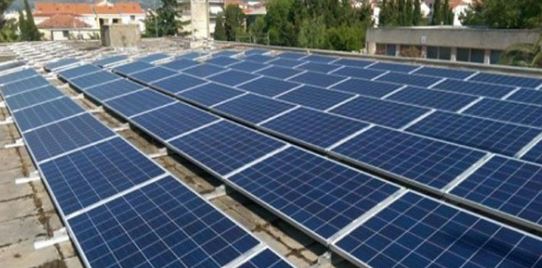
Stock image
By Esther Onyegbula
In a strategic move to combat post-harvest losses and bolster food security in riverine communities, the Global Environment Facility Small Grants Programme (GEF-SGP), implemented by the United Nations Development Programme (UNDP), has inaugurated a 26-kilowatt solar-powered cold storage facility in Sagbokoji, a remote fishing community in Amuwo-Odofin Local Government Area of Lagos State.
The project, commissioned on Wednesday, marks the second phase of a cold chain intervention aimed at empowering local fish processors, mainly women, and reducing the community’s dependence on environmentally harmful preservation methods such as charcoal and firewood.
Speaking at the commissioning, Mrs. Rose Agbo, Programme Management Senior Assistant, GEF-SGP UNDP, said the initiative was conceived to address climate-related challenges, improve livelihoods, and promote sustainable energy in under-resourced coastal settlements.
“Sagbokoji residents are predominantly fish farmers and seafood processors with no access to electricity,” Agbo said on behalf of the programme’s National Coordinator, Mrs. Ibironke Olubamise. “This climate-smart cold room provides a reliable means for preserving fish, minimizing waste, and generating income for women in the community.”
The newly commissioned cold room upgrades the community’s energy infrastructure from 6kW to 26kW of solar generation capacity, with inverter strength scaled up from 10kVA to 23kVA, and battery storage expanded fivefold from 10kWh to 50kWh. The enhanced capacity allows for continuous cold storage operations even during cloudy weather, while laying the foundation for an independent electricity distribution system for other economic hubs in the area.
Dr. Daniel Adeuyi, Chairman of New Energy Frontiers (NEF) Group, GEF-SGP’s implementing partner, described the intervention as a game-changer. “We have used real-time data from the past two years to justify this expansion. With this upgrade, Sagbokoji can now store more fish, boost local trade, and potentially supply energy to neighboring micro-enterprises,” he said.
Adeuyi noted that the phase-two project attracted additional support from corporate partners like Jubaili Bros Engineering Ltd, under its Corporate Social Responsibility (CSR) programme.
The cold room inauguration also hosted a field tour involving 10 NGOs and 10 young energy innovators from Nigerian tertiary institutions. According to Agbo, the tour served as a knowledge-sharing platform showcasing Sagbokoji as a replicable model for community-driven, high-impact energy solutions.
However, NEF Co-Chair, Engr. Adekunle Makinde, noted that staffing remains a critical challenge due to the island’s inaccessibility. “To address this, we are partnering with the community to train young residents in technical operations. An onsite accommodation facility was also included in this phase to attract and retain skilled operators,” he added.
The development was met with applause by local stakeholders. Mrs. Jiselle Azankpo, Chairperson of the Fish Sellers Association in Sagbokoji, said the expansion would allow more women to preserve their products, increasing their profits and reducing spoilage.
“This is a blessing to us. We will ensure the facility is properly maintained,” she assured.
Welcoming the delegation to his palace, Chief Ovime Anthony, Baale of Sagbokoji, lauded the project partners for bringing sustainable development to the long-neglected community. “This will bring economic prosperity and position Sagbokoji for greater things,” he said.
The Sagbokoji solar cold room is one of several grassroots interventions under the GEF-SGP UNDP programme focused on climate resilience, clean energy, and inclusive economic growth for marginalized communities across Nigeria.
Disclaimer
Comments expressed here do not reflect the opinions of Vanguard newspapers or any employee thereof.