By Tuoyo Amuka
In San Sebastian, Northern Spain – Basque Country to be precise, there’s a village square in the Old Town which has been the focal point of cultural activities within the community for centuries. And tucked within a small corner of this rather interesting space riveting with history, I received a most personal & novel welcome early last month…
Now, absolutely taking nothing away from my hosts, LaLiga; who invited me alongside a handful of media practitioners (ten of us precisely) from across the world – Japan, Indonesia, Morrocco, Ghana, Argentina, Brazil, Germany – to not only come witness the Basque Derby (Elderbi Vasco to the uninitiated) – but to experience Basque culture and it’s uniqueness, whilst also taking in two other LaLiga games scheduled over a four day duration to be played within the region. Vamos, I said.. and the City of Bilboa beckoned.
The program would see us also engage with high level club representatives and take a deep dive into the individual clubs operations, learn about their sustainability positions, even challenges as well as the evolution of their philosophies.
All kicked off at Real Sociedad stadium grounds early on day one of three activity filled days; where Sociedad legend and ambassador Xabi Pietro (one club man – 530 games played) welcomed us and shared deep stories from the club’s history. (fun fact – Xabi was a member of the youth team when my friend Mutiu Adepoju played in the first 11 alongside Imanol Alguacil whom has just retired as coach after six and a half years at the helm of affairs). Then Zubieta next – the club’s famed youth academy and training ground of La Real. This ground has trained the likes of Zubimendi (more recently), Xabi Alonso and of course it’s most famous son, Antoine Greizmann of whom academy director Luki Iriate remarked ‘’we used to say the sun comes out when Antione plays’’ given that San Sebastián gets the most rainfall of almost anywhere in Spain, this spoke to how special a talent the French international was coming through the ranks. La Real’s policy of ensuring academy players emerge from its program well rounded academically as well as sportingly – over 90% of its university-age players are enrolled in degree programs; with about 70% of players remaining till age 17 – is indeed something that sets it apart from other football academies in Spain.
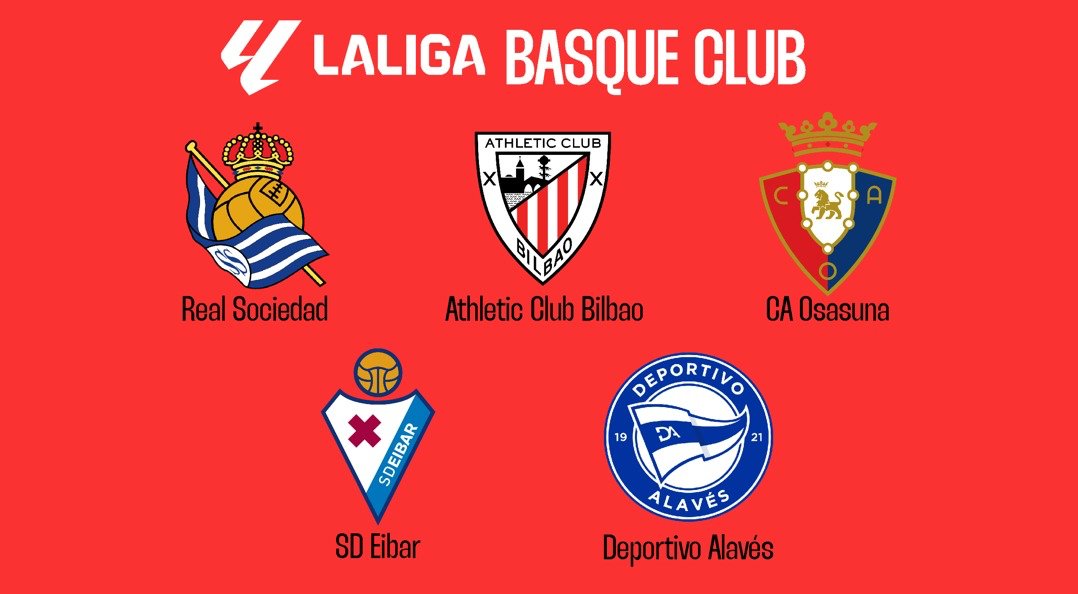
Another policy stipulates that 60 % of the first team have been groomed at Zubieta – this in itself promotes Basque indigenous participation – and this narrative was critical as it became apparent as the excursion progressed as a critical thread that culturally wove all the institutions we engaged with (albeit to varying degrees) – there is a strategic commitment to recruiting & fostering local Basque talent. From Sociedad to Osasuna, Deportivo Alaves, SD Eibar and the bonafide bastion of Basque first football in Athletic Bilbao. More to come here..
Onto El Sadar stadium in Pamplona, where we sat with another club legend and one club man – Putxi Punal Martinez (came into the ranks at age 9 and retired at 38!) and current academy director whom presented very comprehensively, insights into Osasuna’s recent and transformative history via ‘’Metodo Tajonar’’ (the Tajonar method) which speaks to the club’s design to source & develop local talent. (Pamplona has a population of about 200,000 and has delivered more professional football players to competitive leagues per square meter than any other town in Spain) Anchored by a highly effective scouting network which is deeply embedded across the Basque region across younger age levels. The Tajonar way has supported the turnaround of the club’s fortunes from 2011 when they were faced with bankruptcy.
This fan-owned club’s (Osasuna has no external shareholders, it’s fans are indeed equity owners and thus vote to determine governance of the club) network scales to also reach global dimensions and bring in talented youth from academies affiliated with it. Metodo Tajonar espouses in the same vein; a deep focus on a player’s academic, psychological development – and most critically a holistic approach to source, nurture primarily local talent.
Infact, young Nigerian striker – Sixtus Ogbuehi joined the club in January this year on loan till season end. Whilst I hadn’t the priviledge to meet him, we certainly are proud of his being only the third Nigerian to represent Osasuna – we root for him and all the very best as the new campaign will commence. Osasuna, una see better striker, hold am o.
The next day and matchday one, we headed to Vitoria Bastiez – the political capital of the Basque region and straight to Mendizorroza (home to Deportivo Alaves) where club President; Alfonso Fernández de Trocóniz and ambassador Victor Laguardia dove deep into how El Glorioso’s (The Glorious – another centenary club at 104 years as a football club; having spent 90 in LaLiga top flight) has conceived and applied a diversification strategy anchored by astute professional management, public sector partnership and capital investment to turn around it’s fortunes since 2011. Alaves have adopted a model of brand asset development and expansion which has seen them earn revenues from ventures aligned with leveraging its legacy to include a university for tech and creatives, developing residential accommodation for students, offering tuition packages for youth seeking to become professional players – and in the recent past even operating a football school in Senegal.
Former Captain, Laguardia spoke of the passion which powers the football club and the enduring, special connection with the fans which himself and others alumni will always have. As he said, ‘’El Glorioso will always will show it’s love to those whom are believers’’. On this premise, the club has continued to attract and keep the most committed within its ranks; thus love is requited, performances are positive and commercials continue to grow satisfactorily. Match one ended: Alaves Nil – Athletico Madrid Nil!
Ipurua Municipal Stadium in Gipuzkoa was next stop, home to SD Eibar (who play in LaLiga Hypermotion – which is second division). Eibar is also in rarefied company as one of only four LaLiga clubs to be led by a female in Amaia Gorostiza.
On arrival, a senior club official proceeded to describe the novel model that characterises them – firstly, Eibar is on record as the smallest town to participate in LaLiga with a population of just 27,362. Secondly, it’s ownership is voluminous as it is diverse; in 2013, faced with bankruptcy – it entered into a capital raise via crowdfunding which has configured its current ownership to include over 10,000 shareholders spread across 69 different countries no less. The stadium is an aesthetic joy to behold – parts of it seemingly carved into the rock formation which is natural terrain of Basque country. If only their performance on the day brought as much delight.. Match two ended: Eibar 0 – Mirandes 1 – with an early red card for the homeside.
Cometh day three and matchday two, early we headed to Lezama – Athletic club’s world renowned training facility for a grand tour and engaged in depth with Mikel Gonzalez whom at 37 years old is one of the most prolific sporting directors leading any of Europe’s top flight clubs. To understand Basque first football ideology you only have to study Athletic Club and to this end, I reproduce an extract from our chat below;
“In our 70 years of history, we have always played in the La Liga first division. We have 25 Cups – 8 league titles and three Spanish Super Cups. The Royal Basque country is less than 3 million people. There are not too many professional football players.. This is why it is really good to maintain this philosophy to be able to fight in La Liga, one of the strongest leagues in the world. For us to keep this status we need to really work. We have been running our academy for about 16 or 17 years now so that the team can have more players and the capacity to invest in really good players.
Here at Athletic, we try to be very clever in our work in the academy and also selection for the first team because if we fail, we will go to the second division, which will be very dramatic in the city because it is something that we have not known before. It is really hard to maintain this status. To try to have one of the best academies in the world, we have more than 170 partnership clubs across the Basque country, and we invest more than 2 million euros every year in these partnership contracts. With this kind of partnership, we go to clubs for scouting and methodology classes. We start coaching them between ages ten and eleven so that before they come to Athletic they would be familiar with our way of coaching and the methods. Those who are selected come to use our facilities to train. We have like 1,200 young players and the first step for us is to show these young players the club, the philosophy and our methods. This will remain with them for the rest of their lives. In future when they are playing, they will remember they once played for Athletic Club. Playing one match here in the summer is like the best day in your life.
The second step is like holding 100 percent of our players. From about 1000 players about 50 will be selected. Those 50 will be playing different tournaments. The number is reduced to 40. This is like a big factory of performers. Due to our heavy investment in the academy we have the best coaches, physical trainers, the facilities are top notch, a psychologists and a nutritionist to keep them like professional players.
Our first team, we put you under watch for two-three years as an understudy for any expected position. We also look at the market but our market is very small. When we select from the academy, we will see you as the next full back, or goalkeeper or the next striker. We put you under strict regime. Your commitment, your work rate, tactical discipline and all will be put under test. It is the unique way to finish the product. And you will be introduced to the first team. Our first team is now fighting to go the the Champions League. We are fighting hard even though we lost to Manchester United in the semi final of the Europa League.
Notwithstanding, we still believe in ourselves. We have always played in the La Liga Division.(Athletic club is one of 3 clubs including Barcelona & Real Madrid to never have been relegated from LaLiga – Primera Division) Last season we won the Europa Cup. This year we tried to reach the final and ended up in the semis. We still believe we are special, we are unique. We are more than a football club. We are a family. I remember when I was young, the first song I learned was the Anthem of Athletic. If you go to the city centre you see Athletic colours, flags and more. It’s all about the club. When we won the Europa last season more than one million people were in the streets wearing Athletic jerseys.
If we go to another country or another part of this country to try and copy this model and start from the beginning it will take you another twenty years or more to get this kind of structure.”
To paraphrase the concept of Basque-exclusive as Athletic have embraced and genuinely understand the dynamics and challenges of their – it’s like a miracle but truly it is not a miracle.
In sharing Athletic’s manifesto, Gonzalez also spoke to the cultural assimilation of talent from far and wide whom meet criteria for selection including the young Black Lions of San Mames – The Williams brothers who have made such an impact on and off the pitch, resetting notions of Basque identity and inclusivity.
Then onto San Mames stadium, which was our final tour and most memorably, a gastronomic introduction to Bacalao – a special shoutout indeed to Michelin starred Chef Fernando Canales Extanobe for his warmth and hospitality. I look forward to showing him how to cook eja shawa – Lagos Island style.
So it was now crystal clear as things wound down; that Basque football clubs are genuinely unique just as the culture, storied history of the region. By virtue of the following; the institution of progressive football frameworks, professionally run structures and a defined commitment to local talent development. These sporting institutions were deliberately positioned to be – cultural with intention, commercially optimized by design and competitively strong and sustainable.
The new LaLiga campaign will kick off on Sunday, 17th August 2025 with all 20 teams re-energised and gunning for not just competitive honours but as the winners spoils – last seasons champions Barcelona were awarded around €58.4 million which may have risen to about €200 million taking other into consideration performance and market variable payments!
And to return to that special welcome on my first night that ultimately sealed my connection with San Sebastian, imagine my delight to be in a foreign place and a space never visited before, only to know that fellow football purists were with me in spirit – I spotted a small and near-missable poster celebrating Super Eagle No 10 of life – Austin Jay-Jay Okocha – his name written in English as well Basque languages, plastered on a wall far far away from African shores. I felt right at home.
Topa Euskal Herria.
Disclaimer
Comments expressed here do not reflect the opinions of Vanguard newspapers or any employee thereof.