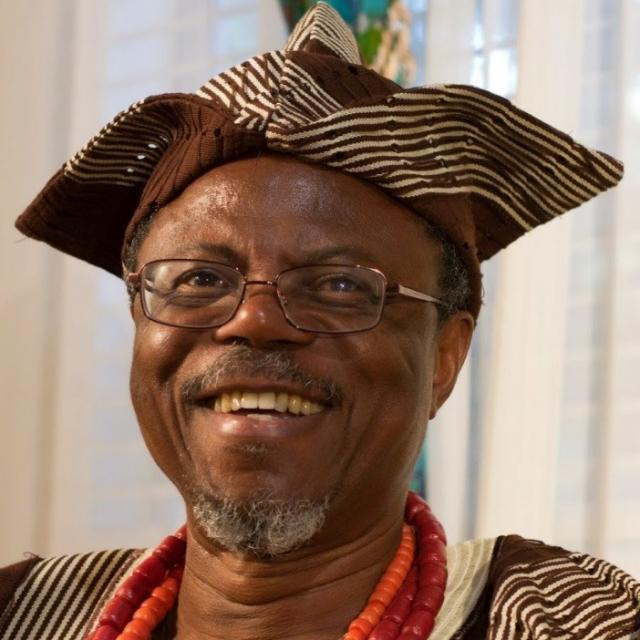
By Shina Abubakar, Osogbo
OSOGBO – A renowned Historian and cultural enthusiast, Professor Toyin Falola has stressed the need for policy makers to decolonise Africa education in a bid to reclaim the peoples’ cultural dignity.
He said super powers that colonised African inserted control mechanisms in our education with a view to destroying Africa’s identity, hence, the need to consciously imbued cultural identity in every developmental project which centres around the people.
Addressing scholars, culture enthusiasts and custodians, theatre practitioners and community builders at the 14th Toyin Falola International Conference on Africa and the African Diaspora held at Osun State University campus in Osogbo on Tuesday, he described culture as a vehicle of progress, not a barrier to success.
While describing culture as the basis for identity, he stressed the need to preserve and passed it to upcoming generations, saying, “to lose culture is to lose a part of ourselves. But to protect culture, to invest in it, to learn from it and to pass it on is an act of survival. It is resistance”.
According to him, culture is not just about preservation. It is a catalyst for creativity. Look at Nollywood, that is one of the world’s largest film industries. Look at Afrobeat and its global reach, the local fabrics in global fashion, the art of storytelling that has now morphed into graphic novels, podcasts, animations. Culture feeds innovation.
“Throughout history, colonizers did not just take the African land. They tried to erase the African culture. They changed African names, outlawed African languages, made mockery of African religions, and imposed foreign systems. They did all of these because they understood that to capture a people, you must destroy their culture. Culture hence is a tool for political power. Our ancestors resisted the colonizers not always with weapons but many times with language, with rhythm of their drums, with their knowledge of culture. In the present day, symbols of culture like statues, official languages, holidays are still political tools. They pass across messages about who belongs, who matters, who is remembered. That is why decolonizing African education, literature, and public space is not merely symbolic but a fight to reclaim cultural dignity.
“Throughout history, colonizers did not just take the African land. They tried to erase the African culture. They changed African names, outlawed African languages, made mockery of African religions, and imposed foreign systems. They did all of these because they understood that to capture a people, you must destroy their culture.
“Culture hence is a tool for political power. Our ancestors resisted the colonizers not always with weapons but many times with language, with rhythm of their drums, with their knowledge of culture. In the present day, symbols of culture like statues, official languages, holidays are still political tools. They pass across messages about who belongs, who matters, who is remembered. That is why decolonizing African education, literature, and public space is not merely symbolic but a fight to reclaim cultural dignity”.
Earlier in his remark, the Vice-Chancellor, Osun State University which organised the Conference in collaboration with Department of History, The University of Texas at Austin, USA, said hosting the conference has further strengthened the institution’s move to become a leading citadel in cultural studies.
“The hosting of this historic International Conference on Culture is coming at a time we are concluding our plans to strengthen our teaching capacity and enhance our research productivity in the broad area of culture. There is no doubt that the establishment of this University at the heart of the western Nigeria has some strategic culture-related advantages from which we can tap to become a leading citadel in cultural studies”, he added.
Among keynote speakers at the event include; Professor Nemata Blyden, Dr Lasisi Olagunju, Saturday Editor, Nigerian Tribune, Dr. Wale Okediran among others.
Disclaimer
Comments expressed here do not reflect the opinions of Vanguard newspapers or any employee thereof.