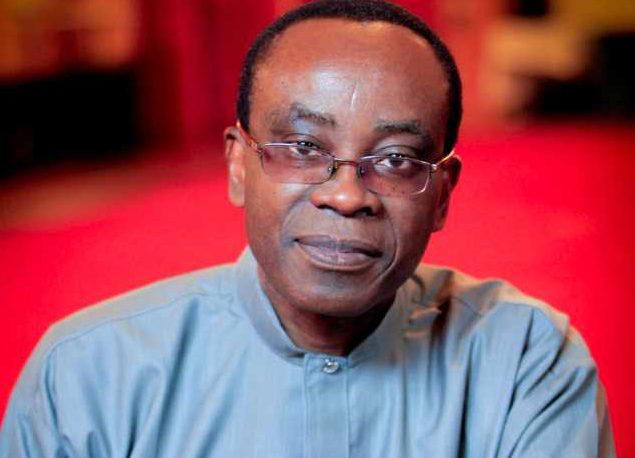
Nnimmo Bassey
…Africa needs to unite, safeguard its people – Kpondzo
By Gabriel Ewepu
ABUJA – FOLLOWING the devastation of the environment and climate of African countries, the Executive Director, Health of Mother Earth Foundation, HOMEF, Arc Nnimmo Bassey, Tuesday, asserted that the Conference of Parties, COPs, impact not felt in Africa’s climate change challenges.
Speaking on the sidelines of the the West Africa, Climate Justice Roundtable held in Abuja, Bassey said the politics at COP is at the detriment of Africans as the polluters continue to have their way and perpetrating unchallenged pollution operations.
He said: “If there is climate justice in Nigeria, there will be no gas flaring, oil spills would stop, and there would be an audit of the entire oil belt. If there were climate justice in Nigeria, how can oil be burning for five years, and government is doing nothing about it? There’s no climate justice in Nigeria, so we’re demanding for climate justice in Nigeria, just like we’re demanding for the whole West African region and the entire African continent.
“So if everything that’s being talked about at this international convention is about false solutions.”
But he posited, “should we stop going? What should we do as a country and as a region? So we need to really see that the crisis is more on us.”
He also added, “So it is not enough for Nigeria to go to the conference of parties and just participate and come back with nothing. I mean, at the last COP, we had the closing statement of the Nigerian leader, head of delegation, which was very encouraging, really calling the system out for what it is.”
Meanwhile, he said ahead of 2025 COP, Africa:s demands should be centred on “the recognition and payment of climate debt because we have been raped for hundreds of years, it is time for someone to pay for it.”
He strongly emphasized that, “Climate finance would never do it. It is a debt that is been owed; a colonial debt, pre-colonial debt, and an ongoing climate debt. It should be recognized for what it is, and we should demand.
He also pointed out that, “It is not a lack of funding. They have taken our resources, stored our resources, and they are still doing so.
“Even in terms of transition to renewable energy, look at the kind of mining process going on in Congo. Millions of people displaced because of so-called critical mineral.
“We demand our environment should be treated with respect. There are people who have a right to live in dignity, and climate change cannot be tackled except we recover our dignity, unless we call the shots.
“What happens in the environment, going to the COP is a symbolic way of playing along with the international community. For us as activists, the COP is the best avenue to meet other people from other parts of the world, because everybody goes there. So you can strategize and organize and campaign and share ideas, but for a real climate solution, the COP is not the place.”
Meanwhile, Kwami Kpondzo of the Centre for Environmental Justice, Togo, lamented the devastation of the environment by polluters with impunity.
Kpondzo called for real action to halt the unbridled degradating activities by miners, oil companies, and farmers by West Africans speaking with one voice to safeguard the lives of the people.
“We have noticed that in West Africa we have so many similar challenges from one country to another. For instance, from Nigeria to Togo, we have pollution, either pollution by oil and gas extraction or mining like phosphates, gold or manganese mining.
“And everywhere in West Africa, in Niger, uranium, in Guinea-Conakry, we have bauxites. And everywhere, either we have mining or oil and gas extraction or other activities that are polluting air, soil or water that are destroying the environment.
“So we have seen plantations in West Africa, either palm oil plantations or eucalyptus plantations, destroying communities’ livelihoods and also destroying biodiversity”, he said.
Disclaimer
Comments expressed here do not reflect the opinions of Vanguard newspapers or any employee thereof.