By Juliet Umeh
The Computer-Aided Therapeutic Discovery and Design (CAT2D) Research Group, based in the Department of Biochemistry at the Federal University of Technology, Akure (FUTA), has concluded a two-month intensive internship programme aimed at building capacity in computational drug discovery and biomedical data science.
The virtual internship, which ran from April 14 to June 30, culminated in a presentation ceremony where selected participants showcased research projects developed during the training. The programme attracted participants from multiple institutions within and outside Nigeria, including other African countries and parts of Asia.
The internship was initiated as a structured research-focused training programme designed to equip early-career scientists with practical skills in computer-aided drug discovery, vaccine design, and bioinformatics-driven biomedical research.
Speaking at the event, Victor Omoboyede, Director of Training and Academics at CAT2D, said the initiative was conceived to address gaps in access to advanced research training across Africa.
“This programme was designed to build practical capacity and train the next generation of researchers who can contribute meaningfully to African-led drug discovery and therapeutic innovation,” Omoboyede said. “Our goal was to go beyond just teaching tools, but to mentor participants through real research problems with direct relevance to human diseases.”
According to him, more than 100 applications were received for the internship, with over 60 participants selected across different career stages, including undergraduate students, recent graduates, PhD candidates, and early-career researchers. Participants were drawn from diverse scientific backgrounds and enrolled in specialised tracks such as vaccine design, computer-aided drug discovery, biomedical data science, Python and R for bioinformatics, and online database development.
During the programme, interns were trained in modern computational techniques and worked under the guidance of multiple mentors on projects spanning cancer drug discovery, infectious diseases, and other therapeutic areas. Selected participants presented research findings at the closing ceremony, while several teams were reported to be preparing manuscripts based on completed projects.
Some participants described the internship as their first exposure to hands-on computational drug discovery research delivered at an international standard.
For interns in the vaccine design track, the programme also offered practical training in immunoinformatics-based approaches. Isaac Kuye said the training provided step-by-step guidance in computational vaccine design, under the mentorship and coordination of Victor Omoboyede, from epitope prediction to structural modeling and molecular docking, equipping participants with skills relevant to modern vaccine research.
Titilola Shittu, one of the interns, said the programme gave her practical experience in structure-based drug design, including molecular docking and protein modeling, while working on antifungal drug targets linked to Candida albicans.
Another participant, Imrana Salisu, noted that the training introduced him to a broad range of computational drug discovery concepts, including molecular docking, virtual screening, ADMET analysis, and machine-learning–assisted drug design, which he applied to identifying potential inhibitors of Schistosoma mansoni drug targets.
The internship marked the first time CAT2D organised a structured training programme of this scale, and organisers noted that it was among the most affordable of its kind in Nigeria, with partial scholarships provided to more than 20 participants to reduce financial barriers.
The Founder of CAT2D, Haruna Isiyaku Umar, said the internship was made possible through the training framework initiated and coordinated by Omoboyede in his role as Director of Training and Academics, describing his contributions as central to the programme’s conception, structure, and execution. He also acknowledged the indispensable contributions of others, including the Director of Research and Innovation, Mr. Ridwan O. Bello, and several mentors and collaborators who were instrumental to the successful delivery of the pioneering internship.
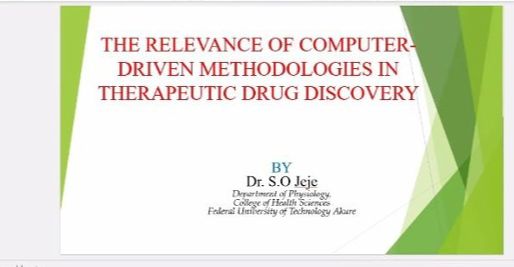
The programme also featured contributions from faculty members, including a keynote lecture delivered at the opening ceremony by Dr. S.O. Jeje, an Associate Professor in the Department of Physiology at FUTA. His presentation highlighted the growing role of computer-driven methodologies in reducing the cost and time associated with traditional drug development.
Organisers noted that certificates were issued electronically to participants who completed the programme requirements, and plans are underway to build on the success of the inaugural internship with future training cohorts.
The CAT2D Research Group focuses on applying computational and data-driven approaches to the discovery and design of therapeutics for communicable and non-communicable diseases, including cancer, microbial infections, cardiovascular diseases, neurodegenerative disorders, and antimicrobial resistance.
Disclaimer
Comments expressed here do not reflect the opinions of Vanguard newspapers or any employee thereof.