— Advocates Shift from Guns to Governance, Applauds Tinubu’s Youth Reforms
By Ibrahim Hassan-Wuyo
LOKOJA — Former Chief of Army Staff, Lt. Gen. Tukur Yusufu Buratai (rtd), has called for a paradigm shift in Nigeria’s approach to security, emphasizing youth engagement, good governance, and non-kinetic strategies as key to defeating violent extremism and securing the nation’s future.
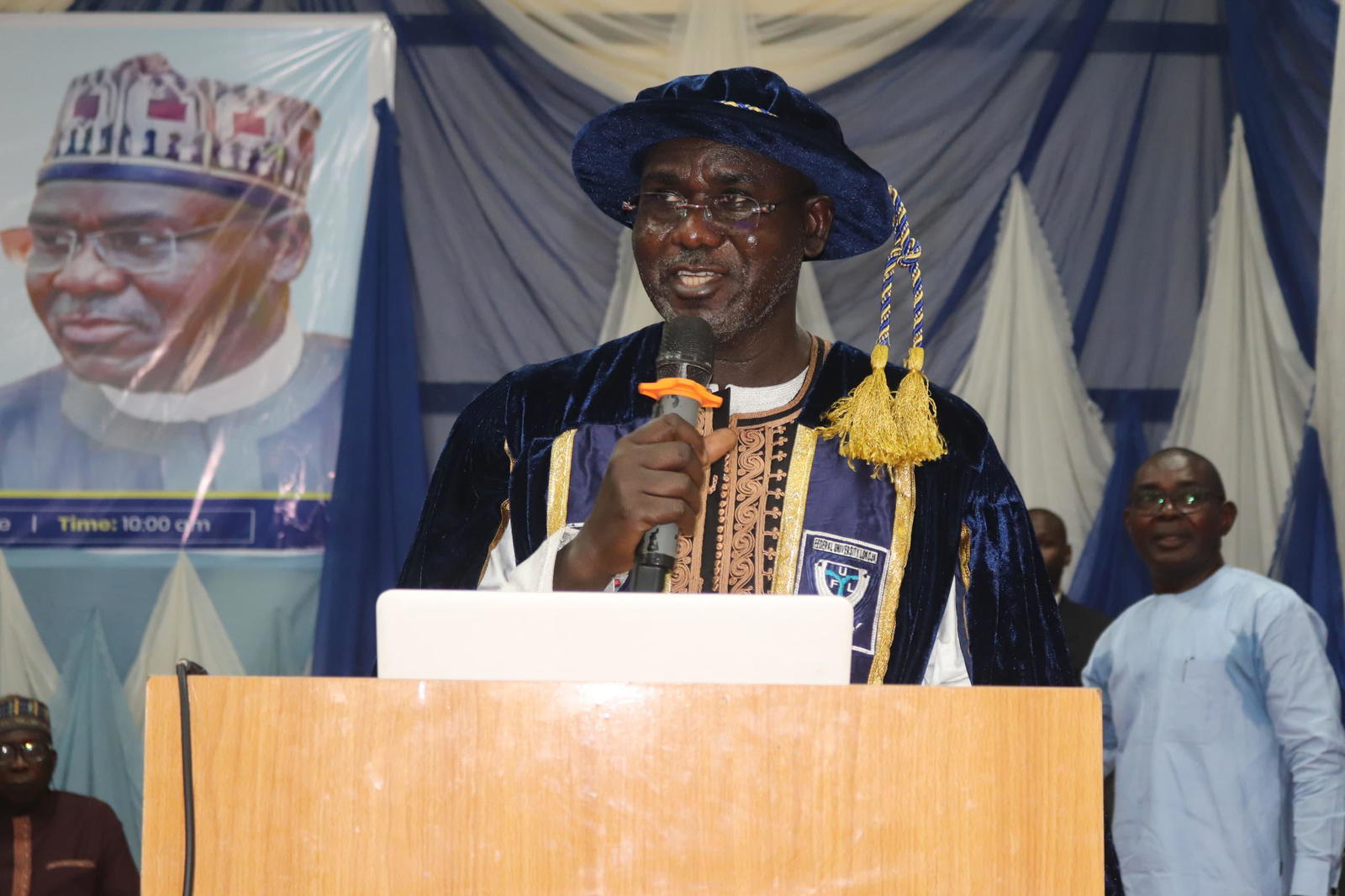
Speaking during the 18th Distinguished Public Lecture of the Federal University, Lokoja, Kogi State, Buratai delivered a lecture titled “Youth, Governance, and Countering Violent Extremism: Rethinking Nigeria’s Security Strategy”. He stressed the need to move away from an over-reliance on military force and instead adopt a holistic model that combines development, ideology, and inclusive governance.
“It takes not guns and boots to counter such threats, but a shift in how we govern and deliver security,” Buratai said. “Youth must be seen as stakeholders in national security, not as threats.”
He warned that neglecting young people could push them into the arms of criminal gangs or extremist organizations, and urged for their full integration into decision-making processes.
“If we do not reach out to our young people, we leave them to be recruited by criminal gangs or extremist organizations,” he cautioned.
Drawing on global examples from Rwanda, Tunisia, Kenya, and Colombia, Buratai urged Nigeria to adopt best practices that place youth empowerment at the core of peacebuilding and conflict prevention.
The retired general praised President Bola Ahmed Tinubu for initiating youth-focused reforms such as the National Education Data System, the Students’ Loan Scheme, and skill development programs. He also advocated for the incorporation of peace literacy, critical thinking, and digital citizenship into the school curriculum, and the support of youth-led platforms to counter hate speech and extremist content online.
“Our young people must be empowered with tools to question ideologies, reject violence, and contribute positively to national development,” he added.
Vice Chancellor of the university, Prof. Olayemi Akinwumi, applauded Buratai’s address, describing it as a timely and strategic roadmap for Nigeria’s security future.
“Our country is in dire need of strategies that are innovative, inclusive, and sustainable. This lecture offers direction and hope,” Akinwumi said.
With insecurity and youth disenfranchisement remaining major national concerns, Buratai’s lecture was seen as a significant intervention—one that urges a shift in focus from armed responses to inclusive, governance-driven solutions that place the youth at the heart of Nigeria’s security architecture.
Disclaimer
Comments expressed here do not reflect the opinions of Vanguard newspapers or any employee thereof.