By Esther Onyegbula & Uduogu Janice
In a bold move set to redefine security operations in Nigeria, LEAD Integrated Security Solutions officially launched its operations with a commitment to fuse traditional physical security with cutting-edge artificial intelligence technologies. The company, led by CEO Ifeanyi Obinali, says it aims to enhance national and corporate safety through predictive, AI-backed systems that tackle security threats before they happen.
Speaking at the LEAD Integrated Security Launch Party in Lagos, Obinali emphasized that Nigeria’s heavy reliance on manpower in security operations is no longer sustainable in a world driven by intelligent systems.
According to him, “The most important thing for us is bringing the blend between physical security and smart, tech-driven surveillance. Physical guards are necessary, but they are not efficient until you add technology. AI is no longer the next big thing, it is the now thing,” Obinali stated.
He described the current threat to security not just in terms of violent attacks, but in the lack of anticipation and preparedness across Nigeria’s security infrastructure.
“The real threat is our inability to detect and anticipate issues before they happen, kidnappings, communal attacks, violent raids. In developed nations, intelligent systems flag these threats before they become emergencies. That’s what LEAD is here to change.”
It’s not just about tools. It’s about using intelligence to protect lives, before the threat even knocks,” he added.
Obinali also declared the company’s support for state policing, saying decentralized policing models work better because officers are embedded in the communities they serve.
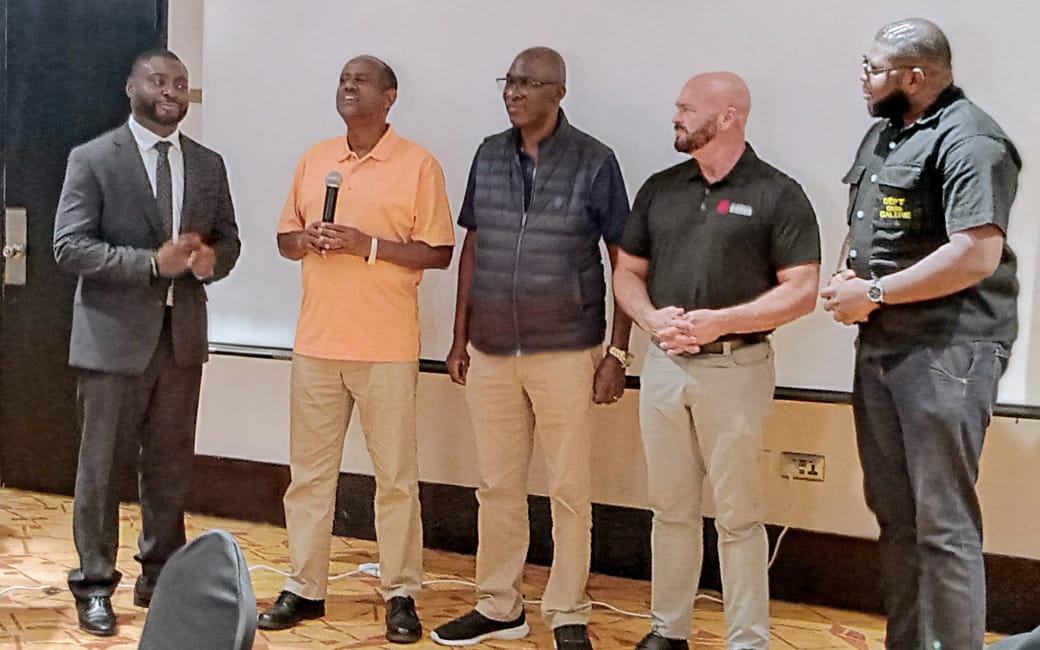
The event, which brought together private security leaders from across Africa and beyond, also featured a robust call for pan-African collaboration in solving the continent’s complex and localized security problems.
The Managing Director of Riley Falcon Security Ltd, Kenya, Tobias See, cautioned against one-size-fits-all approaches, noting that each African country grapples with unique political, economic, and socio-cultural dynamics.
See said: “Africa’s diversity is its biggest challenge. From language to politics, our solutions must be locally tailored. AI, when trained with local data, becomes a powerful tool for real-time response. But we must develop or adapt these technologies to fit our realities,”
He highlighted the importance of partnerships among private firms, arguing that no single company can tackle the full scope of Africa’s security challenges.
Highlighting the urgency of bridging Africa’s technological gap in both physical and cyber domains, Cybersecurity expert Emmanuel Enamejewa explained that: “Africa is behind in tech adoption, and we lack awareness on threat response. LEAD’s entry into the space, powered by AI, can change that, but we need government support to build an enabling environment.
Calling for investment in big data infrastructure and local talent development, Enamejewa noted that with the right training and policy support, Nigeria could produce homegrown security solutions for both digital and physical threats.
He also emphasized the role of AI in protecting porous borders, citing Israel’s AI-powered border defense as a model. “If deployed in Nigeria, such technology would significantly improve security in the Northeast and other hotspots,” he added.
Further cementing LEAD’s commitment to innovation, Managing Director of U.S.-based Thermal Imaging Radar, Mike Petty, announced a strategic partnership that would bring 360-degree intrusion detection technology to Nigeria for the first time.
According to Petty, “We manufacture thermal radar systems that scan 200 acres every two seconds, even in total darkness. We detect heat signatures, not just movement. It’s military-grade technology now accessible for civil security.
Petty explained that, the system, integrates with AI and other camera networks, can identify human presence and trigger alerts before incidents occur, offering actionable intelligence to security teams.
LEAD Integrated Security’s entry into the Nigerian market comes amid rising concerns over kidnapping, rural attacks, cybercrime, and terrorism. With Nigeria struggling to secure its borders and communities, the firm’s AI-focused strategy signals a shift toward proactive, data-driven security.
While challenges remain, including infrastructure deficits, stakeholder coordination, and technological adaptation, industry experts agree that LEAD’s model offers a promising path forward in securing Africa’s largest economy.
Disclaimer
Comments expressed here do not reflect the opinions of Vanguard newspapers or any employee thereof.