By Chioma Obinna
As Nigeria attains the interruption stage in the elimination of onchocerciasis, commonly known as river blindness, about 50 million Nigerians are still at risk.
Meanwhile, the Federal Government and the Nigerian Institute of Medical Research (NIMR) have confirmed that transmission has been interrupted in at least 10 states, including Kaduna, Nasarawa, Anambra, and Abia, among others.
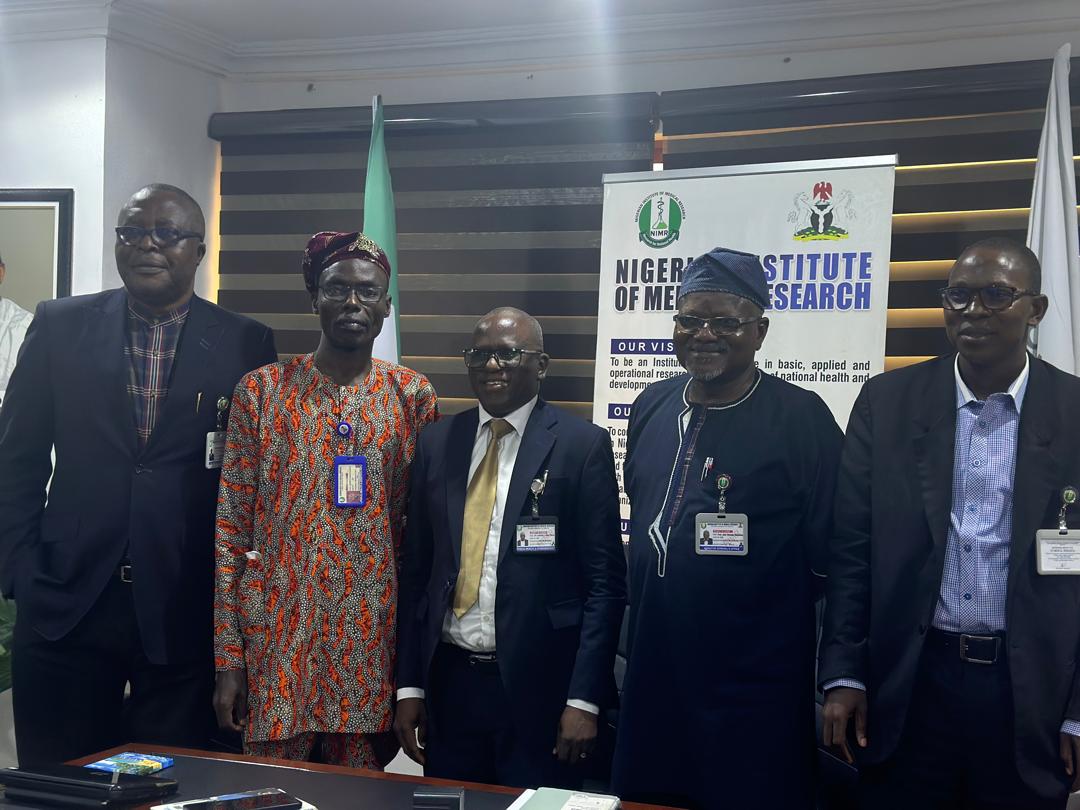
Addressing journalists during NIMR’s Monthly Media Chat in Lagos, the Director of Research at the NIMR and a leading public health parasitologist, Dr. Babatunde Adewale, explained that onchocerciasis, caused by the Onchocerca volvulus parasite and transmitted by blackflies, is the second leading cause of infectious blindness in the world. But Nigeria’s shift from control to elimination is backed by robust data.
He said: “In endemic communities where treatment has gone on for more than 10 years, we now target children under the age of 10 for blood sampling. If the children born during the treatment period test negative, we can confirm that transmission is no longer occurring in those areas.”
Adewale explained that onchocerciasis is transmitted by the bite of infected blackflies and is a leading cause of preventable blindness in sub-Saharan Africa.
Since the 1990s, Nigeria has administered ivermectin through mass drug administration (MDA) campaigns to reduce infection. However, with mounting scientific evidence, particularly from Nigeria, Mali, and Senegal, the goal has shifted from control to full elimination.
“We used to aim for control—reducing the disease to a point where it was no longer a public health problem. But now, with the efficacy of ivermectin, elimination is realistic. By 2030, we hope Nigeria will be declared free of onchocerciasis,” he said.
Noting that NIMR’s ONCHO-STH laboratory is central to the country’s progress, he revealed that over 37 million people have received treatment in Nigeria.
“Over 3,000 dried blood spot samples are collected per community and analysed using the OV-16 antigen serology test. If positivity rates fall below 0.1 per cent, the area is considered to have interrupted transmission.”
Beyond lab work, NIMR is also involved in public health education, ethics oversight, and tackling other diseases prevalent in rural communities. He lamented that neglected tropical diseases affect Nigeria’s rural majority and pose a threat to food security.
“These communities are the backbone of our food system. Their health cannot be neglected. We are at the stage of interruption of transmission in many states. This means that treatment has been ongoing in some communities for more than 15 years, and we now have scientific evidence that the disease is no longer being transmitted.”
He recalled that the breakthrough didn’t happen overnight, but followed a massive national campaign, backed by the World Health Organisation (WHO), Federal Ministry of Health, and partners, using ivermectin—a safe, effective, and freely donated drug for mass distribution.
“The treatment model is called community-directed treatment with ivermectin (CDTI). It puts power directly in the hands of communities. Villagers are trained to treat themselves. It’s a model of empowerment.”
“For the people most affected, this model has meant more than just medicine—it has brought dignity, autonomy, and hope. People used to fear the disease would steal their sight and their lives. Now, they are the ones leading the charge to eliminate it,” Adewale stated.
He said the team established the OV-16 antigen ELISA assay laboratory in Lagos to detect antibodies in children under 10—an age group that shows recent infection. “Once positivity rates fall below 0.1 per cent, we can declare interruption of transmission,” he said.
Stating that Nigeria is on track for total elimination by 2030, Adewale noted: “Phase one is interruption. Phase Two is post-treatment surveillance—to ensure the disease doesn’t return. If there is no recrudescence [return of the disease] after 3 to 5 years, we enter Phase Three. Then, WHO sends independent experts to verify elimination.”
“We are part of a national laboratory network monitoring onchocerciasis. We collaborate with the Federal Ministry of Health, and our laboratory accreditation is in progress,” he added.
Challenges persist. Insecurity in some states hampers access to remote communities, making treatment delivery difficult. Only Lagos and Rivers States remain officially non-endemic.
“We are doing better than many other African countries. Only Niger has been validated for elimination in Africa—and Nigeria is much larger. We’re doing fine. Nigeria is on course, and with continued effort, we can make river blindness a disease of the past.”
On his part, Senior Research Fellow at NIMR, Dr. Kazeem Osuolale, advocated for stronger community engagement and economic empowerment in disease control strategies.
“Health interventions must be people-centered. If people are economically empowered, they are more likely to adhere to treatment and engage with healthcare systems,” he said.
Nigeria’s progress is being closely monitored by WHO. With continued surveillance and community cooperation, experts believe full elimination of river blindness is within reach.
“After decades of suffering, the hope of a river blindness-free Nigeria is no longer a distant dream. Communities that once lived in fear of blindness, skin disease, and stigma are now seeing the light—literally and figuratively—as the country advances towards elimination.”
Also speaking, NIMR Research Fellow Mr. Adeniyi Adeneye emphasized the critical role of health literacy and public health education in tackling major health challenges.
He explained that no matter how much is spent on medical innovations; they may not succeed unless the public understands the causes of diseases and how to prevent them. He called for widespread awareness and community health education to empower people to make informed decisions.
Adeneye presented findings from a study on climate change and malaria in Lagos State, which showed a steady rise in temperature since 1988. This aligns with WHO’s warnings that climate change is a major obstacle to malaria elimination. Though over 70 per cent of respondents had heard of climate change, only about 1 per cent could accurately explain it.
He noted that poor housing and heat are key reasons people avoid using insecticide-treated mosquito nets. In many low-income households in Lagos, entire families often share one room, making it difficult to hang and use nets effectively.
He suggested that improved housing design and better living conditions would enhance malaria prevention. Wealthier households or those in self-contained flats used nets more consistently—showing the link between housing and health behavior.
Adeneye also cautioned that while acceptance of the malaria vaccine was high in pilot states like Ogun and Kogi, misinformation could reduce uptake during wider rollouts, as seen during polio and COVID-19 campaigns. He urged the government to distribute vaccines through trusted public health facilities and invest in community engagement to counter rumors and build trust.
Meanwhile, Director of Research at NIMR, Prof. Oliver Ezechi, reminded Nigerians that nothing is truly free. “When it comes to health, someone somewhere is paying. The UK system people rush to is built on taxpayers’ money. If we want strong public health systems, we must invest.”
The NIMR team is currently seeking funding for a multi-centre study on treatment adherence, warning that without timely intervention, “some patients will die.”
Disclaimer
Comments expressed here do not reflect the opinions of Vanguard newspapers or any employee thereof.