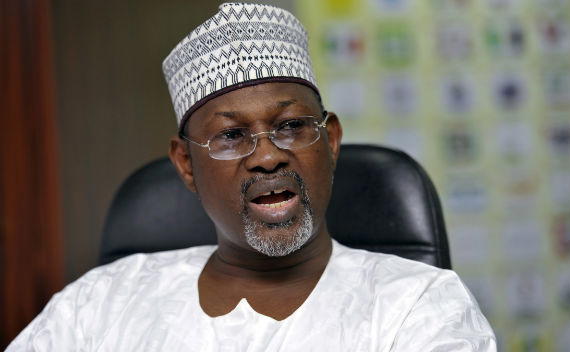
Jega
…Says local production can end forex leakages, herder-farmer clashes, and boost jobs
By Demola Akinyemi, Ilorin
The Chairman of the Presidential Livestock Reform Implementation Committee, Professor Attahiru Muhammadu Jega, has raised alarm over Nigeria’s annual importation of dairy products worth $1.5 billion—resources he said could be redirected toward local production to stimulate rural economies, conserve foreign exchange, and reduce dependency on foreign goods.
Jega made the call on Monday while delivering the Annual Distinguished Personality Lecture organized by the Faculty of Social Sciences, University of Ilorin. The lecture, themed “The Political Economy of Livestock Development in Nigeria: Challenges and Prospects,” was held in honour of Senator Saliu Mustapha, Chairman of the Senate Committee on Agriculture Production Services and Rural Development.
The former INEC Chairman described the staggering dairy imports as a paradox and a major economic setback for Nigeria. “Despite possessing favorable agro-ecologies and a large consumer market, we are still importing what we can produce. This is not only a leakage of foreign exchange but a barrier to rural development and national self-sufficiency,” Jega lamented.
He stressed that Nigeria’s dependency on imported powdered milk and cheese discourages investment in local dairy cooperatives, infrastructure, and market-oriented livestock production, particularly disadvantaging millions of smallholder pastoralists, women, and youth.
To counter this trend, Jega proposed the establishment of Special Livestock Export Zones in key cities like Kano, Jos, and Lagos, complete with Halal and Kosher certification centres, ECOWAS-compliant quarantine facilities, and duty-free input access. These zones, he said, would help reverse the $1.5 billion import burden and enable Nigeria to capture 15% of West Africa’s meat trade by 2030.
He also advocated for National Livestock Industrial Zones across Nigeria’s six geopolitical regions, anchored by export-grade abattoirs, renewable-powered dairy processing clusters, and leather parks. “These clusters would not only reduce post-harvest losses by over 30% but also attract foreign and local investment,” he added, citing Ethiopia’s Bishoftu Industrial Park as a model.
Jega emphasized that the persistent farmer-herder conflict in Nigeria can only be resolved through comprehensive land-use reforms. He proposed the implementation of a National Ranching Corridor System, featuring GIS-mapped grazing reserves and pastoralist title deeds under a forthcoming National Livestock Transformation Law.
He also suggested the formation of community conflict resolution units co-managed by traditional institutions, a model he said was inspired by Botswana’s successful Tribal Grazing Lands Policy. According to Jega, this framework could reduce farmer-herder conflicts by up to 70% within five years.
To support livestock productivity, Jega proposed Operation Feed Abundance—a nationwide feed and fodder security initiative. It would include the expansion of soy and maize-based feed mills in states like Niger, Benue, and Kaduna, and irrigated fodder belts along major rivers including the Niger, Benue, and Sokoto-Rima.
He also called for a genetic revolution in livestock, advocating the creation of regional gene banks and wide-scale deployment of artificial insemination laboratories to increase milk yields from one litre per cow to at least 10 litres daily.
Jega expressed optimism that, if the Tinubu-led administration’s livestock reforms are properly implemented, by 2030 Nigeria could:
Eliminate open grazing as the dominant system;
Halve farmer-herder conflicts;
Double livestock productivity through smarter systems and improved infrastructure;
Create over five million jobs in meat, dairy, leather, logistics, and biogas sectors;
Save billions in foreign exchange and position Nigeria as a regional trade powerhouse under the AfCFTA.
In his remarks, Senator Saliu Mustapha praised Jega’s blueprint and urged stakeholders, particularly youth, to engage with the recommendations and localize solutions. He also revealed that his office is currently training 200 poultry farmers to become self-reliant entrepreneurs.
In her welcome address, Dean of the Faculty of Social Sciences, Prof. Adedoyin Jolade Omeda, said the topic was timely given Nigeria’s growing economic and security challenges.
Representing the Vice Chancellor, Professor Wahab Egbewole, Deputy VC (Management Services), Prof. Fawole Adisa, said the university chose the lecture theme in alignment with President Tinubu’s Renewed Hope Agenda, describing Jega as “a bridge between academia and transformative public service.”
Disclaimer
Comments expressed here do not reflect the opinions of Vanguard newspapers or any employee thereof.